CM Rekha Gupta Marks Delhi Foundation Day, Nov 1
Synopsis
Delhi Chief Minister Rekha Gupta marked Delhi Foundation Day on 1 November 2026, commemorating the city's Union Territory status since 1956 and pledging to preserve its heritage while driving modern urban development for every resident.
Key Takeaways
Delhi Foundation Day is observed on 1 November each year, marking the date in 1956 when the States Reorganisation Act granted Delhi its Union Territory status.
CM Rekha Gupta posted a tribute on X invoking Delhi's history from ancient Indraprastha through the Red Fort and Kartavya Path to the present.
The Chief Minister described Delhi as a city of universal belonging — for generational residents and new migrants alike — anchored in the phrase 'हम दिल्लीवाले हैं' .
Gupta pledged prosperity in every lane, modern facilities in every home, and heritage restoration alongside accelerated development.
The States Reorganisation Act, 1956 separated Delhi from Punjab and established direct central administration, the constitutional basis for Delhi's current governance framework.
Seventy years after the States Reorganisation Act of 1956 gave Delhi its formal identity as a Union Territory, Delhi Chief Minister Rekha Gupta marked Delhi Foundation Day on 1 November 2026 with a sweeping tribute to the capital — from its ancient Indraprastha roots to the promise of a modern, prosperous city for every resident.
From Indraprastha to Union Territory: the city's layered identity
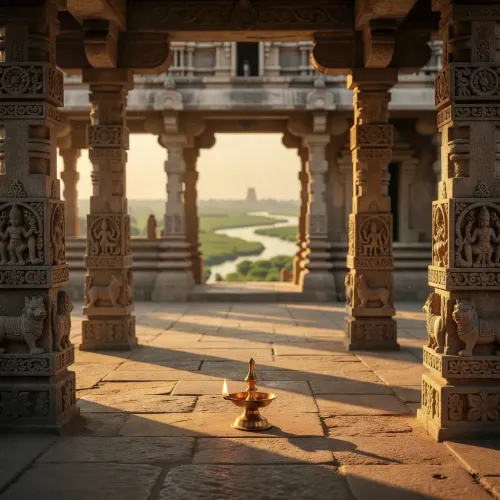
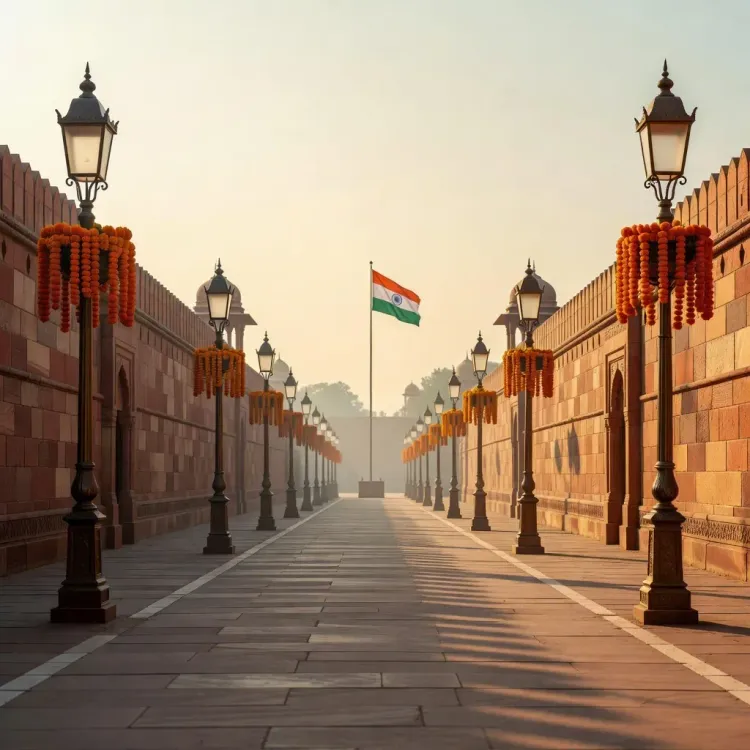
In her post on X, CM Gupta wrote — 'दिल्ली की अपनी एक खुशबू है, अपना एक मिजाज है' ('Delhi has its own fragrance, its own temperament') — invoking the city's sweep from mythology to modernity in a single breath. She drew a line from the grandeur of the Red Fort's ramparts, where the nation's pride 'resounds', to Kartavya Path, where the confidence of a free India is on display. The Yamuna river, she said, carries 'the stories of ages in its flow'.
The constitutional milestone at the heart of the occasion is precise: on 1 November 1956, the States Reorganisation Act formally conferred Union Territory status on Delhi, separating it from Punjab and placing it under direct central administration. That single legislative act set the framework for how India's capital has been governed ever since — a framework that has sparked political debate in virtually every decade that followed.
A city that belongs to everyone who arrives
The emotional core of Gupta's message was the city's identity as a place of belonging for all. 'Someone's childhood was spent here; someone's dreams took their first flight here,' she wrote. 'Some have lived here for generations; some came from far away and became of this city.' Her closing line — 'हम दिल्लीवाले हैं' ('We are Delhiites') — framed the capital not as an administrative unit but as a shared civic identity.
That framing carries weight in a city where nearly half the population is estimated to be migrant or first-generation, drawn from every state in the country. Delhi's story of constant demographic renewal is inseparable from its story as a national capital.
Gupta's pledge: heritage preserved, development accelerated
The Chief Minister paired the tribute with a set of concrete pledges: that Delhi's 'centuries-old identity will remain intact,' that its heritage will be restored, and that 'every lane will have prosperity, every home modern facilities, and every citizen's life will be marked by affluence.' She also committed to giving the city 'a magnificent future befitting its glorious past.'
Successive Delhi administrations have made similar foundation-day commitments, but the pairing of heritage preservation with urban development pledges takes on a specific policy texture in a city where Red Fort, Qutb Minar, and dozens of protected monuments sit alongside some of India's densest urban settlements. How that balance is struck in the next legislative session — particularly on heritage-linked urban projects — will be the real test of the resolve articulated today.
Delhi has been the seat of power through Mughal courts, the British Raj, and seven decades of the Republic. Every government that has run it has claimed its history as its own. What matters now is what gets built — and what gets preserved — in the city that never stops becoming.
Point of View
Contested governance structure, and vast migrant population make it fertile ground for rival visions of ownership. By anchoring her tribute in cultural and emotional universalism rather than partisan framing, Rekha Gupta attempts to occupy the broad civic centre, a space BJP has sought to consolidate in Delhi after years in opposition. The pairing of heritage rhetoric with development pledges follows a template seen across BJP-governed states, where cultural pride and urban infrastructure are presented as a unified rather than competing agenda. Watch whether specific heritage-linked projects or proposals on Delhi's administrative framework follow in the legislative session — that is where the tribute becomes policy.
NationPress
1 Nov 2026
Frequently Asked Questions
Why is Delhi Foundation Day celebrated on 1 November?
1 November 1956 is the date on which the States Reorganisation Act came into effect, formally conferring Union Territory status on Delhi. The day is observed annually as Delhi Foundation Day to mark that constitutional milestone.
What did CM Rekha Gupta say on Delhi Foundation Day 2026?
CM Rekha Gupta posted a message on X describing Delhi's identity from ancient Indraprastha to modern India, invoking the Red Fort , the Yamuna , and Kartavya Path . She pledged heritage preservation, modern urban facilities for every home, and prosperity for every citizen.
What is the States Reorganisation Act 1956 and its connection to Delhi?
The States Reorganisation Act, 1956 restructured India's states and union territories. It separated Delhi from Punjab and placed it under direct central administration as a Union Territory, which is the governance arrangement that — with subsequent constitutional amendments — continues to define Delhi's status today.
What does Delhi's Union Territory status mean?
As a Union Territory, Delhi is under the authority of the central government to a greater degree than full states. A Lieutenant Governor represents the Centre, and certain legislative and administrative powers are shared between the elected state government and the central administration — an arrangement that has been a recurring subject of political and legal debate.