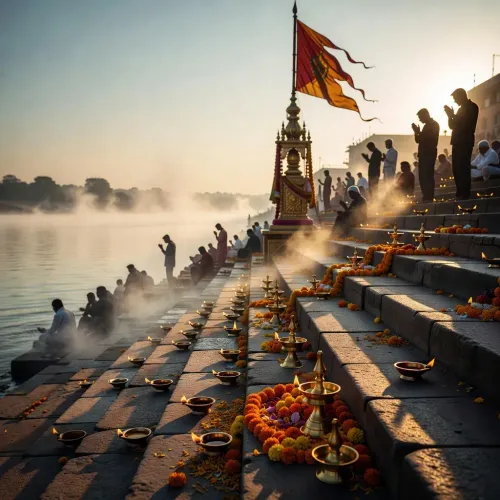
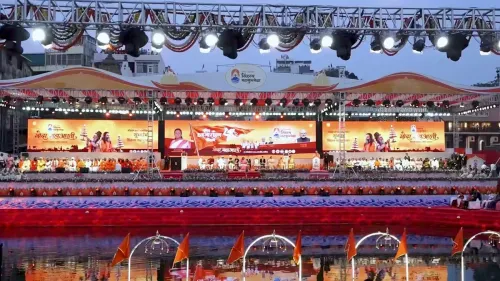
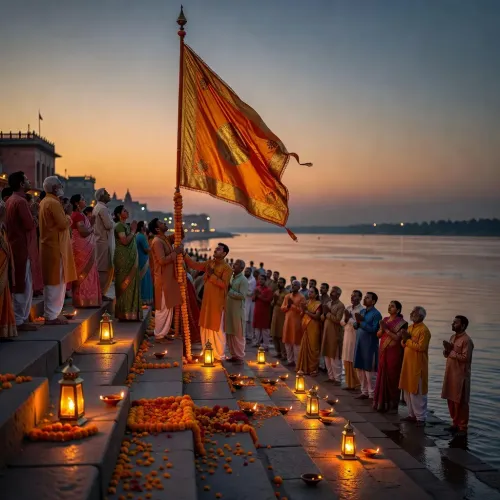
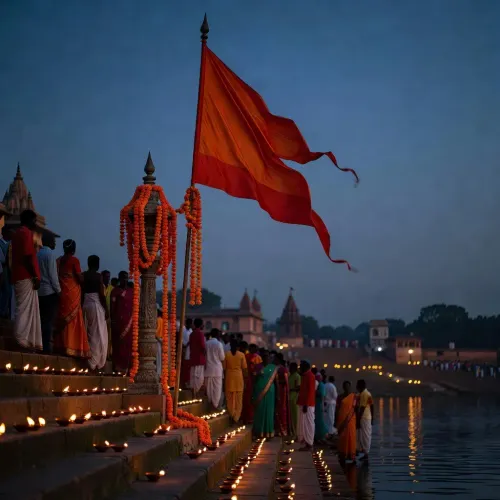
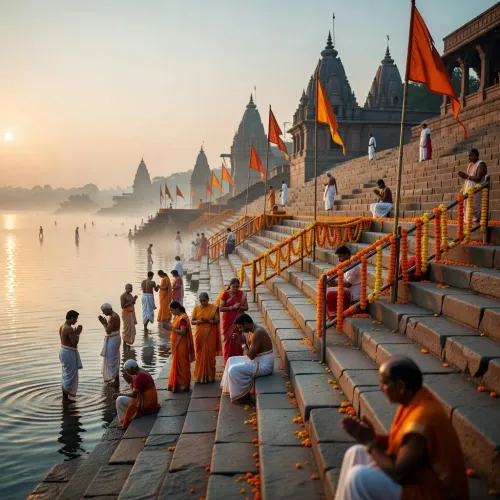
Maharashtra CM's Office flags off Nashik Simhastha Mahakumbh 2027
Synopsis
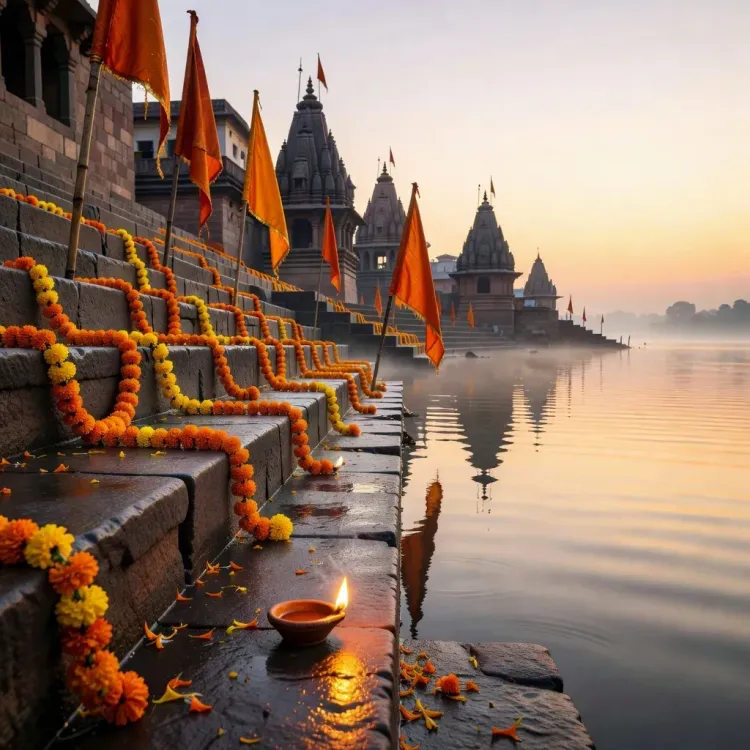
Maharashtra's Chief Minister's Office officially launched the Nashik-Trimbakeshwar Simhastha Mahakumbh Mela 2027 with a ceremonial flag-hoisting on 1 November 2026, with CM Devendra Fadnavis and Rashtrapati Bhavan both tagged, signalling national-level significance for the 12-yearly Hindu pilgrimage.
Key Takeaways
The Chief Minister's Office of Maharashtra announced the ceremonial flag-hoisting launch of Nashik-Trimbakeshwar Simhastha Mahakumbh Mela 2027 on 1 November 2026 .
Rashtrapati Bhavan was tagged in the official communication, underlining the event's national stature.
Chief Minister Devendra Fadnavis is the key state official coordinating preparations.
The Simhastha Kumbh Mela at Nashik-Trimbakeshwar occurs every 12 years ; the last edition was in 2015 .
Nashik and Trimbakeshwar are paired as the twin sacred sites, with Trimbakeshwar home to one of India's twelve Jyotirlingas.
Infrastructure tendering and state budget allocations for crowd management and logistics are the immediate next steps to watch.
Twelve years after millions converged on the banks of the Godavari, the countdown to one of Hinduism's most sacred mass pilgrimages has formally begun. The Chief Minister's Office of Maharashtra announced on Sunday, 1 November 2026 that the 'Nashik-Trimbakeshwar Simhastha Mahakumbh Mela 2027' has been ceremonially launched with a sacred flag-hoisting, with the communication tagged to both Rashtrapati Bhavan and Chief Minister Devendra Fadnavis.
What the flag-hoisting signals
In the tradition of the Kumbh cycle, a ceremonial flag-hoisting marks the official commencement of preparations — not the festival itself, but the institutional declaration that the machinery of the state is now in motion. By tagging Rashtrapati Bhavan, Maharashtra's government is signalling the event's national stature, elevating it beyond a state-level religious festival to a matter of pan-India spiritual and cultural significance.
Chief Minister Devendra Fadnavis, who leads state-level coordination for major cultural and religious events in Maharashtra, anchors the government's commitment to what is expected to be a logistical operation of enormous scale.
Nashik and Trimbakeshwar: why these two towns
Nashik, a city in northern Maharashtra, is one of the four traditional sites in the Kumbh Mela rotation — alongside Prayagraj, Haridwar, and Ujjain. The cycle at Nashik is uniquely paired with Trimbakeshwar, a temple town that is home to one of the twelve Jyotirlingas (sacred Shiva shrines) of India. Ritual bathing by pilgrims at the Ramkund in Nashik and at Trimbak forms the spiritual core of the festival. Together, the two towns draw tens of millions of devotees across the Simhastha period.
The 2015 precedent and what 2027 will demand
The last Nashik-Trimbakeshwar Simhastha Kumbh Mela was held in 2015, with the Maharashtra state government overseeing a vast logistics operation covering crowd management, sanitation, temporary infrastructure, and medical services. In the twelve years since, both Nashik's urban footprint and India's pilgrimage infrastructure expectations have grown considerably.
Maharashtra has historically formed special-purpose vehicles and allocated dedicated budgets for Kumbh preparation. The immediate watch point is state budget allocations and infrastructure tendering for road, water, and crowd-flow upgrades at Nashik-Trimbakeshwar ahead of the 2027 festival window.
With the sacred flag now hoisted and the national calendar marked, Maharashtra's next twelve months will be measured in milestones — every tender floated, every ghaat upgraded, every pilgrim facility commissioned — all building toward a single convergence on the Godavari.
Point of View
The Fadnavis government frames Simhastha 2027 as a national event, effectively inviting central government support and visibility. This fits a broader pattern of BJP-led state governments using major pilgrimage events to demonstrate administrative competence and cultural affinity simultaneously. With the 2015 edition still fresh in institutional memory, the pressure on Maharashtra's delivery machinery is high: Simhastha 2027 will be judged against it. How early and ambitiously the state moves on infrastructure will signal how seriously the government treats this as both a governance test and a political opportunity.
NationPress
1 Nov 2026
Frequently Asked Questions
When is the Nashik Trimbakeshwar Simhastha Kumbh Mela 2027?
The Nashik-Trimbakeshwar Simhastha Mahakumbh Mela 2027 has been formally launched with a flag-hoisting ceremony on 1 November 2026, with the festival itself scheduled for 2027. Exact dates for the main bathing events have not yet been officially confirmed.
How often does the Nashik Kumbh Mela happen?
The Simhastha Kumbh Mela at Nashik-Trimbakeshwar is held every 12 years as part of the larger four-site Kumbh rotation. The previous edition was held in 2015.
Why is it called Simhastha Kumbh Mela?
'Simhastha' refers to the astrological position of Jupiter (Brihaspati) in the sign of Simha (Leo), which determines when the Kumbh Mela is held at Nashik and Trimbakeshwar.
What is special about Trimbakeshwar in the Kumbh Mela?
Trimbakeshwar is home to one of India's twelve Jyotirlingas — sacred shrines of Lord Shiva — making it a uniquely significant spiritual site. Pilgrim rituals are split between Nashik's Ramkund and Trimbakeshwar during the Simhastha.
Who is overseeing preparations for Nashik Simhastha 2027?
Chief Minister Devendra Fadnavis leads state-level coordination for the event. The Maharashtra government is expected to form dedicated administrative bodies and allocate budget for infrastructure, crowd management and sanitation ahead of the festival.