Shekhawat Inaugurates Karnataka Textile Show at NGMA Bengaluru
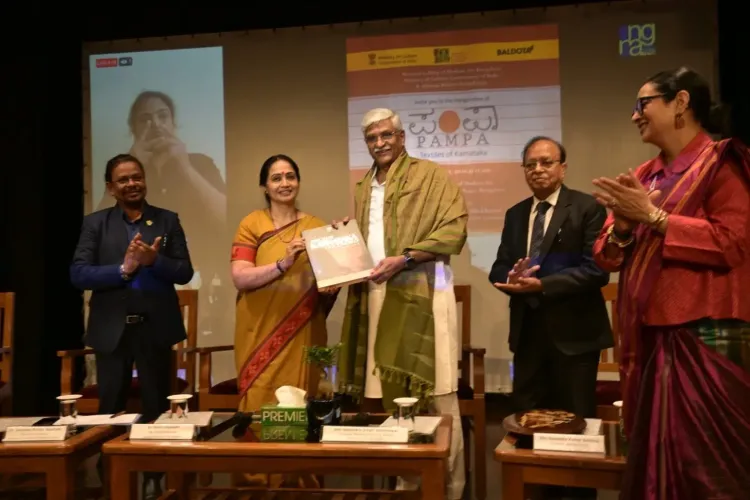
Synopsis
Union Culture Minister Gajendra Singh Shekhawat inaugurated 'Pampa: Textiles of Karnataka' at NGMA Bengaluru on Karnataka Rajyotsava, celebrating the state's textile heritage under the government's Vikas Bhi, Virasat Bhi framework, with support from the Abheraj Baldota Foundation.
Key Takeaways
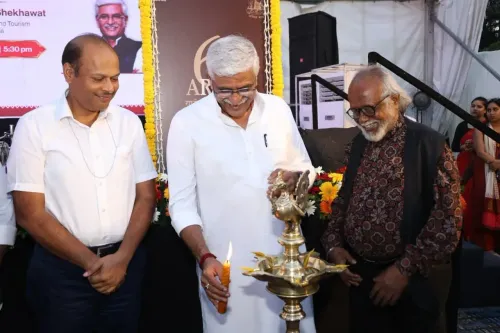
Gajendra Singh Shekhawat inaugurated 'Pampa: Textiles of Karnataka' at NGMA Bengaluru on 1 November 2026 .
The event coincided with Karnataka Rajyotsava , the annual celebration of Karnataka's formation on 1 November 1956 .
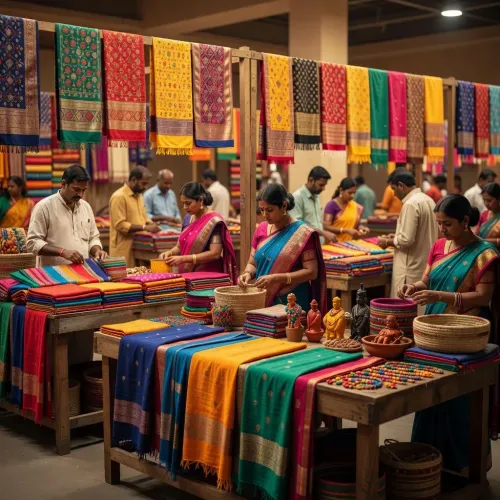
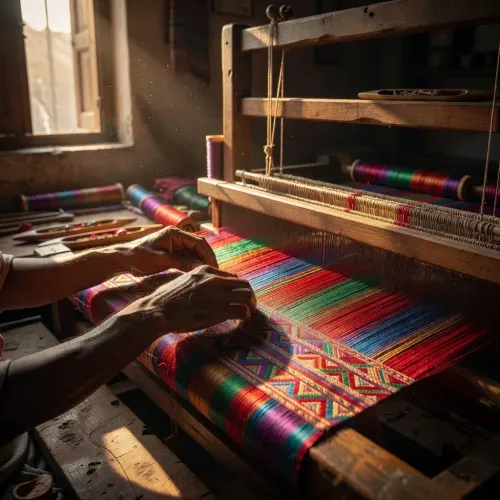
The exhibition highlights centuries of Karnataka's weaving and handloom traditions and the artisan communities behind them.
The Abheraj Baldota Foundation co-organised the exhibition as part of its cultural preservation mandate.
Shekhawat framed the initiative under the government's Vikas Bhi, Virasat Bhi policy of integrating heritage with development.
The Ministry of Culture's NGMA branches continue to serve as platforms for state-specific craft showcases.
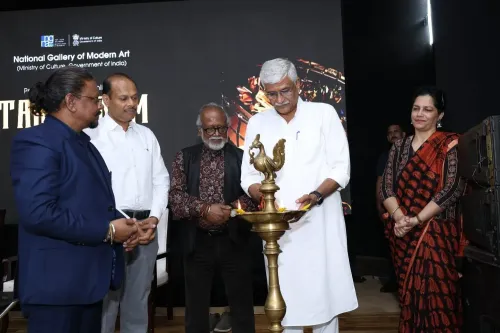
On Karnataka Rajyotsava, 1 November 2026, Union Culture and Tourism Minister Gajendra Singh Shekhawat inaugurated 'Pampa: Textiles of Karnataka' at the National Gallery of Modern Art (NGMA), Bengaluru — a landmark exhibition celebrating the state's centuries-old weaving traditions on the very day Karnataka marks its formation anniversary.
A Living Legacy Enters the Gallery
The exhibition spotlights the depth and diversity of Karnataka's textile heritage — from its famed silk weaves to regional handloom traditions kept alive by generations of artisans. Shekhawat, inaugurating the show, called every weave 'a story of our history, communities, traditions and the generations of artisans who have kept these art forms alive.' The timing is deliberate: anchoring a craft exhibition to Karnataka Rajyotsava gives the celebration both cultural weight and a ready audience of state pride.
The NGMA Bengaluru branch, an institution under the Ministry of Culture, has periodically served as the venue for regional textile and craft exhibitions — bringing living craft traditions into a contemporary gallery context and reaching audiences beyond the workshop floor. This exhibition follows that established pattern, though its scale and specific content make it notable on a state formation day.
Abheraj Baldota Foundation's Role
The exhibition was organised with the support of the Abheraj Baldota Foundation, a philanthropic body with a track record in cultural preservation and heritage promotion across India. Shekhawat offered his 'appreciation' to the Foundation for what he described as a 'commendable initiative' contributing to the celebration and preservation of Bharat's rich cultural heritage. Private foundations co-producing national gallery exhibitions signals a growing public-private model in India's cultural sector.
'Vikas Bhi, Virasat Bhi' — The Policy Frame Behind the Fabric
Shekhawat linked the event explicitly to the government's Vikas Bhi, Virasat Bhi ('Development as well as Heritage') framework — the BJP-led central government's recurring cultural policy anchor, which positions preservation of traditional crafts and artisan livelihoods as integral to national development, not separate from it. Bringing Karnataka's textile traditions under that umbrella on the state's formation day is a pointed alignment of cultural diplomacy with regional sentiment.
For Karnataka's weavers and artisans, visibility at a premier national gallery is more than symbolic. It opens pathways to new collectors, designers, and export markets — the kind of audience that rarely travels to a village workshop. The central government's use of NGMA branches as platforms for state-specific craft showcases is a model worth watching as more anniversaries approach on the cultural calendar.
When a nation's oldest threads find their way into its premier galleries, the loom and the ledger begin to speak the same language.
Point of View
While tethering the gesture to the ruling party's Vikas Bhi, Virasat Bhi narrative. It signals that the Ministry of Culture sees regional craft showcases not as peripheral acts of patronage but as active instruments of cultural policy. The Abheraj Baldota Foundation's involvement also reflects a broader push to draw private capital into heritage preservation, reducing the state's financial burden while expanding programming reach. Watch for similar NGMA-anchored state craft exhibitions as the government approaches other state formation anniversaries.
NationPress
1 Nov 2026
Frequently Asked Questions
What is 'Pampa: Textiles of Karnataka'?
'Pampa: Textiles of Karnataka' is an exhibition inaugurated at the National Gallery of Modern Art (NGMA) in Bengaluru on 1 November 2026, showcasing the diverse weaving and handloom traditions of Karnataka.
Who inaugurated the Pampa textiles exhibition at NGMA Bengaluru?
Union Culture and Tourism Minister Gajendra Singh Shekhawat inaugurated the exhibition on Karnataka Rajyotsava, 1 November 2026.
What is Karnataka Rajyotsava?
Karnataka Rajyotsava is the annual state formation day celebrated on 1 November, commemorating the unification of Kannada-speaking regions into the state of Karnataka in 1956.
What is the Abheraj Baldota Foundation?
The Abheraj Baldota Foundation is a philanthropic organisation that supports cultural preservation and heritage initiatives across India; it co-organised the 'Pampa: Textiles of Karnataka' exhibition.
What does Vikas Bhi Virasat Bhi mean?
'Vikas Bhi, Virasat Bhi' translates to 'Development as well as Heritage' and is the central government's policy framework that positions preservation of traditional crafts and artisan livelihoods as part of national development.