Odisha CMO: Teaching a Noble Responsibility, Not Just a Job
Synopsis
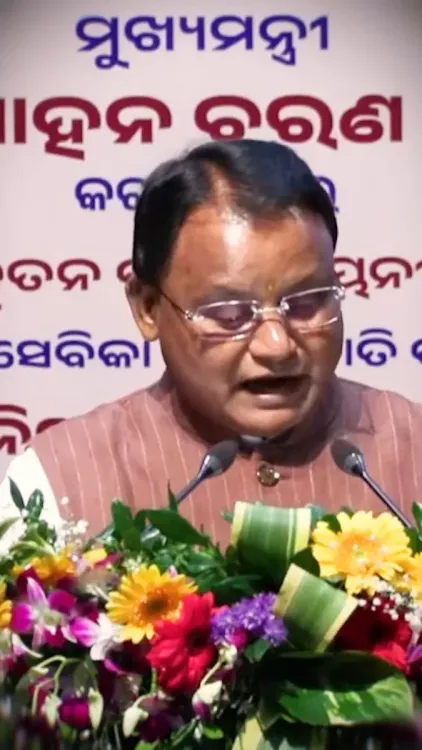
The Chief Minister's Office of Odisha on 1 November 2026 posted a bilingual message calling teaching 'a noble responsibility,' linking educators directly to building an inclusive society and a stronger future generation — a framing that resonates with Odisha's ongoing push for equitable education.
Key Takeaways
The Chief Minister's Office of Odisha posted on 1 November 2026 calling teaching 'a noble responsibility,' not merely a profession.
The message was written in both Odia and English , signalling a broad public audience.
The post explicitly links teaching to building an inclusive society ( samaveshi samaj ) and shaping future generations.
Odisha operates residential school networks — including Eklavya Model Residential Schools — targeting tribal and remote communities where teacher commitment is critical.
India's National Education Policy 2020 identifies teacher motivation as the top lever for improving learning outcomes, giving the CMO's framing a national policy echo.
A teacher does not merely transfer knowledge — they shape the very architecture of a society. On Sunday, 1 November 2026, the Chief Minister's Office of Odisha posted a pointed reminder of that truth on X, framing the act of teaching as far more than a career choice.
The post, written in Odia and English, declared: 'ଶିକ୍ଷାଦାନ କେବଳ ଏକ ବୃତ୍ତି ନୁହେଁ, ଏହା ଏକ ମହତ୍ ଦାୟିତ୍ୱ' — 'Teaching is not merely a profession but a noble responsibility' — and linked that responsibility directly to building an inclusive society and a stronger next generation.
The weight behind a two-line post
Short as the message is, it carries a deliberate charge. Indian state governments do not casually invoke the language of 'noble responsibility' — the phrase signals an intent to elevate public regard for educators at a time when teacher welfare, retention, and quality are live policy concerns across every state. Odisha, like much of India, grapples with rural school staffing gaps, learning-outcome deficits, and the challenge of reaching first-generation learners.
By tying teaching to inclusion — not just academic output — the CMO's framing nudges the conversation toward equity: the idea that who gets taught, and how well, determines the shape of society a generation from now.
Educators as architects of an inclusive Odisha
The reference to a 'samaveshi samaj' (ସମାବେଶୀ ସମାଜ, an inclusive society) is not throwaway rhetoric. Odisha has long invested in tribal and remote-area education through residential school networks such as the Eklavya Model Residential Schools and state-run Ashram schools targeting Scheduled Tribe communities — populations where a committed teacher can be the difference between a child staying in school or dropping out. The CMO's framing aligns with that legacy, even as it stops short of announcing a new initiative.
The call also resonates nationally. India's National Education Policy 2020 specifically identifies teacher capacity and motivation as the single most important lever for improving learning outcomes — a view increasingly shared by state education departments building their own in-service training and incentive structures.
What the Odisha CMO has done here is set a moral and civic tone: teachers are not service providers to be managed but stewards of a generational promise. Whether that tone crystallises into policy announcements — on teacher pay, recruitment, or training — is the question worth watching.
Point of View
Recruitment shortfalls, and low-prestige perceptions of the profession, this kind of top-level messaging can shift the social contract between government and educators. The emphasis on inclusion rather than mere academic performance also signals alignment with equity-first education frameworks. Whether it precedes a concrete policy move — on pay, training, or deployment to underserved areas — will determine whether the sentiment translates into structural change.
NationPress
1 Nov 2026
Frequently Asked Questions
What did the Odisha Chief Minister's Office say about teachers?
The Odisha CMO declared on 1 November 2026 that 'teaching is not merely a profession but a noble responsibility,' and linked it to building an inclusive society and shaping future generations.
Why is Odisha's government statement on teaching significant?
It signals a policy intent to elevate the social and civic standing of educators, particularly relevant as Odisha works to improve education access for tribal and remote communities through residential school networks.
What is the meaning of 'samaveshi samaj' used in the Odisha CMO post?
'Samaveshi samaj' is an Odia phrase meaning 'inclusive society' — it frames the teacher's role as foundational to ensuring no community is left behind in education.
Does India's National Education Policy support this view of teachers?
Yes. India's National Education Policy 2020 explicitly identifies teacher capacity and motivation as the single most important driver of improved learning outcomes across the country.
What schools does Odisha run for tribal and remote-area students?
Odisha operates networks including Eklavya Model Residential Schools and state Ashram schools specifically designed to provide quality education to Scheduled Tribe and remote-area children.