CM Rekha Gupta Meets PM Modi, Presents Delhi's 1.5-Year Report Card
Synopsis
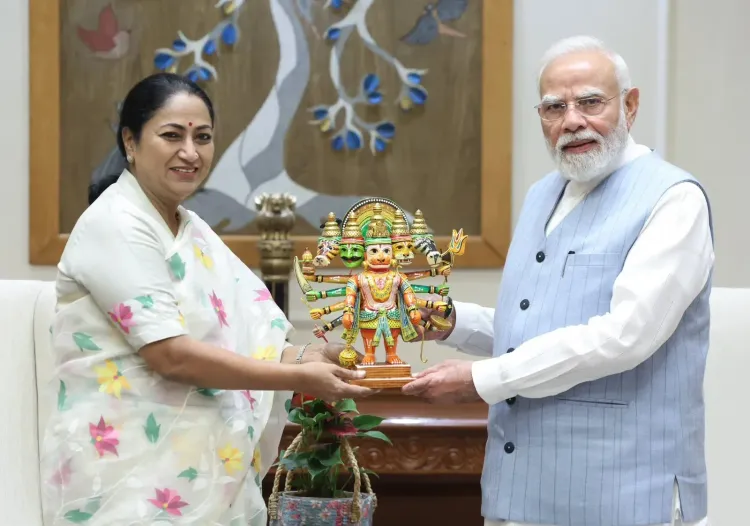
Delhi Chief Minister Rekha Gupta called on Prime Minister Narendra Modi on 29 September 2026, presenting a booklet documenting 18 months of the Delhi government's development and welfare work, framing the meeting as a step toward aligning Delhi's progress with the Viksit Bharat vision.
Key Takeaways
Delhi CM Rekha Gupta met PM Narendra Modi on 29 September 2026 in a courtesy call at the national capital.
Gupta presented a booklet summarising one-and-a-half years of key development projects and public-welfare initiatives in Delhi.
The meeting was framed around the Viksit Bharat vision, with Gupta explicitly invoking 'Viksit Delhi' as Delhi's contribution to the national goal.
BJP chief ministers routinely use such meetings to align state projects with central funding priorities and scheme frameworks.
Any follow-up central allocations or project approvals linked to the booklet's contents will be the concrete test of the meeting's impact.
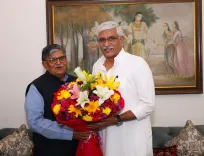
A progress booklet documenting 18 months of development work landed on the Prime Minister's desk on Tuesday, 29 September 2026 — Delhi Chief Minister Rekha Gupta personally handed it over during a courtesy call on Prime Minister Narendra Modi in New Delhi, turning a protocol meeting into a structured state-to-centre briefing.
Gupta shared the meeting on X, writing in Hindi that she 'received guidance from the world's most popular people's leader' and that 'every meeting with the respected Prime Minister gives new inspiration.' She also thanked Modi for his time and 'affectionate guidance' in strengthening her resolve for national and public service.
A Booklet as a Governance Statement
The presentation of a compiled progress dossier is more than a formality. Gupta's team distilled one-and-a-half years of key development projects and public-welfare initiatives into a single document — a move that signals the Delhi government's intent to formally align its record with the Centre's review framework. Such booklets typically form the basis for discussions on central funding and scheme integration in the next budget cycle.
Courtesy meetings between BJP chief ministers and PM Modi have routinely served a dual purpose: reinforcing political solidarity within the party and, more practically, syncing state-level projects with national priorities like the Viksit Bharat vision — Modi's flagship ambition to elevate India to developed-country status by 2047.
Delhi's Place in the Viksit Bharat Blueprint
Delhi, as the national capital, carries outsized symbolic weight in any 'developed India' narrative. Gupta specifically invoked the phrase 'Viksit Bharat ke anurup Viksit Delhi' — a 'developed Delhi in line with a developed India' — in her post, anchoring the city's governance ambitions explicitly to the Prime Minister's long-term national vision.
The capital has historically seen friction between its elected government and the Union administration over jurisdiction on infrastructure and services. The current BJP alignment at both state and central levels removes that fault line, opening a cleaner channel for coordinated project execution and funding — something the booklet meeting is designed to leverage.
What comes out of it in concrete terms — new central allocations, fast-tracked approvals, or joint project announcements — will be the real measure of Tuesday's exchange.
Point of View
Tethering the Delhi government's local record to the Prime Minister's marquee 2047 vision. For Gupta, this also serves an internal party purpose: demonstrating deliverables and loyalty to central leadership ahead of future political cycles. The real test will be whether the booklet translates into tangible central support for Delhi's infrastructure pipeline.
NationPress
29 Sept 2026
Frequently Asked Questions
Why did Delhi CM Rekha Gupta meet PM Modi on 29 September 2026?
Rekha Gupta met Prime Minister Narendra Modi for a courtesy call in which she presented a booklet documenting 18 months of development and welfare work carried out by the Delhi government, and sought his guidance on further progress.
What is the Viksit Delhi vision mentioned by Rekha Gupta?
'Viksit Delhi' refers to Gupta's stated goal of developing Delhi in alignment with the Prime Minister's national 'Viksit Bharat' vision, which aims to make India a developed nation by 2047.
What was in the development booklet presented to PM Modi?
The booklet covered key development projects and public-welfare initiatives undertaken in Delhi over the past one-and-a-half years. The exact contents of the document have not been officially disclosed.
How common are such meetings between BJP chief ministers and the Prime Minister?
Such courtesy meetings are a regular feature of BJP's federal coordination, allowing state chief ministers to brief the Prime Minister on progress and align state schemes with central priorities and funding frameworks.
When did Rekha Gupta become Delhi Chief Minister?
Rekha Gupta became Chief Minister of Delhi following the BJP's victory in the 2025 Delhi assembly elections, making this 18-month progress review a significant early milestone in her tenure.