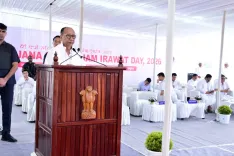
CM Rekha Gupta: 'No Means No, Zero Compromise in Delhi'
Synopsis
Delhi Chief Minister Rekha Gupta called out the double standard that places all behavioural restrictions on girls, invoking PM Modi's 2014 Red Fort address on male accountability and declaring there will be no compromise on consent or misconduct in Delhi.
Key Takeaways
CM Rekha Gupta delivered a pointed address on 30 September 2026 challenging the societal norm of placing all restrictions on girls while exempting boys.
She cited PM Narendra Modi's 2014 Independence Day speech at Red Fort as a rare instance of a national leader publicly demanding accountability from boys and families.
Gupta stated unequivocally that 'No means No' and there is zero compromise on consent-related misconduct anywhere in Delhi.
The zero-tolerance pledge applies to every person — man or woman, public official or ordinary citizen — without exception.
The address fits a broader BJP governance pattern since 2014 of framing women's safety as a shared societal duty involving male socialisation and stricter urban enforcement.
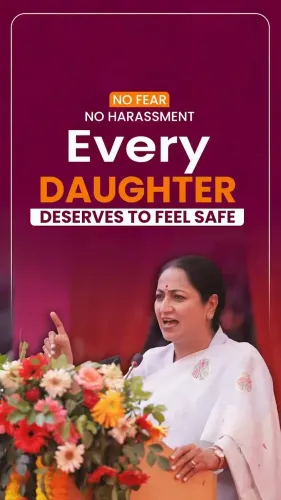
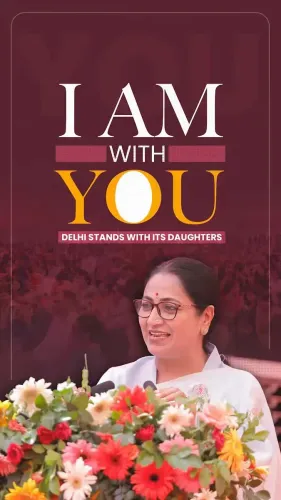
Every restriction, every dress code, every boundary — always aimed at girls. Delhi Chief Minister Rekha Gupta put that double standard squarely in the spotlight on Wednesday, 30 September 2026, delivering a sharp, unambiguous message: the burden of safe behaviour must fall equally on boys, families, and all of society — and in Delhi, anyone who steps out of line will face consequences without exception.
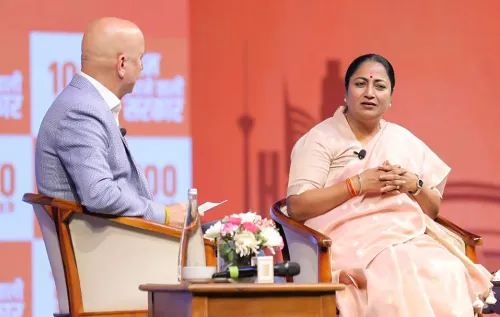
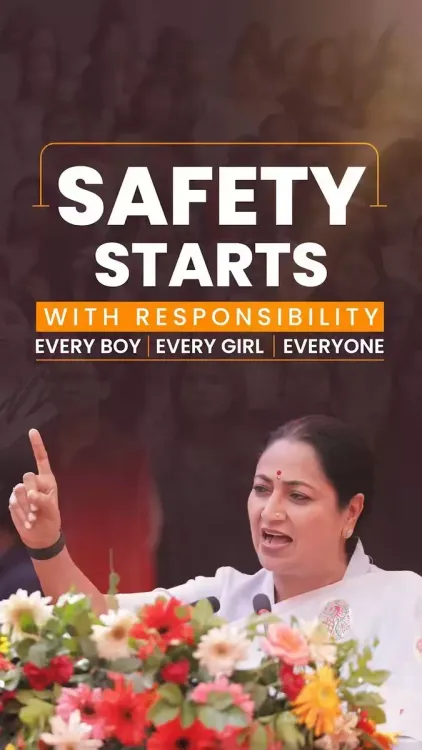
Speaking in a video address, CM Gupta asked the question many have long left unspoken: 'Sab kuch ladkiyon ke liye kyun bhai?' ('Why is everything for girls?') She catalogued the endless list — what to wear, what not to do, where not to go — and demanded to know what equivalent standards are expected of boys.
Invoking Modi's 2014 Red Fort Moment
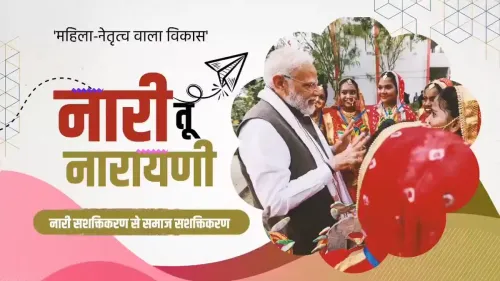
Gupta reached back to a landmark speech to make her point. She credited Prime Minister Narendra Modi as what she called the only national leader who, in his very first Independence Day address from Red Fort in 2014, publicly turned the question around on families: 'You keep advising girls — when will you advise boys?' That address had placed the responsibility of gender socialisation on parents, families, and society at large, not solely on women and girls to protect themselves.
The invocation was deliberate. By anchoring her argument in a 12-year-old prime ministerial intervention, Gupta signalled continuity — framing consent education and male accountability not as new politics but as an unfinished agenda that Delhi now intends to act on at the ground level.
'No' Means No — and Delhi Will Not Bargain on That
The CM was unambiguous about enforcement. 'And 'No' means 'No' — that must be understood. And on this there is no compromise in this city... no compromise,' she said. She made clear the message applies uniformly: man or woman, boy or girl, public official or ordinary citizen — anyone committing a wrong act in Delhi will not be spared.
That framing — treating consent as non-negotiable city policy rather than personal morality — is a notable escalation in language from a sitting Chief Minister. It layers a zero-tolerance enforcement pledge onto the cultural argument about male socialisation, giving the message both a political and an administrative edge.
A Consistent Thread Since Nirbhaya
Delhi has carried the weight of India's sharpest conversations about women's safety since the December 2012 Nirbhaya gang-rape case, which triggered sweeping legal reforms and a national reckoning. The BJP's positioning since 2014 has consistently tried to reframe that conversation — shifting emphasis from restricting women's movements to demanding accountability from men and institutions. CM Gupta's address fits squarely inside that arc.
Whether the speech translates into concrete policy — consent education curricula in Delhi schools, targeted awareness campaigns, or stepped-up enforcement mechanisms — will be the measure of its impact in the months ahead. The words are out. The city is watching what follows.
Point of View
She raises the stakes for her administration: the speech now creates a visible accountability benchmark. The invocation of 2014 also serves a dual purpose, reinforcing BJP's claim to historical ownership of gender-safety messaging while pressuring the Delhi administration to deliver measurable outcomes. The real test will be whether school curricula, policing directives, or public campaigns follow — or whether this remains powerful rhetoric without institutional follow-through.
NationPress
30 Sept 2026
Frequently Asked Questions
What did Delhi CM Rekha Gupta say about women's safety?
CM Rekha Gupta said all social restrictions are unfairly placed on girls while boys face no equivalent accountability. She declared there is zero compromise on consent in Delhi and that anyone committing a wrong act — regardless of gender or position — will not be spared.
What did PM Modi say about girls and boys at Red Fort in 2014?
In his first Independence Day address from Red Fort in 2014, PM Narendra Modi asked families why they only advise girls and questioned when they would similarly advise boys, framing gender safety as a shared family and societal responsibility.
What does 'No means No' mean in the context of Rekha Gupta's speech?
CM Gupta used 'No means No' to assert that consent is non-negotiable in Delhi, emphasising that boys and men must understand and respect a refusal, with zero tolerance for any violation regardless of who the person is.
What is the BJP's stance on women's safety and male accountability?
Since 2014, the BJP has consistently framed women's safety as requiring male socialisation and consent education alongside strict enforcement, rather than placing the burden solely on women through restrictions on their movement or dress.
What could follow Rekha Gupta's speech on consent in Delhi?
The speech raises expectations of concrete follow-up measures such as consent education in Delhi schools, targeted awareness drives for families, and tightened enforcement action against gender-based misconduct in the city.