CM Rekha Gupta Joins Yamuna Ghat Cleanliness Drive
Synopsis
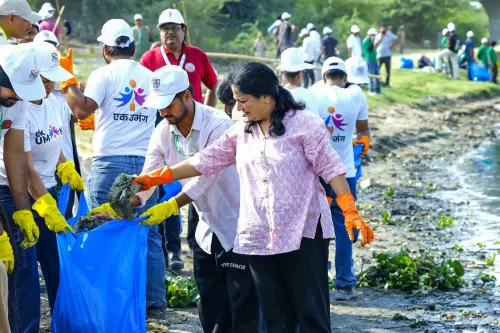
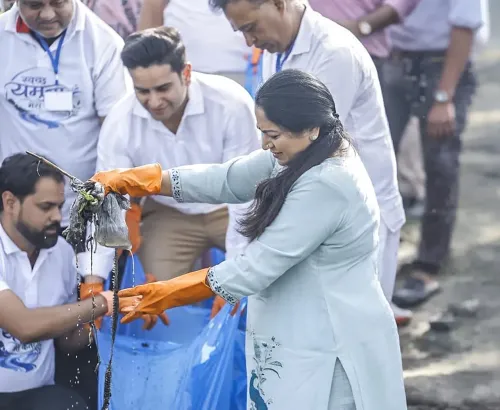
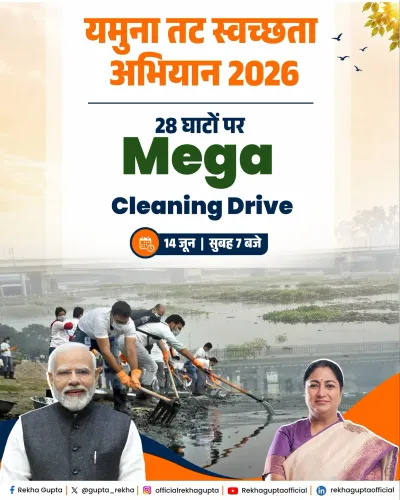
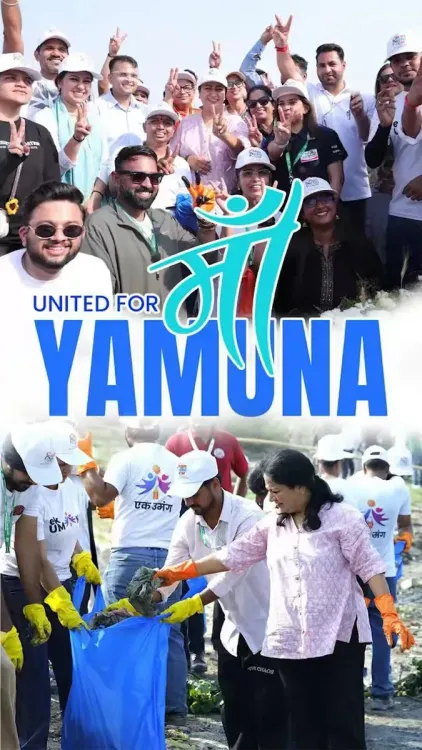
Delhi Chief Minister Rekha Gupta joined hundreds of volunteers and residents at Yamuna Ghat on June 28 for a cleanliness drive, calling it a step forward for the Jan Bhagidari Abhiyan toward a Swachh Yamuna and Swachh Delhi.
Key Takeaways
Delhi CM Rekha Gupta participated in a Yamuna Ghat cleanliness drive on June 28, 2026 .
The drive brought together hundreds of volunteers, youth, and local residents under the Jan Bhagidari Abhiyan .
The campaign is framed around the twin goals of Swachh Yamuna and Swachh Delhi .
The hashtag #SwachhYamunaMeraKartavya ('Clean Yamuna Is My Duty') signals an intent to sustain the campaign beyond a single event.
The Yamuna, flowing through central Delhi, remains one of India's most heavily polluted urban rivers, making community drives a visible complement to larger remediation efforts.
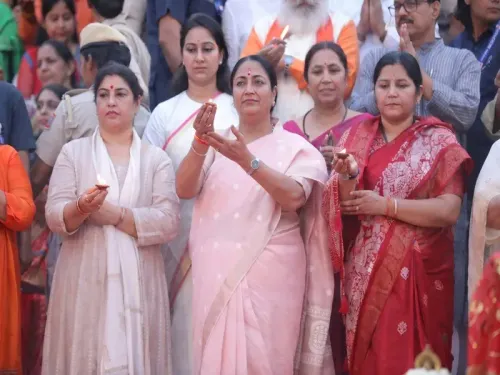
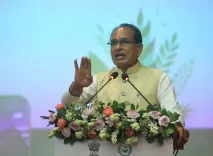
Delhi Chief Minister Rekha Gupta joined hundreds of volunteers, youth, and local residents at a Yamuna Ghat cleanliness drive on Sunday, June 28, 2026, as part of the ongoing Jan Bhagidari Abhiyan aimed at restoring the river and the capital's public spaces.
Context
The Chief Minister took to social media to express her gratitude to participants, stating: 'Every effort strengthens this Jan Bhagidari Abhiyan for a Swachh Yamuna, Swachh Delhi.' The event drew a wide cross-section of citizens — from youth groups to local neighbourhood residents — underscoring the community-driven character of the initiative.
The Yamuna, which flows through the heart of Delhi, has long been one of India's most polluted urban rivers. Cleanliness and rejuvenation drives along its ghats have been a recurring civic and political priority for successive Delhi governments, given the river's religious, cultural, and ecological significance to the capital's residents.
Policy Backdrop
The Jan Bhagidari Abhiyan — roughly translated as 'people's participation campaign' — reflects a governance approach that seeks to mobilise citizens alongside government machinery for civic improvement. Such drives typically complement larger infrastructure-level interventions such as sewage treatment upgrades and industrial effluent regulation, which are essential for sustained river health.
The Swachh Yamuna goal has been linked to broader national frameworks including the Namami Gange programme and urban cleanliness mandates under Swachh Bharat Mission. Delhi's stretch of the Yamuna receives the bulk of the river's pollution load, making ghat-level cleanliness drives a visible, community-facing component of a much larger remediation challenge.
Stakeholders and Impact
The participation of youth volunteers and local residents signals an effort to build civic ownership over the river's upkeep, moving beyond government-led action alone. For residents living near the ghats, such drives also carry immediate quality-of-life benefits — cleaner riverbanks, reduced waste accumulation, and improved public spaces.
For the BJP-led Delhi government, the event serves as a demonstration of on-ground engagement with constituents, particularly in a city where the Yamuna's condition has been a persistent electoral and governance flashpoint. Community-level mobilisation of this kind also helps sustain public pressure on longer-term institutional action.
What's Next
The hashtag #SwachhYamunaMeraKartavya — translating to 'Clean Yamuna Is My Duty' — suggests an intent to sustain the campaign beyond a single event, potentially drawing in more localities and volunteer groups over coming weeks. Whether the Jan Bhagidari Abhiyan translates into measurable improvements in water quality and ghat upkeep will depend on its frequency, scale, and coordination with Delhi's civic agencies. The Chief Minister's direct participation sets a visible benchmark for continued community engagement.
Point of View
Which can help sustain momentum and deflect criticism when institutional progress is slow. The Yamuna's condition has historically been a liability for whichever party holds Delhi, making community-facing drives a way to demonstrate intent even as the harder infrastructural work unfolds over years. Whether this translates into a durable campaign or remains a periodic photo opportunity will be tested by the regularity and measurable outcomes of subsequent drives.
NationPress
27 Sept 2026
Frequently Asked Questions
What is the Jan Bhagidari Abhiyan for Swachh Yamuna?
Jan Bhagidari Abhiyan is a people's participation campaign in Delhi aimed at mobilising citizens, volunteers, and youth to contribute to cleanliness and rejuvenation efforts along the Yamuna river and across the city.
Why is the Yamuna river so polluted in Delhi?
Delhi's stretch of the Yamuna receives a large share of the river's total pollution load due to untreated sewage discharge, industrial effluents, and urban runoff, making it one of the most degraded urban river stretches in India.
What did Delhi CM Rekha Gupta do at Yamuna Ghat on June 28?
Delhi Chief Minister Rekha Gupta joined hundreds of volunteers, youth, and local residents at a Yamuna Ghat cleanliness drive on June 28, 2026, as part of the Jan Bhagidari Abhiyan for Swachh Yamuna and Swachh Delhi.
What does SwachhYamunaMeraKartavya mean?
'SwachhYamunaMeraKartavya' is a Hindi phrase meaning 'Clean Yamuna Is My Duty,' used as a campaign hashtag to encourage civic ownership of the Yamuna's cleanliness among Delhi residents.
How does the Swachh Yamuna drive connect to national schemes?
Ghat-level cleanliness drives in Delhi are linked to broader national frameworks such as the Namami Gange programme and the Swachh Bharat Mission, complementing larger infrastructure-level interventions like sewage treatment upgrades.