CM Revanth Calls All-Party Meet, Delhi Trip on El Niño Crisis
Synopsis
Telangana CM Revanth Reddy has declared an El Niño emergency, urging farmers to skip summer sowing, announcing an all-party meeting after Dasara, and planning a November delegation to Delhi to seek NDRF funds and central power support as reservoirs fall to 200 TMC.
Key Takeaways
Reservoir crisis: Telangana's water storage stands at 200 TMC against 462 TMC at the same time last year — less than half.
Farmer appeal: CM Revanth Reddy asked farmers to voluntarily skip summer paddy sowing to conserve water for drinking across 24,000 villages .
Power surge: State electricity demand has reached 20,000 MW , up from 6,500–7,000 MW in 2014–15 , straining supply.
All-party meeting: A cross-party consultation on the El Niño situation will be held immediately after the Dasara festival.
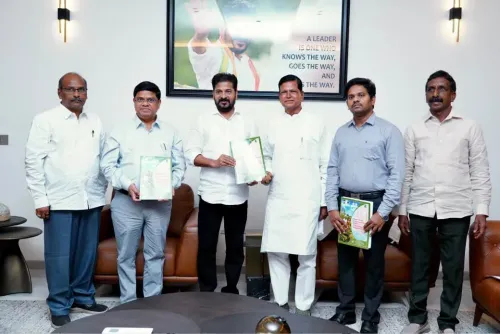
Delhi delegation: An all-party team will visit New Delhi in the first week of November to seek NDRF relief and subsidised central power from the Prime Minister.
Crisis machinery: A sub-committee under Deputy CM Bhatti Vikramarka and a nodal officer with a toll-free war room have been established for continuous monitoring.
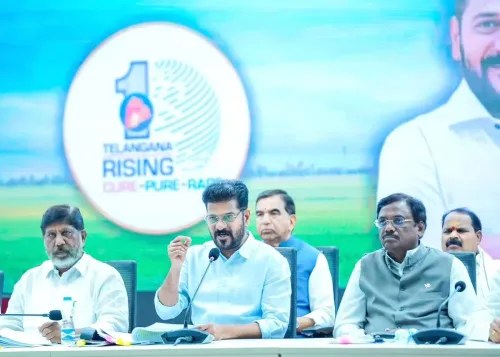
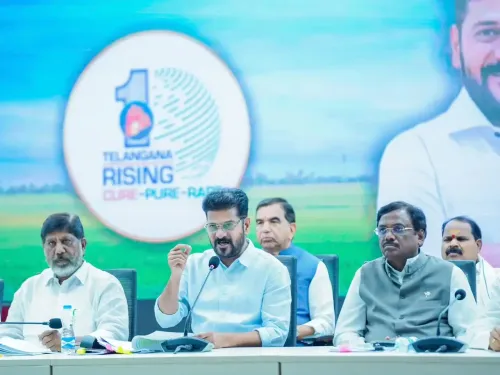
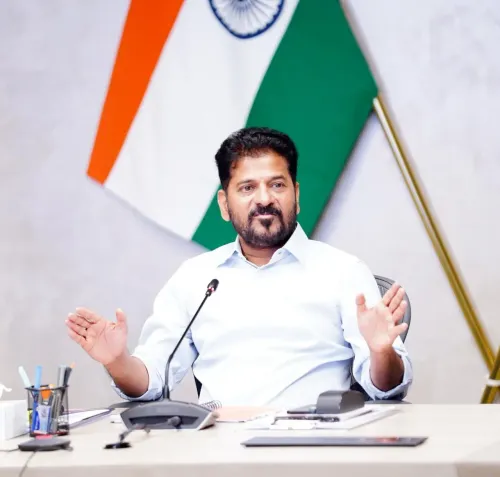
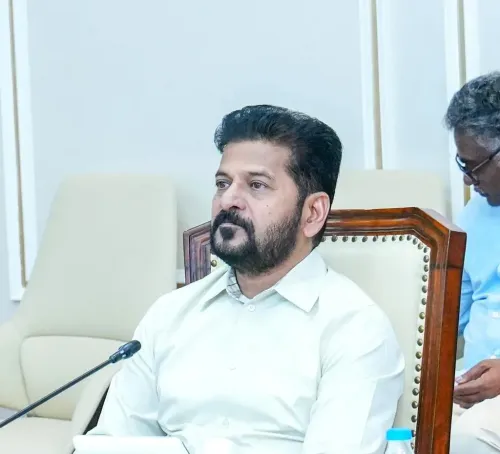
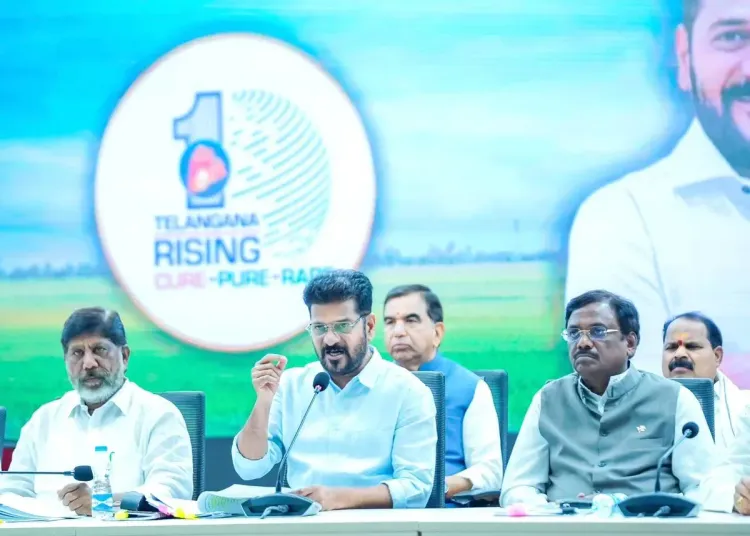
With reservoirs draining well ahead of winter and temperatures already touching 38 degrees Celsius — heat levels Telangana normally sees in March — Chief Minister Revanth Reddy has put every department of the state government on emergency footing over an accelerating El Niño-driven drought crisis. Addressing a press conference at the Dr. B.R. Ambedkar State Secretariat alongside Deputy Chief Minister Bhatti Vikramarka and multiple cabinet ministers on Thursday, 15 October 2026, the Chief Minister's Office of Telangana laid out a multi-pronged action plan — and issued a direct, urgent appeal to farmers to skip one cropping season.
What the CM told farmers — and why it matters
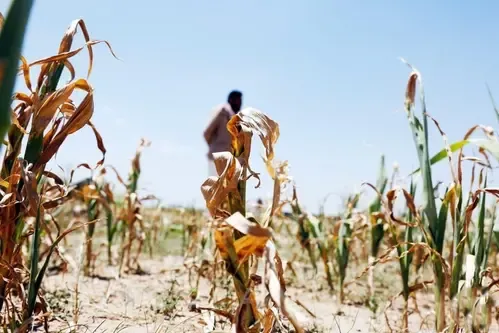
The most striking ask from CM Revanth Reddy was aimed squarely at the farming community. 'Pedda manasutho oka season panta vayidaa vesukovali' — 'With a generous heart, please postpone one season's crop' — he urged cultivators to hold back from sowing summer paddy. His reasoning was blunt: with water too scarce even for drinking, any farmer who plants rice despite warnings risks watching the crop wither, burning out motors and meters, and losing the entire investment. The state, he said, cannot guarantee irrigation supply for summer paddy under current conditions.
He also acknowledged a parallel humanitarian obligation. Alongside farmers, 2.5 lakh landless labourers are expected to seek MGNREGA employment this season. He directed the concerned minister to draw up a special action plan to ensure drought-relief work reaches the most vulnerable.
Reservoir collapse and a ten-month water math
The numbers behind the emergency are stark. At the same point last year, Telangana's reservoirs held 462 TMC of water. Today, the figure stands at 200 TMC — less than half. The CM said that water must be stretched across 8 to 10 months, right through to June, and drinking water for 24,000 villages across the state is the first non-negotiable call on that supply. Every other use — irrigation, industry — comes after that.
The power situation is equally stressed. Telangana's electricity consumption has surged from an average of 6,500–7,000 MW in 2014–15 to 20,000 MW today — a rise of roughly 14,000 MW over 13 years, with 6,000–7,000 MW of that jump coming in just the past two years. The CM confirmed the state is buying power from wherever it is available in the market to ensure that harvest-ready kharif crops — which will be cut in the next 15–20 days — do not fail at the last moment.
All-party meeting and the Delhi delegation
The CM announced two formal political steps. First, an all-party meeting will be convened immediately after the Dasara festival to brief every political party on the severity of the crisis and seek their suggestions. Second, in the first week of November, he will lead an all-party delegation to New Delhi to meet the Prime Minister and formally request central support — both additional power allocation from the central pool at subsidised rates and funds from the National Disaster Response Fund (NDRF) to compensate farmers for current crop losses as well as losses arising from the season they are being asked to skip. He cited a United Nations assessment that nearly 100 countries are facing El Niño impacts, making this a global natural disaster that qualifies for disaster-fund relief.
War room, nodal officer, and the sub-committee
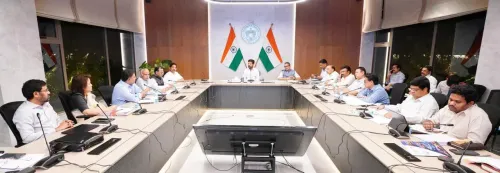
The government has set up an institutional response structure. Deputy CM Bhatti Vikramarka will chair a sub-committee that continuously monitors the unfolding situation. CM Adviser K. Ramakrishna Rao has been designated as nodal officer to provide the public with round-the-clock official information via a dedicated toll-free helpline and a war room. The CM warned citizens — and opposition parties — against spreading misinformation about El Niño and the water or power situation, calling for collective discipline. The Health Department has also been placed on standby to assist the poor through the severe heat ahead.
Telangana's crisis is not isolated. El Niño years have repeatedly compressed the southwest monsoon across peninsular India, leaving southern states to balance drinking water, irrigation, power and livelihoods simultaneously — precisely the bind the state now faces. The coming weeks, as Dasara ends and the all-party meeting takes shape, will test whether that federal compact holds.
Point of View
CM Revanth Reddy is making a shrewd political calculation: wrapping the Congress government's federal aid demand in a non-partisan envelope, making it harder for the BJP-led Centre to deflect or politicise. The scale of the numbers — reservoirs at less than half last year's levels, power demand tripling in a decade — signals that this is not routine monsoon-deficit management but a multi-sector emergency with real electoral stakes in a state where farmer distress drove the last government out. The MGNREGA mobilisation of 2.5 lakh labourers is a key indicator: if drought-relief works do not absorb that workforce quickly, rural discontent could compound the crisis. Whether the Delhi delegation produces tangible NDRF commitments before the rabi sowing window closes will be the sharpest test of Centre-state climate federalism this season.
NationPress
16 Oct 2026
Frequently Asked Questions
What is the El Niño crisis in Telangana in 2026?
El Niño has caused severely deficient monsoon rainfall in Telangana in 2026, draining reservoirs to roughly 200 TMC against 462 TMC at the same point in 2025, pushing the state into acute water and power shortages that affect farmers, rural labourers and urban households.
Why is CM Revanth Reddy asking farmers not to grow paddy?
CM Revanth Reddy has urged farmers to voluntarily skip summer paddy sowing because available water — only 200 TMC in reservoirs — must be conserved for drinking water for 24,000 villages over the next 8–10 months. He warned that sowing paddy without adequate supply will cause crop failure and financial losses for farmers.
What is the all-party meeting on El Niño about?
An all-party meeting will be held after the Dasara festival to brief all political parties on the severity of the El Niño crisis and gather their suggestions. Following that, an all-party delegation will travel to New Delhi in the first week of November to seek NDRF relief funds and additional power allocation from the Prime Minister.
What is Telangana's current power demand and why is it a problem?
Telangana's electricity demand has reached 20,000 MW, up from an average of 6,500–7,000 MW in 2014–15. This unprecedented consumption, combined with lower generation capacity during drought conditions, has created a supply shortfall that the state is partly bridging by purchasing power from the open market.
What relief is being arranged for landless labourers in the drought?
The Telangana government has flagged that around 2.5 lakh landless labourers are expected to seek MGNREGA employment this season. CM Revanth Reddy has directed the concerned minister to formulate a special action plan to ensure drought-relief work and wages reach this highly vulnerable group.