CM Revanth Reddy briefs NCSC chief on Telangana SC welfare
Synopsis
NCSC Chairperson Kishor Makwana called on Telangana CM Revanth Reddy at Mahatma Jyotiba Phule Praja Bhavan on 13 July 2026. The CM briefed the commission on YIIRS residential schools, Telangana Public Schools, SC sub-categorisation, and urged greater central support for SC welfare in the state.
Key Takeaways
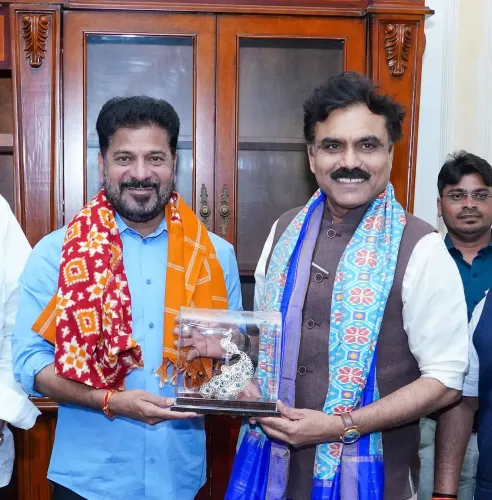
NCSC Chairperson Kishor Makwana and commission members met CM Revanth Reddy at Mahatma Jyotiba Phule Praja Bhavan, Hyderabad on 13 July 2026 .
The state plans to build Young India Integrated Residential Schools (YIIRS) on 25 acres per assembly constituency, targeting operationalisation from the next academic year.
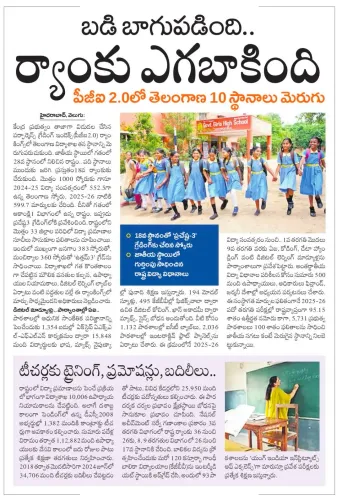
Telangana Public Schools will offer free education from nursery to Class 12, with in-school meals and planned transport — initially launched in the core urban region.
Telangana has completed SC sub-caste classification and is implementing it, the Chief Minister informed the commission.
CM Revanth Reddy urged the NCSC to push for greater central government assistance for SC development programmes in Telangana.
Senior officials including CS Sanjay Jaju , DGP C.V.
Anand , Minister Adluri , and adviser Mohd Ali Shabbir attended the meeting.
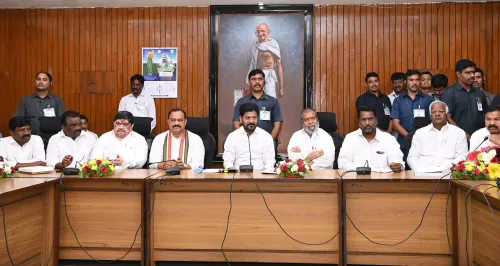
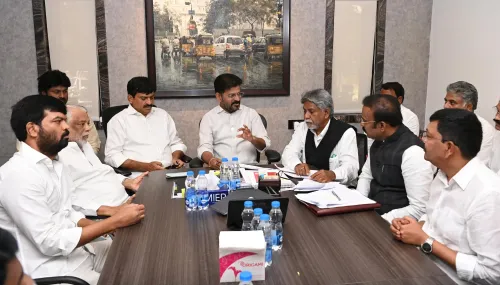
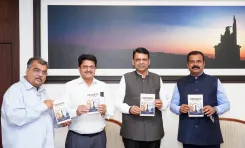
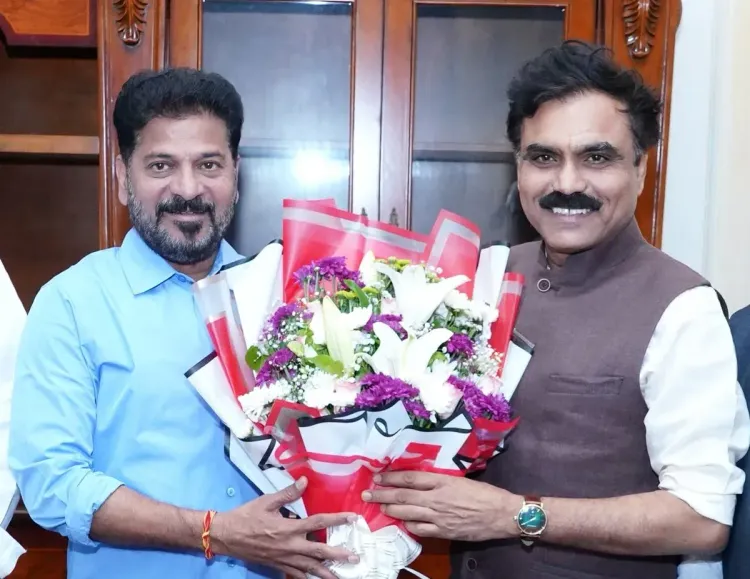
Hyderabad, 13 July 2026: The Chief Minister's Office of Telangana announced on Monday that National Commission for Scheduled Castes (NCSC) Chairperson Kishor Makwana paid a courtesy call on Chief Minister Revanth Reddy at Mahatma Jyotiba Phule Praja Bhavan in Hyderabad, accompanied by commission members, to discuss the state's welfare and education initiatives for Scheduled Caste communities.
Context
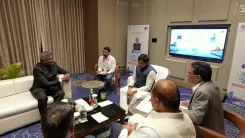
The meeting brought together senior state officials — including Minister Adluri, government adviser Mohd Ali Shabbir, Telangana Chief Secretary Sanjay Jaju, and Director General of Police C.V. Anand — alongside NCSC members and state government officers. CM Revanth Reddy used the occasion to present a comprehensive account of education reforms his government has undertaken since taking office in December 2023. The Chief Minister also urged the commission to facilitate greater central government support for SC development programmes in the state.
Policy Backdrop
A centrepiece of the briefing was the Young India Integrated Residential Schools (YIIRS) scheme, under which the state government plans to construct residential schools on 25 acres in every assembly constituency. The Chief Minister stated that the government is working to make these schools operational from the next academic year. The initiative is explicitly aimed at eliminating caste-based discrimination among students by providing an integrated residential learning environment from nursery through Class 12.
The government also highlighted the Telangana Public Schools programme, designed to deliver free education from nursery to Class 12, with in-school breakfast and lunch provided to students and transport facilities planned. The Chief Minister noted that the rollout would begin with as many schools as possible in the core urban region before expanding further. The NCSC, established as a separate constitutional body under Article 338 of the Constitution in 2004, is mandated to monitor safeguards and development measures for Scheduled Castes across the country, making such state-level briefings a standard part of its oversight function.
On the contentious issue of SC sub-categorisation, the Chief Minister informed the commission that Telangana has completed the classification of SC sub-castes and is in the process of implementing it — a step that remains an active and often contested policy question in several states following judicial and commission-level recommendations.
Stakeholders and Impact
The most direct beneficiaries of the schemes discussed are SC students and Scheduled Caste communities across Telangana's 119 assembly constituencies. If YIIRS schools are built in each constituency as planned, they would represent one of the state's largest single investments in residential school infrastructure. The Chief Minister also told the NCSC delegation that Telangana is providing SC communities with opportunities exceeding their population percentage — including representation in political positions and other key roles — and that the sub-categorisation framework is being actively implemented.
The request for enhanced central assistance is significant: state-level SC welfare programmes frequently depend on a combination of state funds and centrally sponsored scheme allocations, and a formal nudge from the NCSC could influence how the Union government prioritises Telangana's proposals.
What's Next
The immediate marker to watch is whether YIIRS schools begin operations in the next academic year as indicated by the Chief Minister. Any formal response from the Union government on additional central assistance for SC welfare in Telangana — potentially prompted by the NCSC's engagement — will also be closely tracked. The commission's visit signals continued federal-level scrutiny of state SC welfare delivery, and Telangana's sub-categorisation implementation could serve as a reference point for other states navigating similar policy decisions.
Point of View
But the platform it gives the Telangana government to publicise its SC welfare agenda — particularly YIIRS and sub-categorisation — carries clear political weight ahead of any future electoral cycle. CM Revanth Reddy's explicit request for enhanced central funding signals an attempt to leverage the constitutional commission as an interlocutor with the Union government, a dynamic that reflects the broader tension between state ambitions and centrally controlled welfare budgets. The emphasis on sub-categorisation implementation is notable: Telangana positioning itself as an early mover on this contested reform could pressure other states and the Centre to accelerate their own responses. Whether the commission's visit translates into tangible federal support or remains a symbolic exchange will define the meeting's lasting significance.
NationPress
13 Jul 2026
Frequently Asked Questions
What is the Young India Integrated Residential Schools (YIIRS) scheme in Telangana?
YIIRS is a Telangana government scheme to build residential schools on 25 acres in every assembly constituency, providing integrated education from nursery to Class 12 with the aim of eliminating caste-based discrimination among students. The government has stated it is working to make these schools operational from the next academic year.
Why did NCSC Chairperson Kishor Makwana meet CM Revanth Reddy?
Kishor Makwana, Chairperson of the National Commission for Scheduled Castes, paid a courtesy call on CM Revanth Reddy at Mahatma Jyotiba Phule Praja Bhavan in Hyderabad on 13 July 2026 to receive a briefing on Telangana's welfare and education initiatives for Scheduled Caste communities.
What are Telangana Public Schools and who can benefit?
Telangana Public Schools are state-run institutions offering free education from nursery to Class 12, with in-school breakfast and lunch provided to students and transport facilities planned. The rollout is beginning in the core urban region of Hyderabad before expanding to other areas.
Has Telangana implemented SC sub-categorisation?
Yes. CM Revanth Reddy informed the NCSC delegation that Telangana has completed the classification of SC sub-castes and is in the process of implementing it — a reform that remains contested and incomplete in several other Indian states.
What did CM Revanth Reddy ask the National Commission for Scheduled Castes?
The Chief Minister urged the NCSC to take initiative in ensuring that the Union government provides necessary support and assistance for Scheduled Caste development programmes in Telangana.