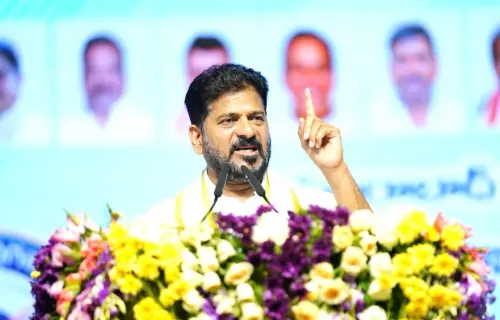
CM Revanth Reddy calls tiger conservation a social duty
Synopsis
On International Tiger Day 2026, Telangana CM A. Revanth Reddy called tiger conservation a social responsibility for all citizens, stressing habitat protection, anti-poaching enforcement, and deforestation curbs as pillars of ecological health.
Key Takeaways
Revanth Reddy issued a tiger conservation appeal on International Tiger Day, 29 July 2026 .
He described tigers as 'the king that preserves nature's balance,' linking their safety directly to forest, water, and biodiversity health.
Four action points were outlined: protect tiger habitats, stop deforestation, prevent illegal poaching, and ensure individual environmental responsibility.
India's Project Tiger , launched in 1973 , established the national framework of dedicated reserves that underpins such state-level commitments.
The National Tiger Conservation Authority (NTCA) oversees periodic population assessments; the next All India Tiger Estimation report will be a key policy marker.
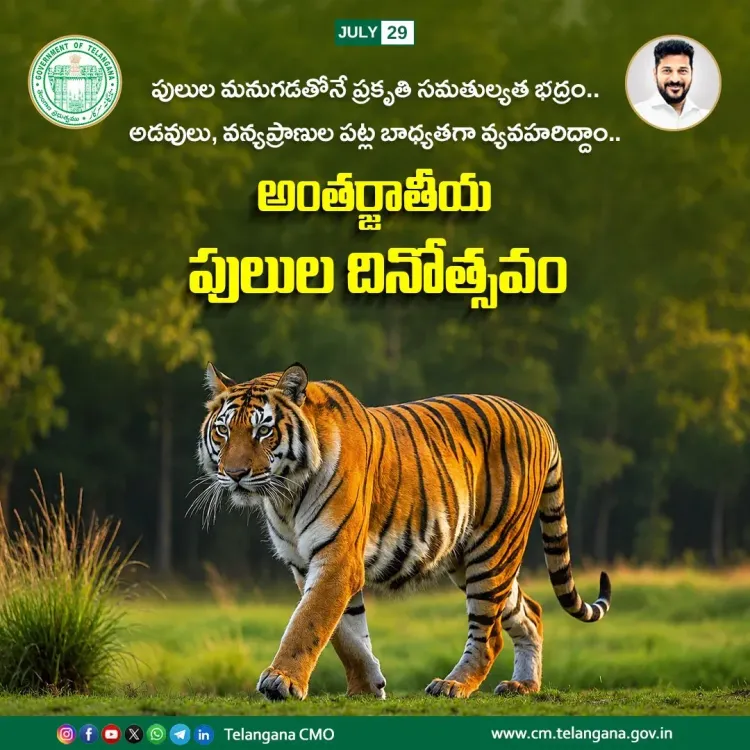
Tigers are not just symbols of the wild — they are the guardians of entire ecosystems. On International Tiger Day, 29 July 2026, the Chief Minister's Office of Telangana shared a call to action from Chief Minister A. Revanth Reddy, urging every citizen to treat tiger conservation as a personal and collective social responsibility.
Speaking on the occasion, CM Revanth Reddy said: 'A tiger is not merely a symbol of the forest — it is the king that preserves nature's balance. If tigers are safe, forests are safe, and through that, biodiversity, water resources, and the environment are also protected.' The message, posted in Telugu by the Chief Minister's Office, framed the tiger not as a conservation curio but as a living index of ecological health.
Four pillars Revanth Reddy put on the table
The Chief Minister outlined four specific imperatives: protecting tiger habitats, halting deforestation, curbing illegal poaching of wildlife, and ensuring every individual plays their part in environmental preservation. The framing is deliberate — conservation is not outsourced to forest departments alone. It lands at the door of every citizen.
Why tigers are India's ecological barometer
India's Project Tiger, launched in 1973, pioneered the idea of dedicated reserves with strict habitat protection and anti-poaching enforcement. More than five decades later, the principle holds: a thriving tiger population signals healthy forest cover, intact watersheds, and functioning biodiversity corridors. The National Tiger Conservation Authority (NTCA) oversees a national network of reserves, with states contributing through local enforcement and habitat management. Telangana's message on 29 July fits squarely within that national framework — tigers as the headline indicator, forests as the real story.
Forest communities and wildlife conservation groups remain the frontline stakeholders in this effort, often bearing the highest costs — and the highest stakes — of coexistence with large predators. Their role in any durable conservation outcome is irreplaceable.
The next All India Tiger Estimation report will be a key moment of reckoning: whether the numbers are holding, growing, or under pressure will shape both national policy and state budget priorities for reserve expansion and anti-poaching infrastructure.
A tiger in the wild is a forest that works. Lose one, and you begin losing the other — and that is the case CM Revanth Reddy made to Telangana, and to anyone listening, on International Tiger Day.
Point of View
Not just charismatic megafauna. By framing conservation as a 'social responsibility' rather than a state function alone, the Chief Minister nudges public ownership of environmental outcomes at a moment when forest encroachment and poaching pressures remain real. The statement carries no new policy announcement, but its timing and language signal that Telangana intends to stay visible in the national conversation on wildlife governance ahead of the next tiger census cycle.
NationPress
29 Jul 2026
Frequently Asked Questions
What did CM Revanth Reddy say on International Tiger Day 2026?
CM Revanth Reddy called on every citizen to treat tiger conservation as a social responsibility, saying tigers protect forest balance and that safe tigers mean safe forests, biodiversity, and water resources.
When is International Tiger Day observed?
International Tiger Day is observed every year on 29 July to raise global awareness about tiger conservation and the protection of tiger habitats.
What is Project Tiger in India?
Project Tiger is India's flagship wildlife conservation programme launched in 1973 to establish dedicated tiger reserves, reduce poaching, and support long-term population recovery of Bengal tigers.
What is the role of the National Tiger Conservation Authority?
The National Tiger Conservation Authority (NTCA) oversees India's network of tiger reserves, conducts periodic All India Tiger Estimation surveys, and coordinates conservation policy between the central government and states.
Why are tigers considered indicators of forest health?
Tigers sit at the top of the forest food chain; their presence signals intact prey populations, healthy vegetation cover, and functioning water systems — making them a reliable barometer of overall ecosystem health.