CM Revanth Reddy Orders Clean, Traffic-Free Hyderabad
Synopsis
Chief Minister A. Revanth Reddy chaired a review at Jubilee Hills on 2 November 2026, ordering Hyderabad officials to enforce daily garbage collection, scale up Green Water Tankers from sewage treatment plants, and plan underpasses and elevated corridors for signal-free traffic flow.
Key Takeaways
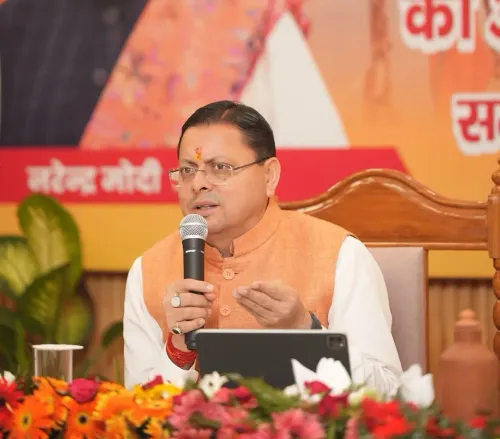
Revanth Reddy held a review at his Jubilee Hills residence on 2 November 2026 with municipal officials from GHMC, HMDA, and other bodies.
Daily door-to-door waste collection mandated city-wide; officials warned of strict action for negligence, with special arrangements ordered for construction debris removal.
HMWSSB has deployed 28 Green Water Tankers from 19 STPs in the first phase; the CM ordered expansion of the scheme into CMC and MMC areas.
Potable water must be replaced by STP-treated water for construction, parks, landscaping, and gardening to conserve drinking water supplies.
Plans for underpasses and elevated corridors at congestion points ordered to create a signal-free traffic system across Hyderabad.
MP Vem Narender Reddy and senior HMDA and municipal corporation officials attended the review meeting.
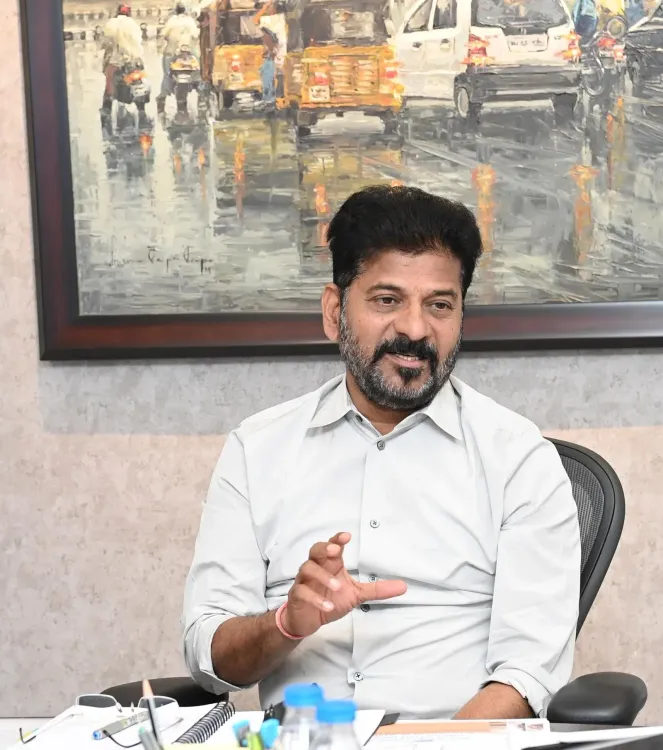
Zero visible garbage and uninterrupted traffic flow — that is the twin mandate Chief Minister A. Revanth Reddy has now put squarely on the shoulders of Hyderabad's municipal machinery. At a high-level review held at his Jubilee Hills residence on Monday, 2 November 2026, the Chief Minister's Office of Telangana announced that the CM directed officials to transform Hyderabad into a 'clean city and a traffic-free city' — with zero tolerance for negligence.
Door-to-door waste collection made non-negotiable
CM Revanth Reddy was unambiguous: not a speck of garbage should be visible anywhere in the city. He ordered that daily door-to-door waste collection be operationalised across every neighbourhood and that continuous monitoring be put in place to ensure compliance. Officials were told that those found neglecting their duties would face strict disciplinary action — a signal that the directive carries enforcement weight, not just advisory value.
The CM also called for special arrangements for the removal of construction debris, a persistent source of roadside clutter in a city experiencing a sustained building boom. He directed coordination between GHMC (Greater Hyderabad Municipal Corporation) and Industrial Local Authority officials to cover waste collection across the various industrial zones within the municipal limits — an often-overlooked gap in city-wide sanitation chains.
Green Tankers: recycled water over drinking water
One of the sharper moves to emerge from the review was the CM's push to mainstream Hyderabad's Green Tanker programme. Revanth Reddy pointed out that drinking water is currently being used for construction activity, park maintenance, landscaping, and gardening — a wasteful habit the city can no longer afford. The fix: treated water from Sewage Treatment Plants (STPs), delivered via Green Tankers, should replace potable water for all such non-drinking uses.
The Hyderabad Metropolitan Water Supply and Sewerage Board (#HMWSSB) has already launched a first phase covering 28 Green Water Tankers drawing from 19 STPs. The CM directed officials to create awareness among contractors and civic agencies about using these tankers, and to extend the Green Water supply network beyond GHMC limits — into the areas under CMC (Cantonment Municipal Corporation) and MMC (Malkajgiri Municipal Corporation) jurisdictions, as well as under HMDA (Hyderabad Metropolitan Development Authority).
Signal-free corridors and the push for flowing traffic
The second big pillar of Monday's review was mobility. The CM directed that a plan be drawn up to build underpasses and elevated corridors at key congestion points, with the explicit goal of creating a signal-free movement system across the city. Vehicles should not stop at signals, he said — traffic must keep flowing. The approach mirrors interventions already underway in other major Indian metros grappling with vehicle-density-driven gridlock.
MP Vem Narender Reddy attended the review alongside senior officials from HMDA and the various municipal corporations — a rare joint presence that underlines the cross-institutional scale the government is aiming for.
Governance pressure meets urban scale
Hyderabad is both Telangana's capital and one of India's fastest-growing tech and services hubs, which means civic challenges — garbage, congestion, water stress — compound faster than in slower-growing cities. The directives align with the national Swachh Bharat Mission framework for urban waste management and echo water-conservation goals under the AMRUT scheme. But directives from a chief minister's residence review are only as good as the follow-through they generate on the ground.
The next measure of seriousness will be whether detailed project reports for signal-free corridors materialise on schedule — and whether the Green Tanker fleet expands meaningfully beyond its current 28-tanker first phase.
Point of View
However, is the high-risk bet — infrastructure timelines in Indian metros routinely slip, and the gap between a review-room directive and a ribbon-cutting on an elevated corridor can be years. Whether this announcement translates into funded DPRs and ground-breaking ceremonies will determine whether the 'Traffic-Free Hyderabad' framing becomes a governance asset or a liability.
NationPress
2 Nov 2026
Frequently Asked Questions
What did CM Revanth Reddy order regarding Hyderabad cleanliness?
CM Revanth Reddy directed municipal officials on 2 November 2026 to ensure no garbage is visible anywhere in the city, with daily door-to-door collection in every area and strict action against negligent officials.
What is the Green Tanker scheme in Hyderabad?
The Green Tanker scheme uses water treated at Sewage Treatment Plants and delivered via tankers for non-drinking purposes such as construction, park maintenance, and landscaping, reducing the draw on the city's drinking water supply. HMWSSB launched a first phase with 28 tankers drawing from 19 STPs.
How does Hyderabad plan to become a traffic-free city?
The CM directed officials to prepare plans for underpasses and elevated corridors at key congestion points to create a signal-free movement system, with the goal of keeping vehicles flowing continuously without stopping at signals.
Which agencies attended the Jubilee Hills municipal review?
The review included MP Vem Narender Reddy and senior officials from HMDA, GHMC, CMC, MMC, and associated municipal corporations, along with HMWSSB representatives.
Will the Green Tanker service expand beyond GHMC limits?
Yes. CM Revanth Reddy directed that the Green Water supply network be extended beyond the GHMC boundary into areas covered by CMC, MMC, and HMDA jurisdictions.