CM Revanth Reddy Pushes 152m Thummidihatti Barrage, Eyes Maharashtra Talks
Synopsis
Chief Minister Revanth Reddy has ordered officials to prepare for inter-state talks with Maharashtra on the Thummidihatti Barrage, targeting a 152-metre height to deliver irrigation water to 2 lakh acres in tribal Adilabad. Maharashtra CM Fadnavis has signalled talks after 23 October.
Key Takeaways
CM Revanth Reddy directed Telangana irrigation officials on 23 October 2026 to prepare fully for imminent bilateral talks with Maharashtra on the Thummidihatti Barrage .
Maharashtra CM Devendra Fadnavis has indicated he will invite Telangana for discussions after 23 October ; Telangana aims to persuade Maharashtra to accept a 152-metre barrage height, up from the previously agreed 148 metres .
At 152 metres , the barrage would submerge approximately 2,300 acres but deliver maximum water; at 150 metres , submersion falls below 1,000 acres .
Officials confirmed no Maharashtra villages face submersion risk at either height.
The project aims to bring irrigation water to 2 lakh acres in the tribal and forest-dominated combined Adilabad district .
An additional 0.6 TMC of water is to be sourced from Srisailam to supply the Dindi and Achamapet lift irrigation schemes, without affecting Palamuru project allocations.
Irrigation engineers have been told to begin route designs and land acquisition planning for the Thummidihatti-to-Yellampalli water channel once the barrage height is finalised.
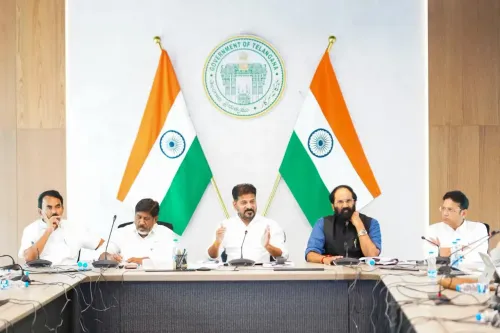
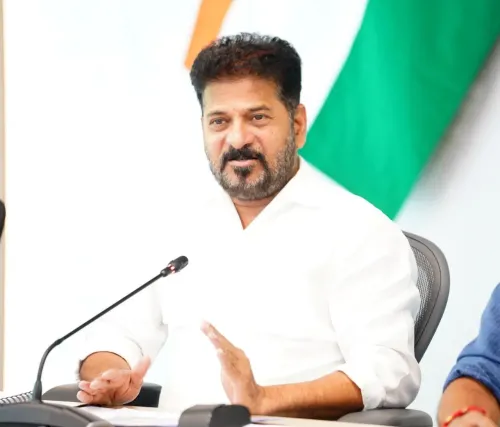
Two lakh acres of tribal farmland in one of Telangana's most neglected forest districts could finally get water — if two state capitals can agree on a barrage height. On Friday, 23 October 2026, the Chief Minister's Office of Telangana announced that Chief Minister Revanth Reddy has directed officials to be fully prepared for imminent inter-state talks with the Maharashtra government on the Thummidihatti Barrage project on the Godavari river.
Why 152 metres — and why it matters
The barrage's height is not a technical footnote; it is the central political and hydrological dispute. Irrigation engineers presented two scenarios to the review meeting. A barrage built at 152 metres would submerge approximately 2,300 acres of land — none of it falling within Maharashtra's village boundaries, officials clarified — and would deliver significantly more water to Telangana. Drop the height to 150 metres and the submersion footprint shrinks to under 1,000 acres, but so does the water yield, with flow possible only up to the Yellampalli Project.
Maharashtra had previously agreed to a height of 148 metres in earlier rounds of negotiation. CM Revanth Reddy said bluntly that building at that level would not deliver the water volumes Telangana needs. The state's goal is now to convince Maharashtra Chief Minister Devendra Fadnavis — who recently indicated he would invite Telangana for talks after 23 October — to accept the higher 152-metre design. Officials have been told to prepare complete technical reports covering water availability, submersion extent, and all supporting data to make that case persuasively.
The promise to tribal Adilabad
The CM framed the project in terms of a generational commitment, invoking the Jal, Jungle, Zameen ('water, forest, land') slogan under which forest-dwelling communities have fought for decades. The barrage's stated purpose is to bring irrigation water to 2 lakh acres in the combined Adilabad district — a predominantly tribal and forest region that has historically been left behind by mainstream irrigation networks in the Godavari basin.
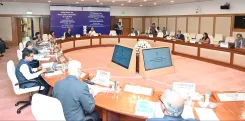
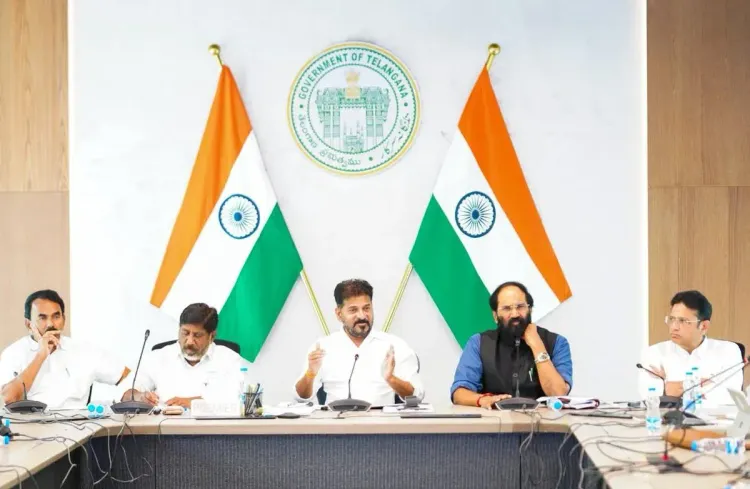
The review meeting was chaired by CM Revanth Reddy and attended by Deputy Chief Minister Bhatti Vikramarka, Ministers Uttam Kumar Reddy, D. Sridhar Babu, and Jupally Krishna Rao, MP Vem Narender Reddy, and senior irrigation department officials. Once the final barrage height is confirmed, engineers have been instructed to immediately focus on route designs and land acquisition for the channel linking Thummidihatti to Yellampalli. Reports from recent meetings held under the Central Water Commission in Delhi are also to be submitted without delay.
Dindi and Achamapet: plugging the water gap from Srisailam
The Thummidihatti talks were not the only agenda item. The meeting also took up pending issues on the Dindi Lift Irrigation Scheme (DLIS) and the Achamapet Lift Irrigation Scheme. Officials were directed to arrange the lift of 0.5 TMC of water from Edula Reservoir for Dindi and 0.1 TMC for Achamapet — a combined additional 0.6 TMC to be sourced from Srisailam via a dedicated lifting system from Narlapur to Edula.
Representatives from Mahabubnagar and Nalgonda districts raised objections over the preferred water-source route — whether to draw from Narlapur or Edula — and officials presented a PowerPoint comparison of costs and trade-offs for both options. CM Revanth Reddy's directive: find the middle path that brings additional water to Dindi and Achamapet without cutting a single drop from the Palamuru project's existing allocations. Ministers present backed that formulation.
What rides on the Maharashtra meeting
The upcoming bilateral is not a courtesy call — it is a negotiation with hard technical stakes. The 0.5-metre difference between 152 and 150 metres translates to a significant gap in irrigable area and water security for a district that has waited the longest. Officials have been asked to arrive at the table armed with every number Maharashtra might question: flood-impact assessments, water yield data, submersion maps, and the full record of Central Water Commission deliberations.
If Fadnavis agrees to 152 metres, Telangana gains a project that could transform the agrarian landscape of its most backward tribal district. If the talks stall again, the window may not reopen quickly. The CM has left little room for ambiguity — speed up preparations, make the case, bring home the water.
Point of View
Jungle, Zameen' — gives the project political insulation domestically while adding moral weight to the Maharashtra talks. The real variable is whether Fadnavis, heading a coalition government in Maharashtra, has the political bandwidth to concede a higher submersion footprint, even if that footprint falls outside populated areas.
NationPress
23 Oct 2026
Frequently Asked Questions
What is the Thummidihatti Barrage project?
The Thummidihatti Barrage is a proposed structure on the Godavari river designed to lift and store water for irrigation in Telangana's Adilabad region. The project aims to bring water to 2 lakh acres of tribal and forest land in the combined Adilabad district.
Why is the height of the barrage so important?
The height directly determines how much water can be stored and delivered. At 152 metres the barrage stores significantly more water than at 148 metres , the level Maharashtra had previously agreed to. Telangana argues the lower height would not meet the district's irrigation needs.
Will any Maharashtra villages be submerged by the Thummidihatti Barrage?
No. Telangana irrigation officials have clarified that even at the higher 152-metre level, no villages within Maharashtra's jurisdiction face submersion risk. The approximately 2,300 acres affected at that height fall outside populated Maharashtra areas.
When will Telangana and Maharashtra hold talks on the barrage?
Maharashtra CM Devendra Fadnavis has indicated he will invite Telangana for discussions after 23 October 2026 . CM Revanth Reddy has ordered officials to complete all technical preparations before those talks begin.
What is the Dindi Lift Irrigation Scheme and how is it connected to this review?
The Dindi Lift Irrigation Scheme (DLIS) is a Telangana project that requires additional water. The review meeting directed officials to arrange 0.5 TMC from Edula Reservoir for Dindi and 0.1 TMC for the Achamapet scheme, sourcing the combined 0.6 TMC from Srisailam without cutting allocations to the Palamuru project.