CM Revanth Reddy reviews Rs 20,000 cr urban infra push
Synopsis
Chief Minister Revanth Reddy reviewed Rs 20,000 crore climate-resilient urban infrastructure proposals, backed by the World Bank, ADB, AIIB and KfW, covering Warangal drainage, moat restoration, wastewater recycling for textile parks, and a 10-12 MW waste-to-energy plant.
Key Takeaways
The Municipal Administration Department of Telangana has prepared proposals worth nearly Rs 20,000 crore involving the World Bank, ADB, AIIB, KfW and domestic lenders.
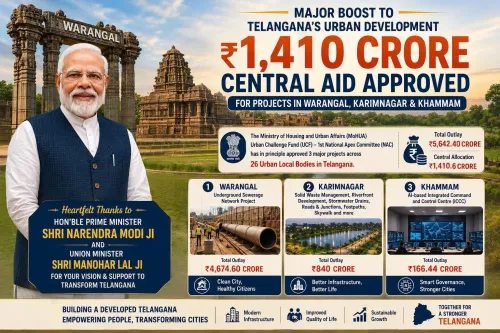
Warangal is the focal city, with proposals covering underground drainage, stormwater systems, Warangal Fort moat restoration , and a Central Business District in Hanamkonda .
A dedicated wastewater recycling policy is being formulated to supply treated water to textile parks and industries, easing pressure on freshwater sources.
A waste-to-energy plant generating 10–12 MW of electricity, plus bio-CNG production and plastic recycling units, are proposed for the Warangal Mega City Economic Region .
CM Revanth Reddy directed officials to reduce electricity consumption in urban water systems and increase use of renewable energy in municipal operations.
Stated targets include lower urban carbon emissions, reduced flood risk, water conservation and lower municipal operational costs.
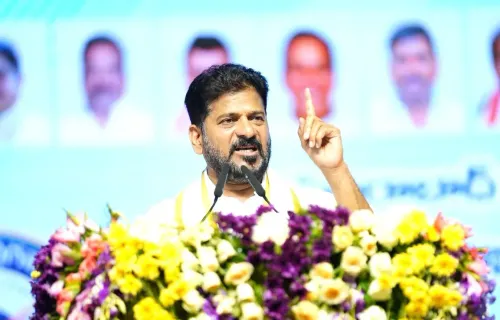
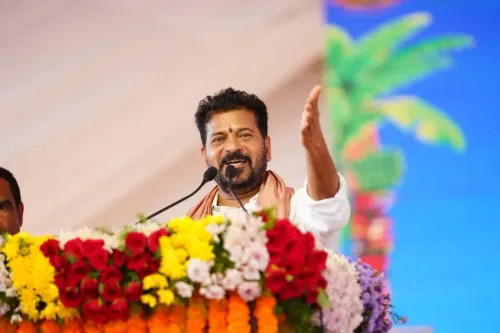
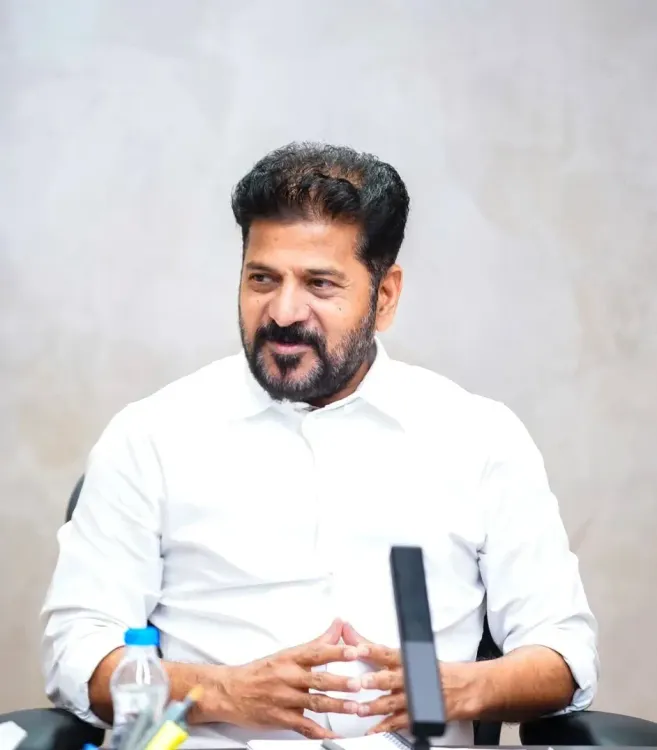
A Rs 20,000 crore blueprint for climate-resilient cities — backed by four international lenders and anchored in Warangal — is now on Chief Minister A. Revanth Reddy's desk. The Chief Minister's Office of Telangana announced on Friday, 20 November 2026, that Revanth Reddy chaired a high-level review of urban infrastructure proposals prepared by the state's Municipal Administration Department.
Four global lenders, one integrated vision
The scale of the funding ambition is striking. The Municipal Administration Department has drawn up proposals to rope in the World Bank, the Asian Development Bank (ADB), the Asia Infrastructure Investment Bank (AIIB), and Germany's KfW development bank — alongside domestic financial institutions — to collectively finance projects worth nearly Rs 20,000 crore. The multilateral consortium signals that Telangana is positioning this not merely as a state spending exercise but as a bankable, globally-scrutinised programme of urban reform.
India's secondary cities have increasingly become the testing ground for exactly this kind of blended-finance model, where state governments use multilateral credibility to unlock long-tenure, low-interest capital that domestic markets alone rarely provide. Telangana's approach mirrors that broader pattern — but the size and the number of lenders involved in a single review cycle make it notable.
Warangal at the centre: drains, moat, and a new business district
The meeting zeroed in on Warangal with unusual specificity. Four proposals dominated the discussion: a new underground drainage system, a stormwater drainage network, the restoration of the historic moat surrounding Warangal Fort, and the development of a Central Business District in Hanamkonda. That combination — flood protection, heritage restoration, and economic activation in a single city — reflects a deliberate strategy of concentrating integrated investment in major secondary cities to generate compounding returns rather than spreading thin across dozens of towns.
Warangal's flood vulnerability has historically been a drag on its economic potential. Fixing underground drainage and stormwater systems simultaneously addresses the city's resilience deficit while creating the conditions for the CBD proposal to succeed.
Wastewater as a resource: the textile-park pivot
One of the more consequential ideas reviewed at the meeting is a dedicated wastewater recycling policy for the state. Under the proposal, treated sewage water would be channelled to industries — with textile parks as the primary beneficiary — reducing pressure on potable freshwater sources. Telangana's textile sector is a significant industrial employer, and its water intensity makes it both a burden on freshwater and an obvious candidate for treated-water reuse. The Chief Minister also directed officials to cut electricity consumption in urban water supply, treatment, and distribution systems, and to accelerate the shift to renewable energy in municipal operations.
Waste-to-energy in the Warangal Mega City Economic Region
Beyond water, the meeting reviewed a proposal to establish a plant capable of generating 10 to 12 megawatts of electricity from waste within the Warangal Mega City Economic Region. The discussion also covered bio-CNG production and the setting up of plastic recycling units. The stated goals running across all these projects — lower urban carbon emissions, reduced flood risk, conserved water resources, and lower municipal operational costs — amount to a compact, measurable urban sustainability agenda rather than an aspirational list.
The next critical milestones are formal fund sanction decisions from the World Bank, ADB, AIIB, and KfW, followed by tendering for the Warangal drainage and waste-to-energy components. The wastewater reuse policy's pilot rollout — particularly how quickly textile parks can be connected to treated supply — will be the earliest real-world test of whether the blueprint survives contact with implementation.
Telangana has drawn a clear line in the sand: build cities that pay for themselves, clean up their own water, and generate their own power. Whether the multilateral lenders sign on is the question that decides whether this review room ambition becomes ground-level reality.
Point of View
ADB, AIIB and KfW — reflects a wider shift among Indian states away from sole dependence on central grants toward blended global capital. Concentrating this investment in Warangal rather than spreading it thinly is a strategic choice: secondary cities with integrated flood, water and energy projects deliver more measurable impact per rupee. The wastewater-to-textile-park pivot is politically smart as well as environmentally sound — it ties a large industrial constituency to the success of the programme. The real test arrives when multilateral due-diligence processes engage with Telangana's project readiness; the speed of fund sanction will reveal whether the state's preparation matches its ambition.
NationPress
20 Nov 2026
Frequently Asked Questions
What is the total value of Telangana's urban infrastructure proposals reviewed by CM Revanth Reddy?
The proposals are valued at nearly Rs 20,000 crore , to be funded through a consortium of international lenders — the World Bank, ADB, AIIB and KfW — alongside domestic financial institutions.
Which projects in Warangal were discussed at the CM's review meeting?
The meeting covered underground drainage , a stormwater drainage system , restoration of the moat around Warangal Fort , and development of a Central Business District in Hanamkonda .
What is Telangana's wastewater recycling plan?
The state is formulating a dedicated policy to treat sewage water and supply it to industries, primarily textile parks , reducing demand on potable freshwater sources.
What is the waste-to-energy proposal for Warangal?
A plant to generate 10 to 12 megawatts of electricity from waste is proposed within the Warangal Mega City Economic Region , along with bio-CNG production and plastic recycling units.
What role does KfW play in Telangana's urban infrastructure plan?
KfW , Germany's state-owned development bank, is listed as one of four international lenders whose funding is being sought for Telangana's climate-resilient urban infrastructure programme.