CM Revanth Reddy Reviews Bullet Train, Warangal Airport Plans

Synopsis
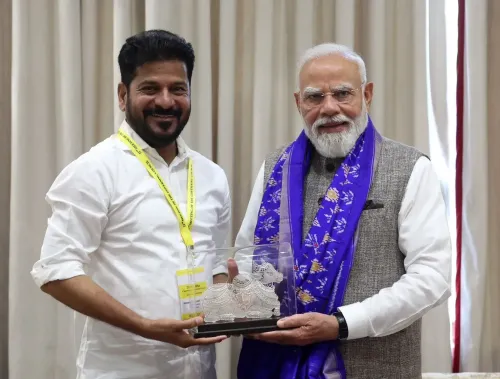
Telangana CM Revanth Reddy reviewed the proposed bullet train project and Warangal Airport construction at MCRHRD's Bodhi Pavilion on June 16, 2026. He directed that the airport's design reflect Warangal's rich historical heritage, signalling the state's push for culturally rooted modern infrastructure.
Key Takeaways
Revanth Reddy chaired a review meeting on June 16, 2026 at the Bodhi Pavilion, MCRHRD Institute, Hyderabad .
The meeting covered two major proposals: the bullet train project and Warangal Airport construction.
The CM directed that Warangal Airport 's architecture must reflect the region's historical heritage .
Warangal is home to significant Kakatiya dynasty monuments, including Warangal Fort and the Thousand Pillar Temple .
India's high-speed rail programme is managed by NHSRCL ; no specific Telangana bullet train corridor has been officially confirmed.
Detailed project reports and tendering timelines for both projects are the key next milestones to watch.
Telangana Chief Minister A. Revanth Reddy on Tuesday, June 16, 2026, chaired a review meeting at the Bodhi Pavilion, MCRHRD Institute, Hyderabad, examining progress on the proposed bullet train project and the planned Warangal Airport construction. The Chief Minister also directed that the airport's design reflect the region's historical heritage.
Context
Posting in Telugu on X, CM Revanth Reddy stated: 'Today at Bodhi Pavilion in MCRHRD, I conducted a review of the proposed bullet train project and the Warangal Airport construction. I suggested that the airport's architecture should reflect its historical heritage.' The review signals the state government's active engagement with two major infrastructure proposals that could reshape connectivity in Telangana.
The MCRHRD Institute — the Dr. Marri Channa Reddy Human Resource Development Institute in Hyderabad — has served as a regular venue for high-level state government policy reviews and planning sessions.
Policy Backdrop
The Warangal Airport is a proposed greenfield project intended to boost air connectivity in northern Telangana, a region that has sought improved infrastructure links since the state's formation in 2014. Telangana's aviation policy framework, developed post-bifurcation, identified Warangal as a priority node for regional air access.
On the rail side, India's high-speed rail programme is managed by the National High Speed Rail Corporation Limited (NHSRCL), established in 2016. The Mumbai-Ahmedabad corridor remains the first approved operational route, and state governments have been separately advocating for inclusion in future high-speed rail alignments. The exact corridor alignment for any bullet train route involving Telangana is yet to be confirmed in the public record.
The Chief Minister's directive on heritage-sensitive design aligns with a broader pattern visible in Indian public infrastructure: post-2014, several states have mandated that new airports and transit hubs incorporate local architectural idioms, particularly in historically significant cities. Warangal, home to the Kakatiya dynasty's legacy including the iconic Warangal Fort and Thousand Pillar Temple, carries significant archaeological and cultural weight that the state government appears keen to embed in its modern infrastructure.
Stakeholders and Impact
Residents of Warangal and surrounding districts in northern Telangana stand to benefit most directly from the airport project, which would reduce dependence on Rajiv Gandhi International Airport in Hyderabad — roughly 150 kilometres away. Improved air connectivity could also catalyse investment in the region's textile, agriculture, and tourism sectors.
The bullet train review, meanwhile, signals Telangana's interest in positioning itself within India's emerging high-speed rail network. Rail infrastructure developers and construction firms tracking NHSRCL project expansions will be watching for any formal corridor announcements that include Telangana. Heritage conservation bodies and urban planners are also stakeholders in the airport's design direction, given the CM's explicit instruction on architectural character.
What's Next
The immediate watch points are the release of detailed project reports and tendering timelines for both the bullet train alignment and Warangal Airport. The state government's review meeting suggests internal groundwork is under way, but formal project clearances, land acquisition processes, and Union government approvals will determine actual construction timelines.
If the heritage-design directive translates into the airport's architectural brief, it could set a precedent for culturally anchored public infrastructure across Telangana — and draw attention from urban design and conservation communities nationally.
Point of View
Even as the Union government has yet to formally extend bullet train corridors beyond the Mumbai-Ahmedabad route. Taken together, the twin reviews reflect a broader pattern of state governments using infrastructure optics to assert policy agency in domains that straddle both state and central jurisdiction.
NationPress
19 Sept 2026
Frequently Asked Questions
What is the Warangal Airport project in Telangana?
The Warangal Airport is a proposed greenfield airport in Warangal district, northern Telangana, designed to improve regional air connectivity and reduce dependence on Hyderabad's Rajiv Gandhi International Airport, which is about 150 kilometres away.
What did CM Revanth Reddy say about Warangal Airport design?
CM Revanth Reddy directed that the Warangal Airport's architecture should reflect the region's historical heritage, a nod to the city's Kakatiya dynasty legacy including monuments such as Warangal Fort and the Thousand Pillar Temple.
Where was the Telangana infrastructure review meeting held?
The review meeting was held at the Bodhi Pavilion inside the MCRHRD Institute — the Dr. Marri Channa Reddy Human Resource Development Institute — in Hyderabad on June 16, 2026.
Is there a confirmed bullet train route through Telangana?
No specific bullet train corridor alignment involving Telangana has been officially confirmed. India's high-speed rail programme, managed by NHSRCL, currently has the Mumbai-Ahmedabad corridor as its first approved route; Telangana's inclusion in future corridors is under review.
What is NHSRCL and its role in India's bullet train project?
NHSRCL, the National High Speed Rail Corporation Limited, was established in 2016 to plan and execute high-speed rail corridors across India. It manages the Mumbai-Ahmedabad bullet train project, which is the country's first approved high-speed rail corridor.