CM Rio Backs Dragon Fruit to Put Nagaland on India's Horticulture Map
Synopsis
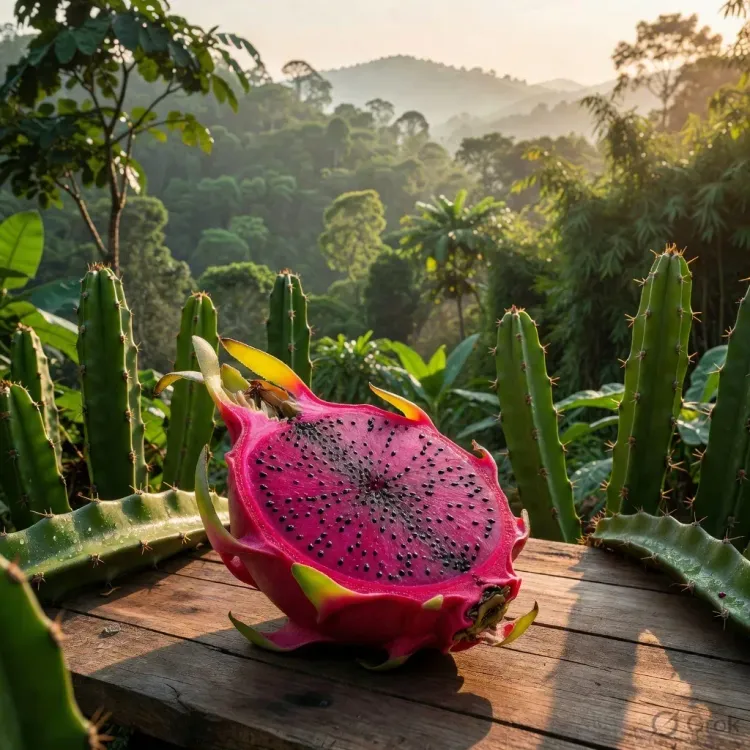
Nagaland Chief Minister Neiphiu Rio on 5 August 2026 promoted dragon fruit cultivation, citing its health benefits and backing the state horticulture department's drive to position Nagaland as a recognised producer of the high-value crop.
Key Takeaways
CM Neiphiu Rio publicly backed dragon fruit cultivation on 5 August 2026 as the season gets underway in Nagaland .
Dragon fruit is promoted for its Vitamin C, antioxidants, and fibre content, with benefits for immunity, heart health, and blood sugar regulation.
The Department of Horticulture Nagaland is driving the campaign to position the state as a recognised national producer.
Nagaland's push fits a broader Northeast India pattern of shifting from traditional jhum farming to high-value, climate-resilient horticultural crops.
The initiative aligns with the central government's Mission for Integrated Development of Horticulture (MIDH) , active in the region since the mid-2010s.
Market linkage and harvest aggregation remain the critical next steps for the programme to deliver real income gains to farmers.
As the cultivation season gets underway across Nagaland, Chief Minister Neiphiu Rio is making a pointed case for an unlikely crop to reshape the state's agricultural identity — dragon fruit. On Wednesday, 5 August 2026, Rio took to X to champion the exotic fruit's health credentials and the state government's push to turn Nagaland into a nationally recognised producer.
What the CM is saying — and why dragon fruit
Rio highlighted that dragon fruit is 'rich in Vit. C, antioxidants, and fibre, helping strengthen immunity, support heart health and regulate blood sugar.' The post tagged the Department of Horticulture Nagaland (@horticulturengl), signalling this is a coordinated government push, not just a seasonal nudge. The hashtag #KnowYourGovernment frames it as a public-awareness drive — the administration wants citizens to see horticulture diversification as active policy, not accident.
Nagaland's pivot from jhum to high-value horticulture
This is not a standalone moment. Nagaland, like several of its northeastern neighbours, has spent the better part of a decade trying to move farmers away from traditional jhum (shifting cultivation) and rice farming toward climate-resilient, high-value alternatives. Dragon fruit — low on water demand, hardy in hilly terrain, and commanding premium prices in urban markets — fits that brief almost perfectly.
The push aligns with the central government's Mission for Integrated Development of Horticulture (MIDH), under which northeastern states began pilot-scale dragon fruit introductions from the mid-2010s onward. Nagaland's current season-level promotion by the horticulture department marks a step toward mainstreaming what was once an experimental crop.
The market question that will define success
The farming community stands to gain — but only if supply chains catch up. The pattern across the Northeast has been consistent: state agencies generate farmer interest, cultivation expands, and then market linkage becomes the bottleneck. What to watch in the next two cultivation cycles is whether Nagaland's Department of Horticulture can pair its promotional drive with concrete harvest aggregation and buyer tie-ups. Area expansion targets for the state have not been officially confirmed for this season.
For now, Rio's post does the work of political signalling: this government sees horticulture not as a subsidy exercise, but as an economic identity project for the state. Whether Nagaland's dragon fruit finds its way to supermarket shelves in Delhi or Bengaluru will be the real measure of that ambition.
Point of View
Especially ahead of scrutiny over rural income levels in the Northeast. The real test, however, is whether the horticulture department can solve the market-linkage problem that has historically blunted similar drives across Manipur and Mizoram. If Nagaland cracks that piece, dragon fruit could become a genuine rural income story — not just a seasonal social media campaign.
NationPress
5 Aug 2026
Frequently Asked Questions
Why is Nagaland promoting dragon fruit cultivation?
Nagaland is promoting dragon fruit as a high-value, climate-resilient alternative to traditional crops like jhum and rice, aiming to raise rural incomes and establish the state as a recognised horticultural producer.
What are the health benefits of dragon fruit mentioned by CM Rio?
CM Rio highlighted that dragon fruit is rich in Vitamin C, antioxidants, and fibre, which help strengthen immunity, support heart health, and regulate blood sugar levels.
Which government department is leading Nagaland's dragon fruit push?
The Department of Horticulture Nagaland (@horticulturengl) is leading the cultivation promotion drive this season.
Is dragon fruit cultivation supported by any central government scheme?
Yes, northeastern states including Nagaland have promoted dragon fruit under the central government's Mission for Integrated Development of Horticulture (MIDH) , which began pilot introductions in the region from the mid-2010s.
What challenges does Nagaland face in scaling dragon fruit production?
The primary challenge is market linkage — connecting farmers to buyers and aggregation networks so that expanded cultivation translates into actual income, a bottleneck seen across several Northeast states.