CM Rio Meets Eastern Command Chief Lt Gen Bhuvana Krishnan
Synopsis
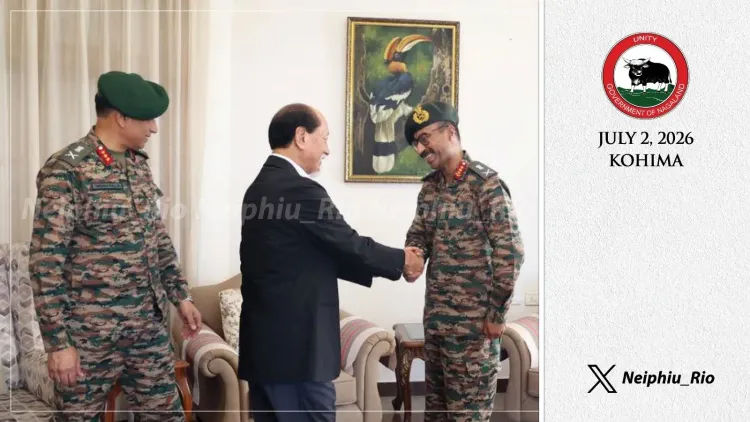
Nagaland Chief Minister Neiphiu Rio met Lieutenant General V. M. Bhuvana Krishnan, GOC-in-C of the Indian Army's Eastern Command, on 2 July 2026. The courtesy call reflects routine but significant civil-military coordination in a state where security, peace negotiations, and development remain closely intertwined.
Key Takeaways
CM Neiphiu Rio met Lt Gen V.
Bhuvana Krishnan , GOC-in-C of the Eastern Command , on 2 July 2026 .
The Eastern Command , headquartered in Kolkata , oversees security and border management across India's northeast, including Nagaland .
AFSPA remains in force in parts of Nagaland, making civil-military dialogue a key governance mechanism.
The Indian Army's Operation Sadbhavana has paired security presence with civic development in the northeast since the 1990s .
The meeting comes against the backdrop of ongoing Naga peace negotiations rooted in the 2015 Framework Agreement with NSCN-IM.
Nagaland Chief Minister Neiphiu Rio met Lieutenant General V. M. Bhuvana Krishnan, General Officer Commanding-in-Chief of the Indian Army's Eastern Command, on 2 July 2026, in a courtesy call that underscores the ongoing civil-military engagement in India's northeast.
Context
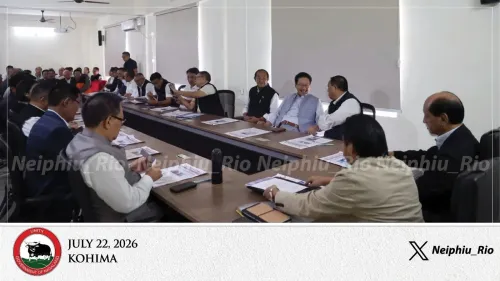
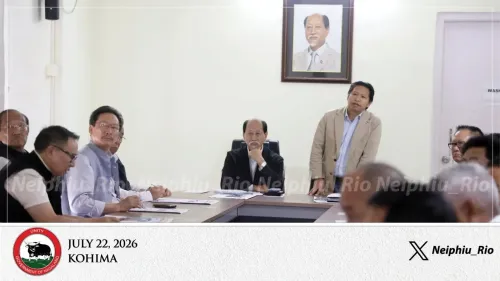
Rio shared news of the meeting on X, writing: 'It was a pleasure to meet Lieutenant General V. M. Bhuvana Krishnan, General Officer Commanding-in-Chief (GOC-in-C) of the Eastern Command. I wish him every success in his tenure and in the responsibilities ahead.' The post was accompanied by photographs from the meeting.
The Eastern Command, headquartered in Kolkata, holds operational responsibility over India's northeastern states, including Nagaland. It oversees counter-insurgency operations, border management along the frontiers with Myanmar and China, and civic action programmes in the region.
Policy Backdrop
Nagaland has been one of the most sensitive theatres for civil-military relations in India. The Armed Forces Special Powers Act (AFSPA) remains in force in parts of the state, making coordination between elected state leadership and the Army command a matter of practical governance as much as protocol.
The Indian Army's Operation Sadbhavana, running since the 1990s, has sought to complement security presence with development and humanitarian outreach across the northeast. Meetings of this nature between chief ministers and Eastern Command leadership are a recognised part of that broader civil-military framework.
On the political side, the 2015 Framework Agreement between the Government of India and the NSCN-IM set the formal architecture for Naga peace negotiations, a process that remains active and in which the state government plays a consultative role alongside central authorities.
Stakeholders and Impact
For Naga civilians, sustained dialogue between the state's elected leadership and the Army command carries significance on two fronts: the pace and shape of security arrangements, and the delivery of development programmes in remote areas. Security forces operating in the region benefit from clear civil-military channels that reduce friction and align operational priorities with state governance goals.
Chief Minister Rio, who has led Nagaland since 2018 under the Nationalist Democratic Progressive Party (NDPP), has consistently engaged with central security and administrative institutions as part of his government's approach to stabilising the state. Such engagements signal continuity of that approach.
What's Next
Observers will watch for any follow-up statements from either the state government or the Eastern Command on specific areas of coordination — whether on security deployments, AFSPA-related reviews, or development initiatives under Operation Sadbhavana. Progress in the long-running Naga peace talks remains the broader backdrop against which all civil-military engagement in the state is read.
Point of View
But in Nagaland's context it carries added weight. The state sits at the intersection of active peace negotiations, AFSPA applicability, and a contested border with Myanmar — making civil-military alignment a live policy question, not merely a ceremonial one. The NDPP-led government has consistently positioned itself as a bridge between New Delhi's security imperatives and local Naga aspirations, and engagements like this reinforce that role. Whether this meeting feeds into any movement on AFSPA review or the stalled Naga peace framework will be the real measure of its significance.
NationPress
1 Oct 2026
Frequently Asked Questions
Who is Lieutenant General V. M. Bhuvana Krishnan?
Lieutenant General V. M. Bhuvana Krishnan is the General Officer Commanding-in-Chief (GOC-in-C) of the Indian Army's Eastern Command, which is responsible for security and operations across India's northeastern states.
Why did Nagaland CM Neiphiu Rio meet the Eastern Command chief?
CM Rio met Lt Gen Bhuvana Krishnan as part of routine civil-military engagement. Such meetings between northeast chief ministers and the Eastern Command leadership are a recognised channel for coordinating security arrangements and development programmes in the region.
What is the Eastern Command of the Indian Army?
The Eastern Command is one of the Indian Army's operational commands, headquartered in Kolkata. It oversees military operations, counter-insurgency, and border management along India's frontiers with Myanmar and China, covering the entire northeastern region.
What is AFSPA and does it apply in Nagaland?
The Armed Forces Special Powers Act (AFSPA) grants special powers to security forces in designated 'disturbed areas.' It remains in force in parts of Nagaland, making coordination between the state government and the Army a significant governance matter.
What is the status of Naga peace talks?
The Naga peace process is anchored in the 2015 Framework Agreement between the Government of India and the NSCN-IM. Negotiations have continued since then but a final settlement is yet to be reached, with the state government playing a consultative role alongside central authorities.