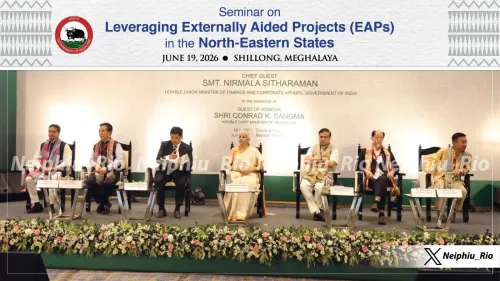
CM Rio calls for fast-track clearances for NE projects
Synopsis
Nagaland Chief Minister Neiphiu Rio has called for a dedicated fast-track statutory clearance mechanism for Northeast India, saying multi-agency approvals and overlooked community consultations routinely cause project redesigns, cost revisions, and delays.
Key Takeaways
CM Neiphiu Rio publicly called for a dedicated fast-track clearance mechanism for infrastructure projects in Northeast India on 19 June 2026 .
He identified multi-agency statutory clearances as a primary cause of project delays in the region.
Standard national project timelines, he argued, fail to account for mandatory community consultations and local decision-making processes.
Overlooked consultations lead to project redesigns, revised cost estimates, and contract extensions — compounding delays.
The Ministry of Development of North Eastern Region and the North Eastern Council are the existing institutional frameworks meant to coordinate such clearances.
The proposal is expected to feature in future NEC plenaries and Union Budget discussions on regional infrastructure.
Nagaland Chief Minister Neiphiu Rio on Friday, 19 June 2026 called for a dedicated fast-track statutory clearance mechanism for infrastructure projects in Northeast India, arguing that multi-agency approval processes routinely delay execution and that standard national timelines fail to account for the region's distinct community consultation requirements.
Context
Responding to AIR News Kohima, CM Rio stated that 'multi-agency statutory clearances often delay projects' and that a 'dedicated fast-track clearance mechanism for NE can improve efficiency and timely execution.' He further noted that 'standard timelines overlook community consultations and local decision-making resulting in redesigns, revised estimates and extensions.'
The remarks place a longstanding regional grievance squarely in the public domain. Infrastructure projects across Northeast India must navigate sequential approvals from multiple central ministries covering environment, forests, and land acquisition — a process critics say is poorly calibrated to the region's constitutional protections and customary land regimes.
Policy Backdrop
The Ministry of Development of North Eastern Region (MDoNER), established in 2001, was created precisely to provide a dedicated central coordination window for the eight northeastern states. The North Eastern Council (NEC), a statutory regional planning body set up in 1971, has similarly sought to align national development priorities with local realities.
The Act East Policy, launched in 2014, further elevated the Northeast as a gateway for physical connectivity and economic integration with Southeast Asia, adding urgency to project timelines. Despite these institutional layers, sequential clearance requirements across ministries have continued to extend project gestation periods well beyond original schedules.
Community consent is not merely procedural in the Northeast. Predominant tribal populations across the region hold customary land rights backed by special constitutional protections, meaning that project redesigns triggered by inadequate prior consultation carry significant cost and time implications — precisely the pattern CM Rio described.
Stakeholders and Impact
The primary stakeholders are infrastructure developers — both public-sector project authorities and private contractors — who absorb cost escalations from revised estimates and contract extensions. Equally affected are tribal communities whose land and livelihoods intersect with project corridors, and who bear the disruption of stalled or redesigned works.
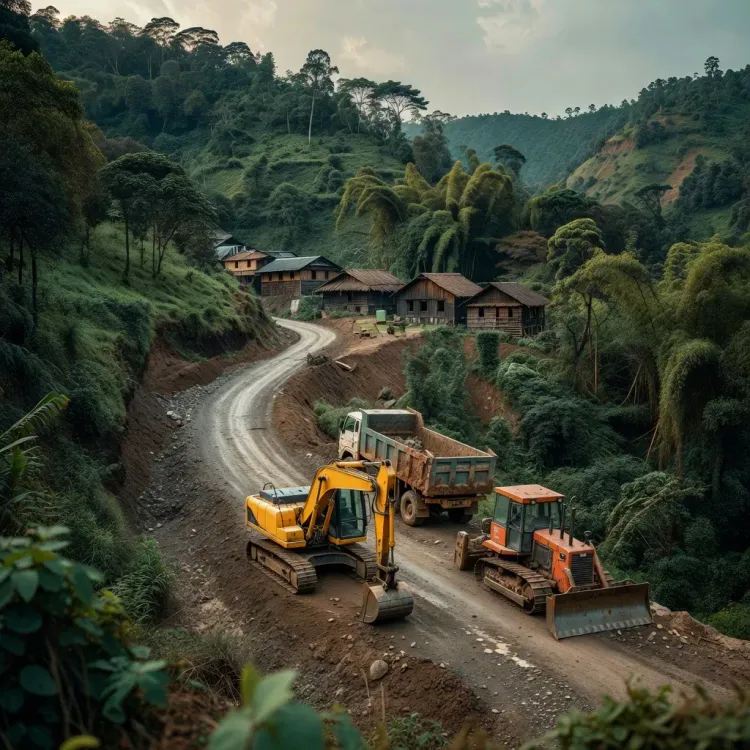
For Nagaland specifically, delayed infrastructure translates into deferred connectivity, slower economic activity, and continued dependence on limited road links that are vulnerable to seasonal disruption. A fast-track single-window mechanism, if designed with genuine community consultation built into its early stages rather than appended as an afterthought, could address both efficiency and equity concerns simultaneously.
What's Next
The proposal for a dedicated fast-track clearance body for the Northeast is likely to gain traction in discussions at future North Eastern Council plenaries and in Union Budget deliberations on regional infrastructure. Whether the Centre responds with a formal institutional mechanism or incremental timeline reforms will determine how quickly the bottlenecks CM Rio has flagged can be resolved.
The Chief Minister's public articulation of the problem signals that the issue will remain on the regional political agenda, with Nagaland likely to push for structural reform through both the NEC and direct engagement with MDoNER.
Point of View
He frames the problem not just as bureaucratic inefficiency but as a design flaw in how national timelines interact with tribal customary rights. This positions the demand for a fast-track mechanism as both a development imperative and a rights-sensitive governance reform, giving it broader political resonance across the eight northeastern states. The timing, amid ongoing Act East Policy commitments, increases pressure on the Centre to respond with something more substantive than incremental tweaks.
NationPress
18 Sept 2026
Frequently Asked Questions
Why do infrastructure projects in Northeast India face delays?
Infrastructure projects in Northeast India face delays primarily because they must obtain sequential statutory clearances from multiple central ministries covering environment, forests, and land acquisition. Community consultations required under tribal customary land rights often surface late in the process, triggering redesigns and revised cost estimates.
What is the fast-track clearance mechanism CM Rio is proposing?
CM Rio has called for a dedicated fast-track clearance mechanism specifically for the Northeast that would streamline multi-agency approvals and ensure community consultations are integrated early, reducing redesigns and extensions.
What is MDoNER and what does it do?
The Ministry of Development of North Eastern Region (MDoNER), established in 2001, is the central ministry responsible for coordinating planning and funding for the eight northeastern states, including facilitating clearances for development projects.
What is the North Eastern Council?
The North Eastern Council (NEC) is a statutory regional planning body set up in 1971 to promote balanced development across Northeast India. It serves as a forum where central and state governments coordinate on regional infrastructure and policy.
How does the Act East Policy relate to Northeast infrastructure?
The Act East Policy, launched in 2014, elevated Northeast India as a connectivity and economic gateway to Southeast Asia, making timely execution of infrastructure projects in the region a strategic national priority.