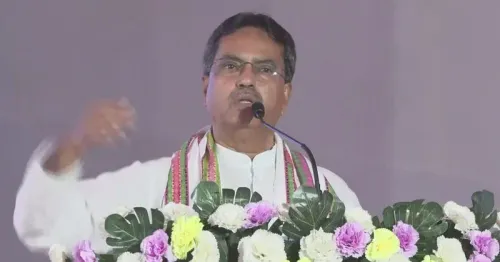
CM Manik Saha hails Agartala pond restoration drive
Synopsis
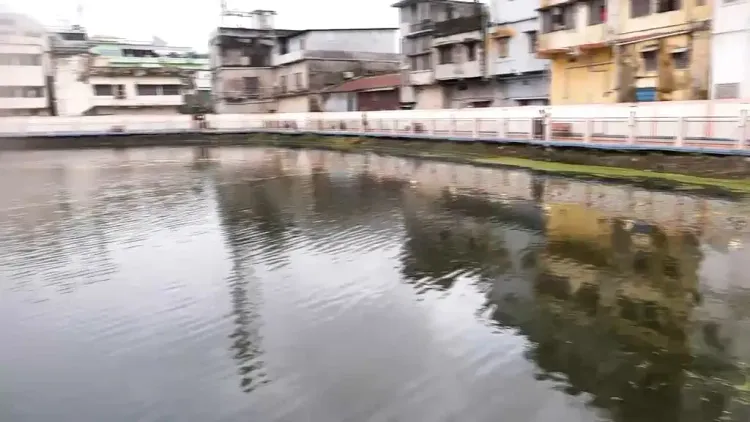
Tripura CM Dr. Manik Saha on 12 July 2026 credited the Agartala Municipal Corporation and state government for restoring the city's historic ponds, citing the royal-heritage Shibbari pond as the standout example of the beautification drive.
Key Takeaways
Manik Saha publicly praised the restoration of Agartala 's famous ponds on 12 July 2026 .
The Shibbari pond , linked to Tripura 's former royal family, was highlighted as the prime example of the revival effort.
The Agartala Municipal Corporation and the state government are jointly credited for the beautification initiative.
Ponds that were previously overgrown and neglected have been restored to preserve their cultural and ecological sanctity.
The effort is part of a broader pattern of urban heritage infrastructure investment in Tripura since 2018 .
Possible future linkage of restored ponds to Tripura 's state tourism circuits is being watched by stakeholders.
Tripura Chief Minister Dr. Manik Saha on Sunday, 12 July 2026, highlighted the transformation of Agartala's historic ponds, crediting the Agartala Municipal Corporation and the state government for restoring and beautifying water bodies that had long fallen into neglect.
Writing in Bengali on X, Dr. Saha noted: 'আগরতলার প্রসিদ্ধ পুকুরগুলোকে আগে আমরা জঙ্গলাকীর্ণ অবস্থায় নিমজ্জিত হয়ে পড়ে থাকতে দেখতাম' — 'We used to see the famous ponds of Agartala lying submerged in an overgrown, jungle-like state.' He added that through beautification efforts, the sanctity of these ponds has now been preserved.
Context
Agartala, the capital of Tripura, is home to several traditional ponds with deep cultural and religious significance. The Shibbari pond — singled out by the Chief Minister as the finest example of this restoration effort — carries royal heritage, historically associated with the former ruling family of Tripura. Over decades of neglect, many such water bodies had become overgrown and unusable.
Dr. Saha pointed to the Shibbari pond specifically, describing it as a water body 'steeped in royal memory,' now restored to reflect its original character. The post was accompanied by a video, offering residents a visual record of the transformation.
Policy Backdrop
Urban pond and water-body restoration has gained momentum across Indian cities as civic bodies balance ecological concerns with heritage preservation. In Tripura, such efforts intensified after 2018 when the BJP-led government came to power, with capital-city infrastructure and cultural sites receiving renewed attention.
The Agartala Municipal Corporation has been a central actor in these drives, combining cleanup campaigns with selective restoration of sites tied to the state's pre-independence royal legacy. The framing of pond restoration as both an ecological and a cultural act has become a recurring motif in the state government's urban development communication.
Stakeholders and Impact
Residents of Agartala stand to benefit most directly — restored ponds improve local microecology, reduce waterlogging risk, and create public recreational spaces. Heritage and conservation groups have long advocated for protecting such water bodies, viewing them as irreplaceable urban commons.
The highlighting of the Shibbari pond's royal connections also appeals to cultural and tourism stakeholders, potentially positioning restored water bodies as heritage tourism nodes within the city's broader visitor circuit.
What's Next
Attention will now turn to whether the Agartala Municipal Corporation extends similar restoration work to other historic ponds across the city. Observers will also watch for any formal linkage of these sites to Tripura's state tourism circuits, which could amplify both footfall and conservation funding.
The Chief Minister's public endorsement signals continued political priority for urban heritage infrastructure — a space where civic governance and cultural identity increasingly intersect in Northeast India.
Point of View
A narrative tool that has proven effective in Northeast India. This sits within a wider national pattern where state governments use heritage restoration to signal both administrative competence and civilisational continuity. The move also quietly positions Agartala's restored water bodies as potential tourism assets, suggesting the government is thinking beyond optics toward economic utility.
NationPress
11 Oct 2026
Frequently Asked Questions
Which pond did CM Manik Saha highlight in his post about Agartala restoration?
CM Dr. Manik Saha highlighted the Shibbari pond in Agartala, describing it as a water body steeped in royal memory and the finest example of the state's pond beautification drive.
Who is responsible for the restoration of ponds in Agartala?
The Agartala Municipal Corporation and the Tripura state government have jointly carried out the pond restoration and beautification work in the capital city.
What is the significance of the Shibbari pond in Agartala?
The Shibbari pond is historically associated with the former royal family of Tripura, giving it cultural and heritage importance beyond its ecological value.
When did Tripura's urban pond restoration efforts gain momentum?
Pond and water-body restoration in Tripura accelerated after 2018 , when the BJP-led government came to power and increased focus on capital-city infrastructure and cultural sites.
What is the broader impact of Agartala pond restoration?
Restored ponds improve local ecology, reduce waterlogging, and create public spaces. They also have potential as heritage tourism nodes, benefiting residents, conservation groups, and the tourism sector.