Is Chief Minister Saha Spreading Lies to Conceal BJP-TMP Conflicts?
Synopsis
In a fierce political clash, CPI (M) Tripura's Jitendra Chaudhury accuses CM Manik Saha of spreading lies to cover up the BJP-TMP rift. This article explores the heated exchanges, allegations of corruption, and the implications for Tripura's governance as parties gear up for the upcoming TTAADC elections.
Key Takeaways
Jitendra Chaudhury attacks CM Manik Saha for spreading lies.
Accusations of misuse of office and false propaganda.
Internal conflicts within the BJP-TMP alliance .
Significant implications for upcoming TTAADC elections .
Concerns over public trust in democratic institutions .
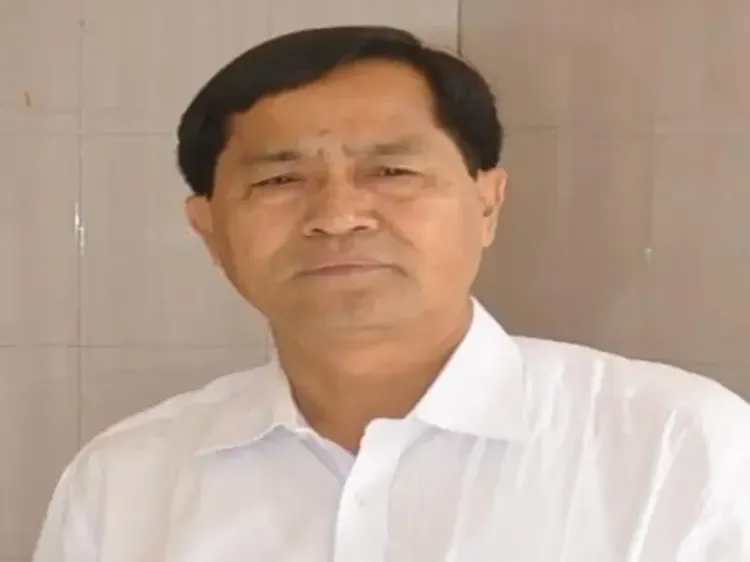
Agartala, Jan 7 (NationPress) The Leader of the Opposition and CPI (M) Tripura state Secretary Jitendra Chaudhury has fiercely criticized Chief Minister Manik Saha, accusing him of disseminating “untruths and unfounded propaganda” against the Left party to distract from escalating tensions within the ruling alliance of the BJP and Tipra Motha Party (TMP).
Chaudhury, who is also a member of the CPI (M) Politburo, claimed that Chief Minister Saha has been misusing his constitutional role and acting more like a spokesperson for the BJP rather than fulfilling his duties as the head of the state government.
He alleged that Saha has been attributing every negative occurrence in the state, including violence and discord, to the CPI (M), rather than acknowledging the internal conflicts between the BJP and its ally TMP.
The Left leader rejected the Chief Minister’s assertion that the CPI (M) is attempting to gain power “through the backdoor,” deeming it a desperate measure to hide what he described as a “failure of governance.”
“The Chief Minister is resorting to inappropriate language and propagating fabricated stories that mislead the public and undermine the respect of his office,”
Chaudhury stated, asserting that Saha is being misled by his close associates.
The CPI (M) leader also claimed that TMP had a covert agreement with the BJP before officially joining the ruling coalition in 2024 and suggested that their electoral strategy in the 2023 Assembly elections was designed to divide the Left's voter base, facilitating the BJP's return to power.
According to him, since TMP became part of the BJP-led government in March 2024, internal strife has manifested, resulting in violent incidents and public disputes among the ruling allies.
Chaudhury firmly dismissed Saha’s claim that the CPI (M) instigated insurgency in Tripura as “historically inaccurate and ethically offensive,” asserting that Left leaders have been primary victims of extremist violence.
“A notable minister, along with numerous CPI (M) leaders, workers, and supporters, have previously been victimized by extremists in Tripura,”
he elaborated.
He accused the Chief Minister of entangling the CPI (M) in the BJP-TMP conflict and highlighted widespread corruption within the ruling coalition, warning that continued misuse of the Chief Minister's office for political attacks could diminish public faith in democratic institutions.
Chaudhury urged Saha to cease spreading false information and reminded him that as Chief Minister, he is responsible for the entire state, not merely a political faction.
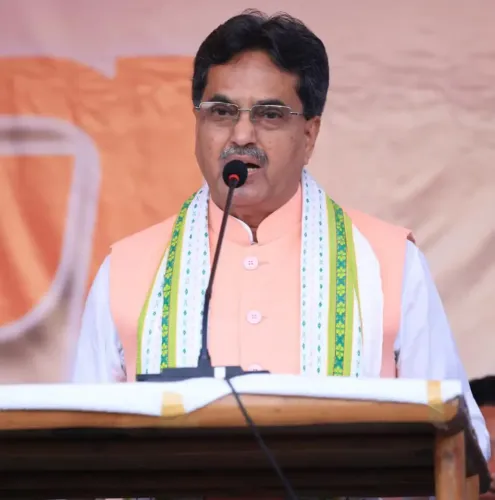
Meanwhile, Chief Minister Manik Saha stated on Tuesday that the BJP is focused on fostering constructive, development-oriented politics in the state and cannot be intimidated by violence or conflict.
During a public meeting organized by the party at Chawmanu in the Dhalai district, the Chief Minister claimed that the state government has allocated 39.06 percent of the state budget to the Tripura Tribal Areas Autonomous District Council (TTAADC) for the 2024-25 fiscal year, even as some parties continue to assert that funds are not being disbursed.
“The BJP is not just strong nationally but globally. We are sometimes warned that the national party or the Chief Minister will be barred from entering TTAADC regions. The more we are told not to enter, the more we will go in. We will reach every home in the tribal areas,”
he asserted, hinting at the BJP ally TMP.
Since 2021, TMP, led by former royal figure Pradyot Bikram Manikya Debbarma, has been overseeing the politically critical 30-member TTAADC, which encompasses nearly two-thirds of Tripura’s 10,491 sq km area and serves over 12.16 lakh people, with approximately 84 percent belonging to indigenous communities.
In anticipation of the TTAADC elections, all major political entities, including the ruling BJP, its partners TMP and the Indigenous People’s Front of Tripura (IPFT), as well as the opposition CPI (M) and Congress, are ramping up efforts to strengthen their backing among tribal communities, which represent about one-third of Tripura’s population of around 4.2 million.
Point of View
The ongoing political tussle between CPI (M) and the BJP-TIPRA Motha alliance reflects a deeper crisis within Tripura's governance. As accusations fly and tensions escalate, it's crucial to monitor how these developments affect the state's political landscape and the trust of its citizens in democratic processes.
NationPress
5 Oct 2026
Frequently Asked Questions
What are the main accusations against Chief Minister Saha?
Jitendra Chaudhury accuses Chief Minister Saha of spreading falsehoods and propaganda to distract from infighting within the BJP-TIPRA Motha Party alliance.
What impact has the TMP's alliance with the BJP had?
Chaudhury claims the TMP's alliance has led to increased internal conflicts, violence, and public confrontations among the ruling allies.
How has the CPI (M) responded to Saha's allegations?
The CPI (M) leader has strongly rejected Saha's claims, asserting that they are historically inaccurate and morally offensive.
What is the significance of the TTAADC elections?
The TTAADC elections are crucial as tribal communities represent a significant voter base, and all major political parties are intensifying efforts to consolidate support.
What are the implications for governance in Tripura?
Continued political strife and accusations of corruption could undermine public trust in democratic institutions and governance in Tripura.