CM Sai Highlights Handloom Women's Rise in Dhamtari
Synopsis
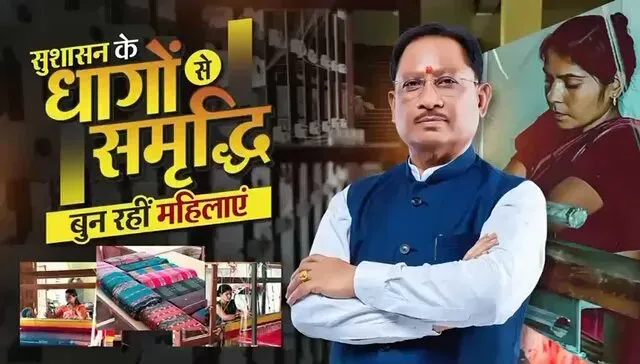
Chhattisgarh CM Vishnu Deo Sai says women weavers in Dhamtari district are achieving self-reliance through the state's Shaskiya Vastra Utpadan Karyakram, which provides yarn, modern looms, financial aid, and training to handloom workers, boosting output and rural employment.
Key Takeaways
CM Vishnu Deo Sai highlighted the progress of women handloom weavers in Dhamtari district on 2 June 2026 .
The Shaskiya Vastra Utpadan Karyakram provides weavers with regular yarn, financial assistance, modern looms, and training in new techniques.
The programme targets women's self-employment, rural development, and economic empowerment as part of the Atmanirbhar Chhattisgarh vision.
Dhamtari district has a notable concentration of handloom weavers, making it a key site for the scheme.
The initiative aligns with the national Atmanirbhar Bharat Abhiyan framework launched in 2020 .
Possible future steps include replication in other handloom belts and additional budget allocations in the next state fiscal statement.
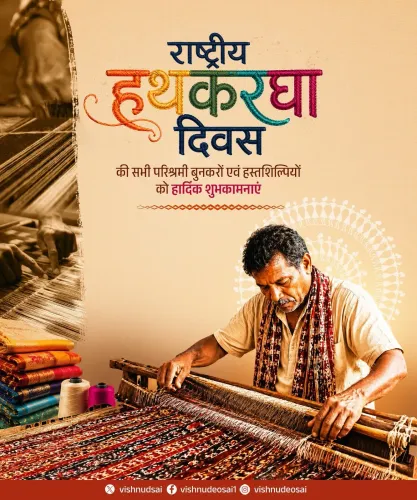
Chhattisgarh Chief Minister Vishnu Deo Sai on Tuesday, 2 June 2026, highlighted how women weavers in Dhamtari district are becoming pillars of financial support for their families through the state's handloom industry, crediting a government textile production programme for driving the transformation.
Context
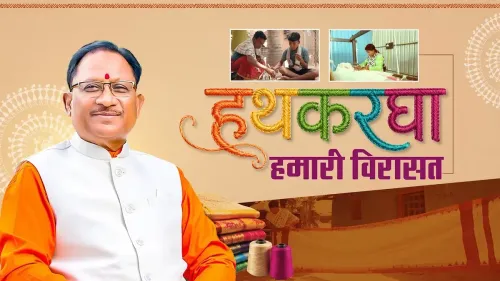
In a post on X, CM Sai described the women weavers — referred to affectionately as bunkar didiyan (weaver sisters) — as living examples of self-reliance. He wrote that these women are today 'becoming an example of self-reliance and an economic support for their families' in Dhamtari district. The post was accompanied by a video documenting the work of these weavers on the ground.
The Chief Minister noted that the programme has resulted in increased production capacity, steady growth in income, and the creation of new employment opportunities for women engaged in handloom work across the district.
Policy Backdrop
The initiative referenced is the Shaskiya Vastra Utpadan Karyakram (Government Textile Production Programme), run by the Chhattisgarh state government. Under the scheme, enrolled weavers receive regular yarn supply, financial assistance, modern looms, and training in contemporary weaving techniques — a package designed to address both the input-side and skill-side barriers that have historically constrained handloom output in rural areas.
The programme sits within the broader national policy arc of Atmanirbhar Bharat Abhiyan, announced in 2020, which promoted local textile production and self-employment as routes to economic resilience. State-level handloom cluster schemes have long served as a mechanism to generate supplementary rural income, particularly for women, while preserving traditional craft skills alongside technology upgrades.
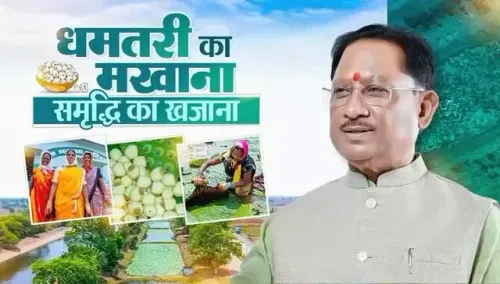
Dhamtari district has a notable concentration of handloom weavers, making it a natural focal point for such an intervention within Chhattisgarh.
Stakeholders and Impact
The direct beneficiaries are women weavers and, by extension, rural households in Dhamtari and surrounding areas. By supplying inputs and training rather than just cash transfers, the programme aims to build sustained productive capacity rather than short-term relief. CM Sai described the initiative as 'dedicated to women's empowerment, self-employment, and rural development' — framing it as foundational to what his government calls Atmanirbhar Chhattisgarh (self-reliant Chhattisgarh) and Viksit Chhattisgarh (developed Chhattisgarh).
The emphasis on female participation in household-level manufacturing mirrors parallel drives in several other states, reflecting a wider political and policy consensus around expanding women's role in rural economic activity. For weaver families, regular yarn supply and access to modern looms can meaningfully reduce downtime and increase the volume and quality of cloth produced.
What's Next
Observers will watch for district-level production and income data that could quantify the programme's outcomes, as well as any announcements on extending the model to other handloom belts within Chhattisgarh. The state's next fiscal statement could also indicate whether supplementary budget allocations are planned to scale the scheme. If measurable income gains are documented and published, the Dhamtari cluster could serve as a template for replication across the state's wider artisan economy.
Point of View
Using the human story of bunkar didiyan to reinforce the 'Viksit Chhattisgarh' brand ahead of what is likely a sustained rural outreach cycle. The framing of handloom support as women's empowerment — rather than purely industrial policy — is politically astute, allowing the BJP government to speak simultaneously to welfare, tradition, and economic modernisation. The Dhamtari focus suggests a district-by-district rollout strategy, where visible local success stories are amplified centrally to build programme credibility. Sustained impact, however, will depend on whether income and output data are eventually made public and whether the scheme is adequately funded in successive state budgets.
NationPress
16 Oct 2026
Frequently Asked Questions
What is the Shaskiya Vastra Utpadan Karyakram in Chhattisgarh?
The Shaskiya Vastra Utpadan Karyakram is a Chhattisgarh government programme that provides handloom weavers with regular yarn supply, financial assistance, modern looms, and training in new weaving techniques to increase their production capacity and income.
What did CM Vishnu Deo Sai say about women weavers in Dhamtari?
CM Sai said that women engaged in the handloom industry in Dhamtari district are becoming examples of self-reliance and are providing economic support to their families, crediting the state's textile production programme for driving this change.
Which district in Chhattisgarh is known for handloom weaving?
Dhamtari district in Chhattisgarh has a notable concentration of handloom weavers, particularly women engaged in traditional textile production, and is a focal point for the state's weaver support scheme.
How does Chhattisgarh's handloom scheme connect to Atmanirbhar Bharat?
The state scheme aligns with the Atmanirbhar Bharat Abhiyan announced in 2020, which promoted local textile production and self-employment as pillars of economic resilience, with state-level programmes like Chhattisgarh's acting as implementation vehicles.
What is Viksit Chhattisgarh?
Viksit Chhattisgarh, meaning 'developed Chhattisgarh', is a vision articulated by the BJP state government under CM Vishnu Deo Sai, encompassing rural development, women's empowerment, and self-reliance initiatives across the state.