CM Sai Welcomes GST Council 57th Meet Tax Reforms
Synopsis
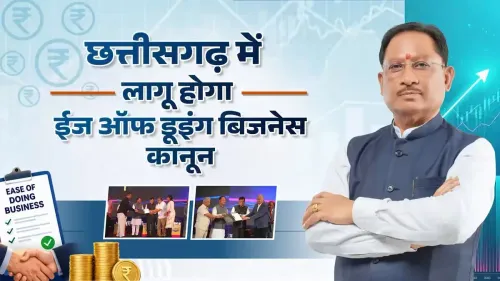
Chhattisgarh Chief Minister Vishnu Deo Sai on October 9, 2026, welcomed key recommendations of the 57th GST Council meeting, saying the reforms will ease compliance burdens for small traders and advance India's Ease of Doing Business goals under PM Modi and Finance Minister Sitharaman.
Key Takeaways
Chhattisgarh CM Vishnu Deo Sai publicly welcomed the recommendations of the 57th GST Council meeting on October 9, 2026 .
The reforms are aimed at simplifying trade compliance and reducing the procedural burden on small traders and entrepreneurs .
CM Sai framed the changes as part of a broader push toward a 'simple, transparent, and trust-based tax system' under PM Modi.
He directly thanked PM Narendra Modi and Finance Minister Nirmala Sitharaman for the reforms.
Chhattisgarh, with its large MSME and small-trader base, has a direct economic interest in GST compliance simplification.
The endorsement signals strong political alignment between the Chhattisgarh BJP government and the Centre on indirect tax policy.
A simpler tax regime, lighter compliance burden, and a government betting on trust over coercion — that is the vision Chhattisgarh Chief Minister Vishnu Deo Sai invoked on Friday, October 9, 2026, as he welcomed the key recommendations that emerged from the 57th GST Council meeting.
Posting on X in Hindi, CM Sai described the reforms as 'स्वागतयोग्य' — 'worthy of welcome' — and framed them as direct relief for small traders and entrepreneurs who have long sought a less cumbersome compliance environment. 'Simple systems, easy business, and growing confidence of taxpayers,' he wrote, capturing what he called the spirit of the Council's recommendations.
What the 57th GST Council recommended
The 57th meeting of the GST Council — the apex federal body that governs India's Goods and Services Tax architecture — considered measures aimed at rationalising trade compliance and easing procedural requirements. CM Sai specifically highlighted that the recommendations would strengthen 'Ease of Doing Business', a benchmark framework that successive governments have used to measure how friction-free commercial activity is for businesses of all sizes.
Small traders and micro-entrepreneurs stand to benefit most. For this segment, compliance costs — filing returns, reconciling invoices, navigating notices — have often been disproportionately heavy relative to their transaction volumes. Any structural simplification that reduces that friction carries real economic consequence at the ground level.
Modi-Sitharaman framework gets a state-level endorsement
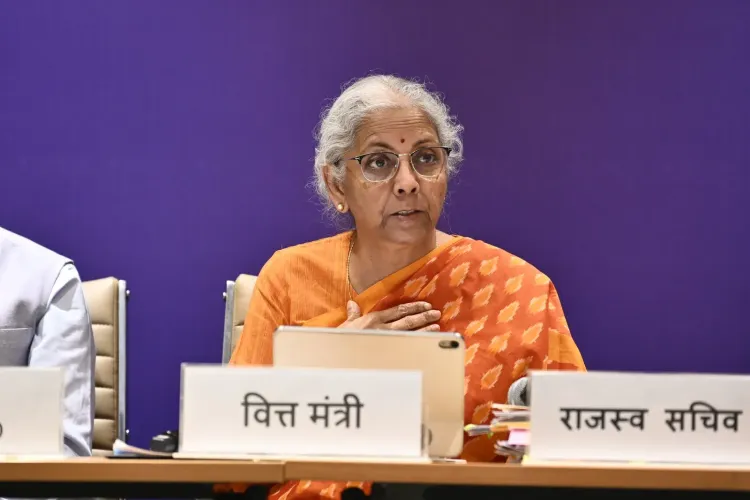
CM Sai was explicit in attributing the reform direction to Prime Minister Narendra Modi and Union Finance Minister Nirmala Sitharaman, tagging both leaders directly in his post. He described the country as 'continuously moving towards a simple, transparent, and trust-based tax system' under PM Modi's leadership — a formulation that places the GST Council's latest round of tweaks inside a longer, decade-spanning arc of indirect tax overhaul that began with GST's landmark rollout in July 2017.
The phrasing matters: 'trust-based tax system' signals a philosophical shift from a compliance model built on penalties and presumption of evasion, toward one that assumes good faith from taxpayers and minimises friction for the compliant majority — an approach Finance Ministry officials have articulated at multiple GST Council press briefings over recent years.
Chhattisgarh's stake in GST simplification
As a state with a significant base of small traders, agricultural enterprises, and mineral-linked businesses, Chhattisgarh has a direct interest in how GST compliance rules are designed. Simpler filing norms and rationalised return structures reduce the compliance cost for the state's MSME ecosystem — a sector the BJP government in Raipur has positioned as a priority for economic growth. CM Sai's public endorsement of the reforms is therefore both a statement of political alignment with the Centre and a practical signal to the state's business community.
The GST Council, which brings together the Union Finance Minister and state finance ministers, operates by consensus — meaning any recommendation it adopts carries the implicit agreement of most states. Chhattisgarh's enthusiastic welcome from its Chief Minister underlines that buy-in.
For millions of small business owners filing GST returns every quarter, the real test will be in the implementation — but the political will, from New Delhi to Raipur, is now visibly aligned.
Point of View
Notice-heavy regime to a business-friendly framework. For Chhattisgarh specifically, where small traders and mineral-linked SMEs form an economic backbone, simpler compliance norms have tangible political salience. The consistent attribution to both PM Modi and Finance Minister Sitharaman also keeps the state government firmly inside the BJP's unified economic messaging architecture.
NationPress
9 Oct 2026
Frequently Asked Questions
What was decided at the 57th GST Council meeting?
The 57th GST Council meeting made key recommendations to simplify trade compliance and tax filing for small traders and businesses, with a focus on easing procedural requirements under India's GST framework.
Why did Chhattisgarh CM Vishnu Deo Sai welcome the GST Council recommendations?
CM Vishnu Deo Sai said the recommendations would provide relief to small traders and entrepreneurs in Chhattisgarh and across India, and would strengthen the country's Ease of Doing Business environment.
What is the GST Council and who chairs it?
The GST Council is India's apex federal body governing the Goods and Services Tax. It is chaired by the Union Finance Minister — currently Nirmala Sitharaman — and includes finance ministers from all states and union territories.
How does GST simplification help small traders in India?
Simpler GST compliance reduces the time, cost, and procedural burden of filing returns and reconciling invoices, which is disproportionately heavy for small and micro businesses relative to their transaction volumes.
When was GST introduced in India?
India's Goods and Services Tax was introduced on July 1, 2017, replacing a complex web of central and state indirect taxes with a unified national framework.