Chhattisgarh Cabinet clears GST, VAT reforms and 11 industry measures
Synopsis
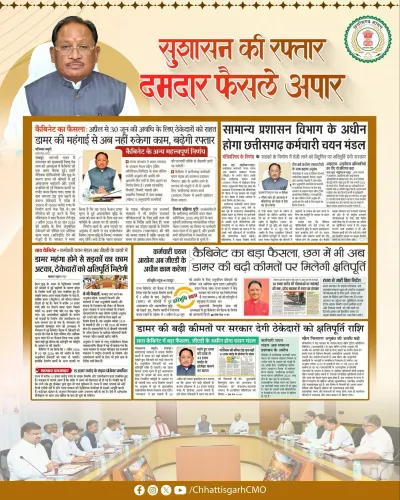
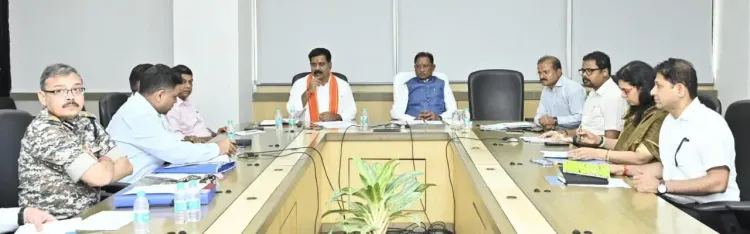
In one of its most wide-ranging single-session approvals, the Chhattisgarh Cabinet under Chief Minister Vishnu Dev Sai cleared 11 decisions on 8 July — including a GST amendment bill, abolition of the VAT tribunal, and an ease-of-doing-business law that reportedly makes Chhattisgarh the first state to introduce deemed permissions and risk-based monitoring for investors.
Key Takeaways
Chhattisgarh Cabinet chaired by CM Vishnu Dev Sai approved 11 major decisions on 8 July 2026 .
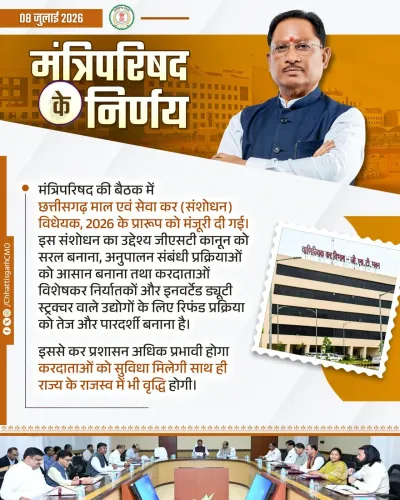
The Chhattisgarh GST Amendment Bill 2026 aims to streamline refunds and strengthen tax administration for exporters and industries.
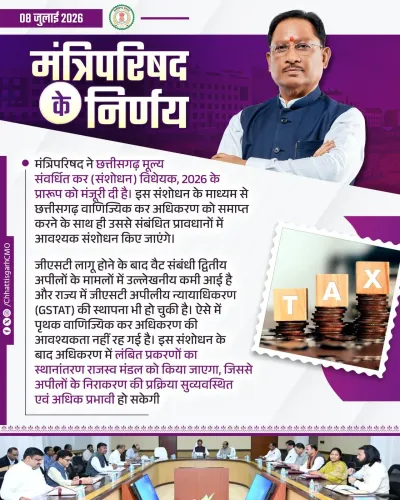
The VAT Amendment Bill abolishes the Commercial Tax Tribunal ; pending cases move to the Revenue Board .
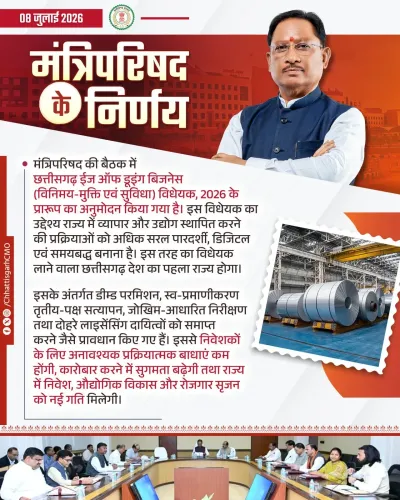
Chhattisgarh is reportedly set to become the first state in India to introduce deemed permissions, self-certification, and risk-based monitoring under the new ease-of-doing-business law.
A Direct Debit Mandate (DDM) system aligned with RBI guidelines replaces the tripartite power-payment agreement.
Other approvals include a private university bill, a one-time settlement scheme for Nawa Raipur Atal Nagar plot allottees, and a 2,000-seat auditorium in Rajnandgaon .
The Chhattisgarh Cabinet, chaired by Chief Minister Vishnu Dev Sai, on Tuesday, 8 July 2026, approved 11 major decisions spanning tax reform, industrial facilitation, and public utility upgrades — among the most wide-ranging single-session approvals by the state government this year. The moves are aimed at easing the investment climate, streamlining tax administration, and improving services for common citizens across Chhattisgarh.
GST and VAT Amendments
The Cabinet cleared the Chhattisgarh Goods and Services Tax (Amendment) Bill 2026, designed to simplify the existing GST framework and make it more operationally effective. The amendment is expected to particularly benefit exporters and industries by streamlining the refund process, improving tax administration, and strengthening revenue collection.
Alongside this, the Chhattisgarh Value Added Tax (VAT) Amendment Bill was also approved. Under the revised framework, the Commercial Tax Tribunal will be abolished, and all pending VAT cases will be transferred to the Revenue Board for faster disposal — a move that reflects the reduced relevance of VAT-specific appeals following the nationwide rollout of GST.
Industrial Investment and Ease of Doing Business
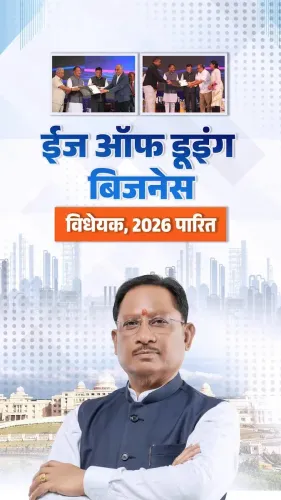
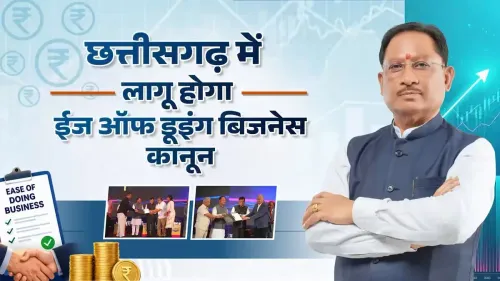
In a significant push for industrial growth, the Cabinet approved both the Chhattisgarh Industrial Investment Promotion Bill 2026 and the Chhattisgarh Ease of Doing Business (Simplification and Facilitation) Bill 2026.
The latter is being touted as making Chhattisgarh the first state in India to introduce provisions such as deemed permissions, self-certification, third-party verification, and risk-based monitoring. These reforms are expected to make the investment approval process more transparent and significantly accelerate industrial development in the state.
Power Payments and the DDM System
The Cabinet also approved a new payment mechanism for the Chhattisgarh State Power Distribution Company. The Direct Debit Mandate (DDM) system, aligned with Reserve Bank of India (RBI) guidelines, will replace the existing tripartite agreement. The change is intended to ensure uninterrupted power supply from central undertakings with greater transparency and financial security.
Other Key Decisions
Among the remaining approvals, the Cabinet cleared the draft of the Chhattisgarh Private University (Establishment and Operation) Bill 2026 to ensure quality education and compliance with University Grants Commission (UGC) norms. A One Time Settlement Scheme 2026 was also approved for plot allottees in Nawa Raipur Atal Nagar.
Amendments to the Water Pollution Act will replace minor criminal offences with monetary penalties, while revisions to the Chhattisgarh Fare Control Act 2011 aim to improve tenant-landlord dispute resolution. The Cabinet additionally cleared land allocation for a 2,000-capacity modern auditorium in Rajnandgaon and approved a study on the service conditions of Bastar Fighters.
With these approvals, the Sai government signals a clear legislative push ahead of the next investment cycle — the implementation quality of the ease-of-doing-business measures will be closely watched by investors and industry bodies alike.
Point of View
Not routine business. The ease-of-doing-business bill's 'first in India' claim on deemed permissions and risk-based monitoring deserves scrutiny — similar claims by other states have often outpaced implementation. The abolition of the VAT tribunal is a sensible administrative cleanup, but transferring a backlog of cases to the Revenue Board only works if that body has the capacity to absorb them. The real test of Tuesday's approvals will come in the months after gazette notification, when investors and exporters either find the refund process genuinely faster or encounter the same bureaucratic friction under new branding.
NationPress
7 Oct 2026
Frequently Asked Questions
What did the Chhattisgarh Cabinet approve on 8 July 2026?
The Chhattisgarh Cabinet approved 11 major decisions including the GST Amendment Bill 2026, the VAT Amendment Bill, the Industrial Investment Promotion Bill 2026, and the Ease of Doing Business (Simplification and Facilitation) Bill 2026, among others. The meeting was chaired by Chief Minister Vishnu Dev Sai in Raipur.
How does the Chhattisgarh GST Amendment Bill 2026 help businesses?
The amendment is designed to simplify the GST law and make it more effective, with particular benefits for exporters and industries through a streamlined refund process, improved tax administration, and stronger revenue collection.
Why is the Commercial Tax Tribunal being abolished in Chhattisgarh?
The VAT Amendment Bill abolishes the Commercial Tax Tribunal because VAT appeals have become far less relevant after the nationwide implementation of GST. Pending VAT cases will be transferred to the Revenue Board for faster disposal.
What makes the Chhattisgarh Ease of Doing Business Bill 2026 significant?
The bill reportedly makes Chhattisgarh the first state in India to introduce deemed permissions, self-certification, third-party verification, and risk-based monitoring for investors. These provisions are intended to make the investment approval process more transparent and accelerate industrial development.
What is the Direct Debit Mandate system approved by the Chhattisgarh Cabinet?
The Direct Debit Mandate (DDM) system, aligned with RBI guidelines, replaces the existing tripartite agreement for electricity payments by the Chhattisgarh State Power Distribution Company. It is designed to ensure uninterrupted power supply from central undertakings with greater transparency and financial security.