CM Sai Flags Rural Bus Scheme Linking Bastar to Sarguja
Synopsis
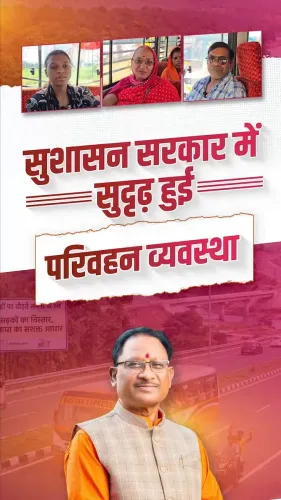
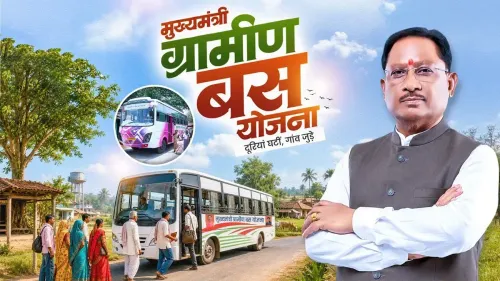
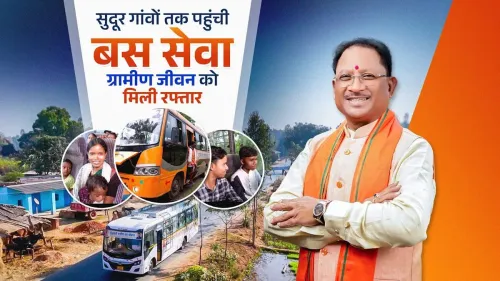
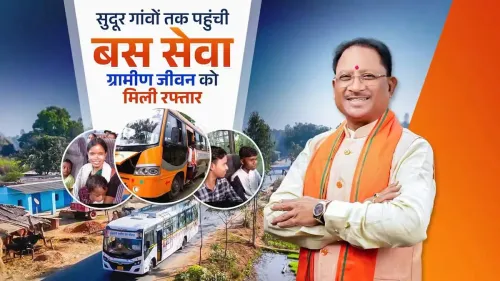
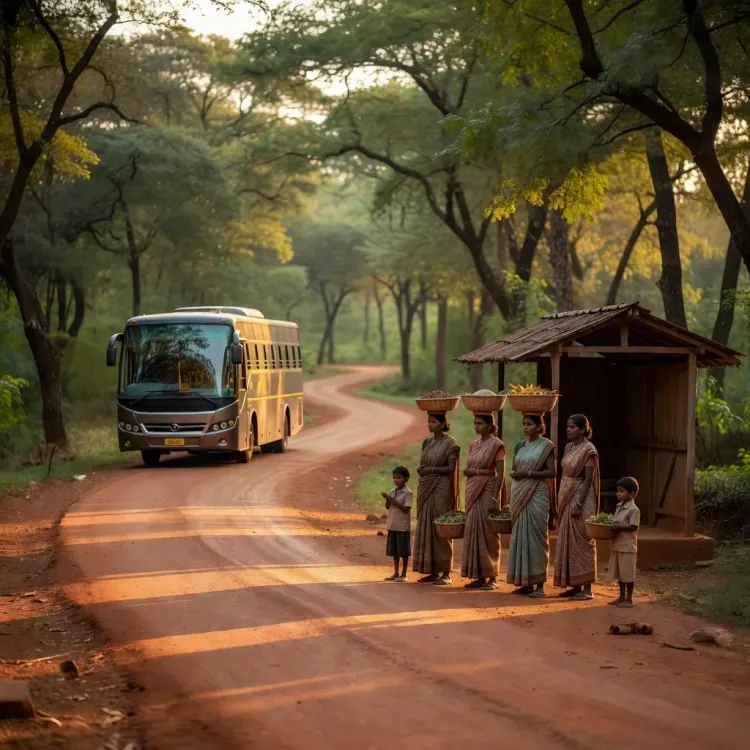
Chhattisgarh Chief Minister Vishnu Deo Sai has highlighted the Mukhyamantri Gramin Bus Yojana, a state scheme providing bus services to remote tribal villages across Bastar and Sarguja, aiming to improve access to education, health, employment, and markets.
Key Takeaways
CM Vishnu Deo Sai promoted the Mukhyamantri Gramin Bus Yojana on 12 November 2026 , calling it a catalyst for rural development.
The scheme targets remote tribal regions in Bastar (south) and Sarguja (north) — Chhattisgarh's most geographically isolated divisions.
Bus connectivity is designed to improve access to education, health services, employment, and markets for tribal villagers.
Both divisions are Scheduled Areas with large tribal populations, historically underserved due to poor transport infrastructure.
Exact fleet size, number of routes, and specific villages covered have not yet been officially confirmed in the public record.
The scheme fits a broader state-level pattern of prioritising public transport in tribal belts of central India.
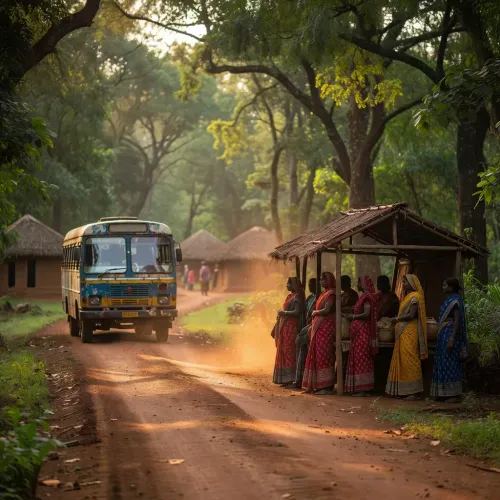
For generations, a trip from a remote tribal village in Bastar or Sarguja to the nearest town meant hours of struggle — on foot, on bullock carts, or simply not at all. Chhattisgarh Chief Minister Vishnu Deo Sai has spotlighted the state's Mukhyamantri Gramin Bus Yojana (Chief Minister Rural Bus Scheme) as the answer, declaring on 12 November 2026 that bus connectivity is now unlocking new possibilities across the state's most remote tribal corridors.
Posting in Hindi, CM Sai wrote: 'Ab gaanvon se shahron ki raah aasaan, vikas ko mil rahi nayi raftaar!' — 'Now the road from villages to cities is easier, development is gaining new momentum!' He added that in the distant tribal regions from Bastar to Sarguja, the scheme is opening doors to new possibilities alongside transport access, making education, health, employment, and markets reachable for villages where reaching a city was once a major challenge.What the Mukhyamantri Gramin Bus Yojana Does
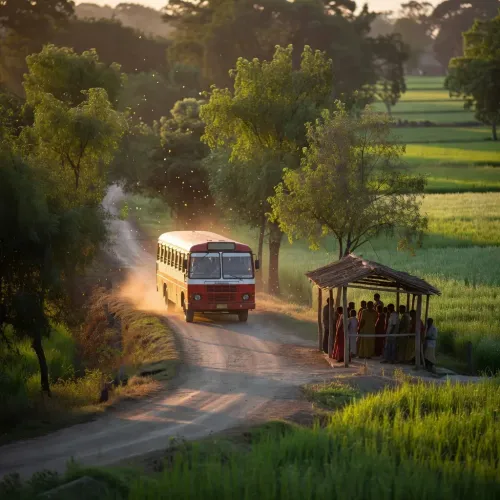
Chhattisgarh's tribal belt — concentrated in its southern Bastar division and northern Sarguja division — has historically ranked among the most geographically isolated parts of central India. Poor road connectivity has long translated directly into poor outcomes: children who cannot reach schools, patients who cannot reach clinics, and farmers who cannot access markets to sell their produce. The Mukhyamantri Gramin Bus Yojana targets exactly this gap, deploying scheduled bus services on routes that connect remote villages to district towns and urban centres. The scheme aligns with a broader pattern of successive Chhattisgarh governments prioritising transport infrastructure in the state's Scheduled Areas — regions where constitutional protections recognise the particular needs of tribal communities. What the current government is emphasising is the downstream effect: a bus route is not just a commute, it is a supply chain for public services.Bastar and Sarguja — Why These Two Names Matter
Bastar in the south and Sarguja in the north bookend Chhattisgarh's tribal geography. Together they cover a vast arc of forest and hill terrain, home to communities including the Gond, Baiga, and Halba, among others. For decades, the development deficit in both divisions has been a persistent policy concern — underdevelopment not from a lack of government schemes, but from the basic inability of people to physically access what those schemes offer. A hospital forty kilometres away might as well be four hundred without reliable transport. By naming both divisions explicitly, CM Sai signals that the scheme is designed as a state-wide tribal connectivity push, not a pilot confined to a single district.Education, Health, Jobs — the Three Promised Dividends
The Chief Minister's post specifically lists four access points the bus service is meant to unlock: education, health, employment, and markets. Each represents a different kind of exclusion the scheme aims to dismantle. Students can reach colleges. Patients can reach district hospitals. Job-seekers can travel for interviews or daily wage work in towns. And small producers — farmers, forest-produce collectors, artisans — can reach weekly markets without depending on intermediaries who have historically captured a disproportionate share of the value. Rollout details — exact routes, fleet size, and coverage villages — have not been officially confirmed in the public record as of this post. What to watch for is data on measured changes: school enrolment numbers, outpatient visits at district health centres, and market participation rates in covered areas. Those figures, when they emerge, will tell the fuller story of whether the momentum CM Sai describes is translating into lives genuinely changed.A bus timetable may seem a modest instrument of policy. In Chhattisgarh's tribal heartland, it could be the most consequential one on the roster.
Point of View
Health, employment, markets — the BJP government is trying to shift the state's development narrative from input (roads built, funds released) to output (people actually reached). The explicit pairing of Bastar and Sarguja is politically deliberate: both divisions carry historical weight as symbols of underdevelopment and, in Bastar's case, of left-wing extremism, making visible connectivity gains strategically valuable ahead of any future electoral cycle. Whether the scheme's operational scale matches the rhetorical ambition will ultimately depend on route coverage and service reliability — metrics the government will face pressure to publish.
NationPress
12 Nov 2026
Frequently Asked Questions
What is the Mukhyamantri Gramin Bus Yojana in Chhattisgarh?
The Mukhyamantri Gramin Bus Yojana is a Chhattisgarh state government scheme that provides scheduled bus services connecting remote tribal villages to nearby towns and urban centres, aiming to improve access to education, healthcare, employment, and markets.
Which areas does the Chhattisgarh rural bus scheme cover?
Chief Minister Vishnu Deo Sai has indicated the scheme covers remote tribal regions from Bastar in southern Chhattisgarh to Sarguja in the north, targeting the state's most geographically isolated Scheduled Areas.
What are the benefits of the Mukhyamantri Gramin Bus Yojana for tribal communities?
The scheme aims to give tribal villagers reliable access to schools and colleges, district hospitals and health centres, job markets in towns, and weekly agricultural or craft markets — all previously difficult to reach without public transport.
Who launched the CM Rural Bus Scheme in Chhattisgarh?
The scheme is a Chhattisgarh state initiative operating under Chief Minister Vishnu Deo Sai's BJP government, which came to power after the 2023 state assembly elections.
Why is connectivity a challenge in Bastar and Sarguja?
Both Bastar and Sarguja are forest and hill divisions with large tribal populations living in dispersed, remote settlements. Poor road and transport infrastructure has historically cut these communities off from public services and economic opportunities in district towns.