CM Sai Backs Voter Roll Cleanup, Calls Congress Opposition Political
Synopsis
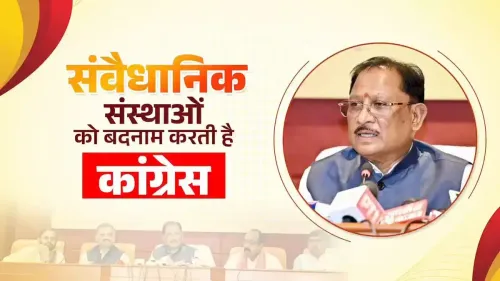
Chhattisgarh CM Vishnu Deo Sai hit out at Congress on 5 November 2026, saying the party is opposing a voter roll revision exercise for political reasons — despite having conducted similar SIR processes during its own tenures in government.
Key Takeaways
CM Vishnu Deo Sai defended the ongoing Special Intensive Revision (SIR) of voter lists on 5 November 2026 .
He stated that voter list revision is not a new practice and that Congress-led governments had also carried out SIR exercises in the past.
Sai accused Congress of opposing the current revision purely for political self-interest, not on principled grounds.
His central challenge: why should ineligible persons or foreign nationals remain on India's electoral rolls?
The Election Commission of India periodically conducts electoral roll revisions as a constitutional duty under governments of different parties.
Opposition concerns about wrongful deletion of valid voter entries remain a key issue to monitor as the revision proceeds.
Voter list revision is not a new invention — and Chhattisgarh Chief Minister Vishnu Deo Sai wants everyone to remember that. On Thursday, 5 November 2026, the BJP leader fired a pointed broadside at the Indian National Congress, accusing the party of opposing an electoral roll cleanup exercise for narrow political gain — the very kind of exercise, he noted, that Congress itself had carried out when in power.
The Sharp Question at the Heart of the Debate
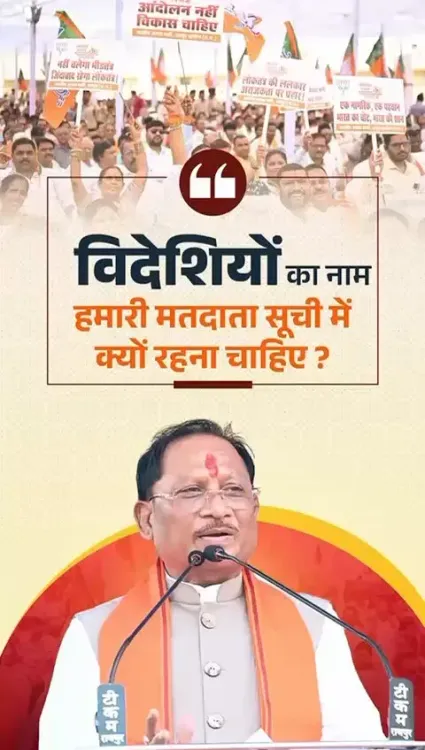
Posting in Hindi on X, CM Sai put the central challenge bluntly: 'आखिर अपात्र व्यक्तियों या विदेशी नागरिकों के नाम हमारी मतदाता सूची में क्यों होने चाहिए?' — 'Why should the names of ineligible persons or foreign nationals figure in our voter list at all?' It is a rhetorical question, but its edge is real. Few voters, wherever they sit on the political spectrum, would argue openly for keeping fraudulent entries on the rolls.
The revision he references is a Special Intensive Revision (SIR) — a process the Election Commission of India has deployed periodically across governments of different political colours. CM Sai made that history explicit, saying Congress-led administrations had themselves ordered SIR exercises in the past, and that the party's current opposition therefore amounts to a reversal of principle driven by political self-interest.
Congress in the Crosshairs — and Why the Charge Stings
The Election Commission of India, as a constitutional authority, has conducted multiple rounds of electoral roll revisions — special summary revisions and intensive revisions alike — under governments of every stripe. That documented precedent is precisely the weapon Sai is deploying. If the process was legitimate under Congress rule, he is arguing, it cannot suddenly become suspect simply because a BJP-led government is overseeing it now.
Opposition parties across India have periodically pushed back on voter roll exercises, raising concerns about selective deletion of valid voters — particularly from marginalised communities. Those are legitimate concerns worth watching. But CM Sai's framing reframes the entire conversation: the question is not whether revision should happen, but whether anyone has a principled reason to shield ineligible or foreign-national entries from removal.
What Voters and Watchers Should Track Next
The immediate stakes are concrete. Chhattisgarh, like every Indian state, depends on accurate rolls for free and fair polls. Any revision exercise carries the dual risk of missing genuinely ineligible names and wrongly striking legitimate ones — which is why the scope, timeline, and safeguards announced by the Election Commission will matter enormously. Responses from Congress at both the state and national level are likely to sharpen as the process unfolds.
An accurate voter list is the foundation every democracy builds on. The fight over who gets to stand on that foundation — and who gets swept off it — is just beginning.
Point of View
He shifts the burden of explanation squarely onto the opposition. The post fits a broader BJP pattern of framing electoral integrity measures as apolitical and administrative rather than partisan, while casting any resistance as proof of a vested interest in an impure voter list. The underlying tension — between legitimate roll-cleansing and the genuine risk of valid voters being removed — will determine whether this narrative holds up once the Election Commission publishes granular data on deletions and additions.
NationPress
5 Nov 2026
Frequently Asked Questions
What is a Special Intensive Revision (SIR) of voter lists in India?
A Special Intensive Revision (SIR) is a periodic process conducted by the Election Commission of India to thoroughly update electoral rolls — adding eligible new voters, correcting errors, and removing ineligible entries such as duplicates, deceased persons, or non-citizens. It has been carried out under governments of multiple parties over the decades.
Why is CM Vishnu Deo Sai criticising Congress over the voter list revision?
CM Sai argues that Congress is opposing the current voter roll revision purely for political reasons, pointing out that the party itself conducted similar SIR exercises when it was in power. He sees the opposition's stance as hypocritical rather than principled.
Can foreign nationals or ineligible persons really appear on India's voter list?
Irregularities such as duplicate entries, names of deceased individuals, and in some cases alleged entries of non-citizens have historically been flagged during electoral roll audits. Periodic revisions by the Election Commission are specifically designed to identify and remove such ineligible entries.
What are the concerns raised by opposition parties about voter list revisions?
Opposition parties, including Congress, have in various instances argued that voter roll revision exercises risk wrongfully deleting legitimate voters — particularly from marginalised or minority communities — and have called for robust safeguards and transparent processes.
What should voters in Chhattisgarh watch for during the current revision?
Voters should track the Election Commission's official announcements on the scope and schedule of the revision in Chhattisgarh, verify their own entries on the rolls, and monitor whether safeguards are in place to prevent wrongful deletions of valid voter registrations.