CM Sai at book launch: Bastar will be India's finest tribal zone
Synopsis
Chief Minister Vishnu Deo Sai attended the launch of 'Tera Raj Nahi Aayega Re' in Raipur on 14 June 2026, declaring that Bastar — cut off from development for four decades by Naxalism — will now become India's most developed tribal division through joint Centre-state efforts.
Key Takeaways
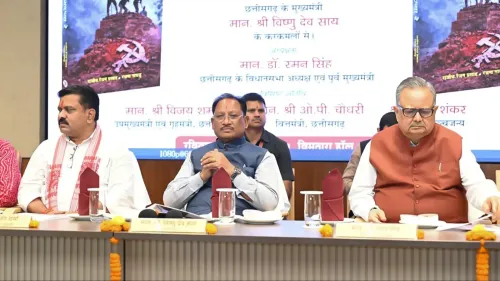
CM Vishnu Deo Sai attended the launch of the book Tera Raj Nahi Aayega Re in Raipur on 14 June 2026 .
He stated that Bastar remained cut off from development for four decades due to Naxalism.
The CM pledged joint Centre-state efforts to make Bastar India's most beautiful and developed tribal division.
He said the book would help future generations understand the struggle of society and security forces against Maoism.
The event was attended by Assembly Speaker Dr Raman Singh , Deputy CM Vijay Sharma , and Sahitya Akademi President Dr Shashank Sharma .
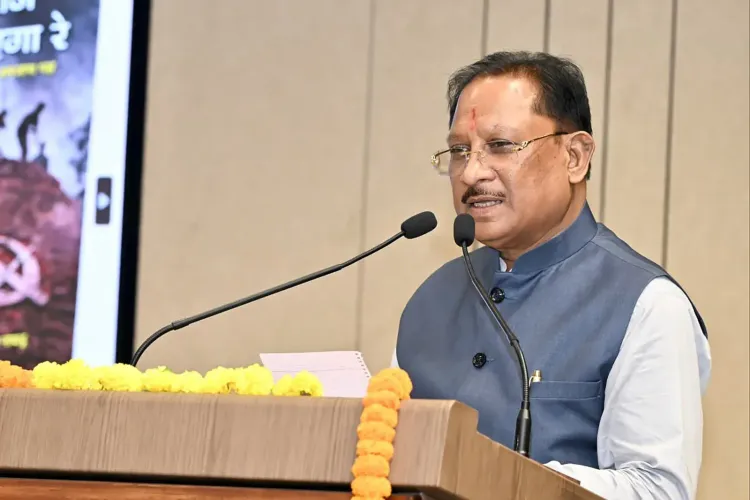
The Chief Minister's Office of Chhattisgarh announced on Sunday, 14 June 2026 that Chief Minister Vishnu Deo Sai attended the launch of a book titled 'Tera Raj Nahi Aayega Re' ('Your reign shall not come') in the state capital Raipur, using the occasion to declare that Bastar would be transformed into India's most developed tribal division now that Naxalism is on the wane.
Context
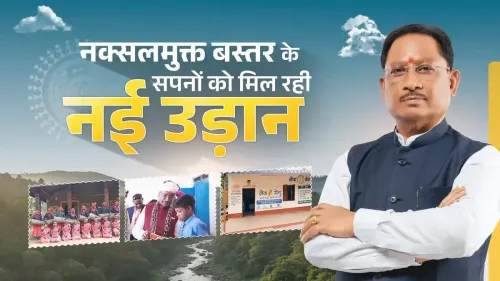
Addressing the gathering, CM Sai said that Bastar had remained cut off from the mainstream of development for four decades due to the scourge of Naxalism. He stated that with Naxalism now being brought to an end, joint efforts by the central and state governments would make Bastar the most beautiful and developed tribal division in the country.
The Chief Minister also reflected on the book's historical value, saying: 'When future generations read this book, they will get an opportunity to understand how hard society and security forces struggled for liberation from Maoism.' The title — Tera Raj Nahi Aayega Re — is itself a pointed assertion against Maoist ideological claims over the region.
Policy Backdrop
Bastar, a sprawling forested division in southern Chhattisgarh, has been among the most severely affected zones of Left-wing extremism in India. Since the early 2000s, successive state governments have pursued coordinated anti-Naxal security operations alongside targeted development schemes for tribal districts, a dual-track approach that has been mirrored across other affected states in central and eastern India.
The BJP government led by CM Sai, in office since December 2023, has positioned the rolling back of Naxal influence as a central plank of its governance agenda. The framing of a literary event around this theme signals an effort to embed the anti-Naxal narrative in cultural and public memory, not just security discourse.
Stakeholders and Impact
The event drew prominent attendees including Legislative Assembly Speaker Dr Raman Singh — the former Chief Minister who governed Chhattisgarh from 2003 to 2018 and oversaw many of the early anti-Naxal campaigns — Deputy Chief Minister Vijay Sharma, and Dr Shashank Sharma, President of the Sahitya Akademi, India's National Academy of Letters, along with other intellectuals and public figures.
For Bastar's tribal communities, the promise of accelerated development carries direct stakes: decades of conflict have suppressed infrastructure investment, educational access, and livelihood opportunities across the region's predominantly Adivasi population. Security forces, who bore sustained operational costs over four decades, are also central to the narrative the book seeks to document.
What's Next
The state administration is expected to follow through with Bastar-specific infrastructure and livelihood schemes as part of the Centre-state development push that CM Sai referenced. Parliamentary and assembly discussions on Left-wing extremism-affected regions are also likely to draw on the shifting ground realities in Bastar as a case study.
The broader implication is significant: if Chhattisgarh can sustain the security gains and convert them into measurable development outcomes for Bastar's tribal population, it would mark one of the most consequential turnarounds in India's long struggle against Left-wing extremism.
Point of View
The administration is also reaching beyond political audiences to legitimise the narrative among intellectuals and civil society. The real test, however, will be whether the promised development pipeline for Bastar translates into measurable outcomes for its Adivasi communities in the near term.
NationPress
13 Sept 2026
Frequently Asked Questions
What is the book 'Tera Raj Nahi Aayega Re' about?
The book 'Tera Raj Nahi Aayega Re' documents the struggle of society and security forces against Maoism and Naxalism in the Bastar region of Chhattisgarh. Its title translates to 'Your reign shall not come' and is a pointed assertion against Maoist ideological claims over the area.
What did CM Vishnu Deo Sai say at the book launch in Raipur?
CM Vishnu Deo Sai said that Bastar had remained cut off from development for four decades due to Naxalism, and that joint efforts by the central and state governments would now make it India's most developed and beautiful tribal division. He also said the book would help future generations understand the sacrifices made to defeat Maoism.
Who attended the 'Tera Raj Nahi Aayega Re' book launch in Raipur?
The event was attended by Chhattisgarh Assembly Speaker Dr Raman Singh, Deputy Chief Minister Vijay Sharma, Sahitya Akademi President Dr Shashank Sharma, and several other intellectuals and public figures, in addition to CM Vishnu Deo Sai.
How long has Bastar been affected by Naxalism?
According to CM Sai's remarks at the book launch, Bastar suffered under Naxalism for four decades, during which the region remained cut off from the mainstream of development.
What is the government's plan for Bastar after Naxalism?
The Chhattisgarh government, along with the central government, plans to develop Bastar into India's most beautiful and developed tribal division. CM Sai indicated this would be achieved through joint Centre-state efforts following the decline of Naxal influence in the region.