CM Sai: Bastar's Former Maoists Now Farming, Building New Lives
Synopsis
Chhattisgarh CM Vishnu Deo Sai says Bastar is undergoing a 'remarkable transformation' as former Maoists take up farming and entrepreneurship under state and central rehabilitation schemes, framing peace-building as a governance priority.
Key Takeaways
CM Vishnu Deo Sai posted on 17 November 2026 describing Bastar as a region where former insurgents are embracing farming and entrepreneurship.
Chhattisgarh has maintained a formal Maoist surrender-and-rehabilitation policy since the early 2000s, including financial aid, land and vocational training.
The central government's SAMADHAN doctrine and revised Surrender-cum-Rehabilitation Scheme form the national policy backbone for LWE reintegration.
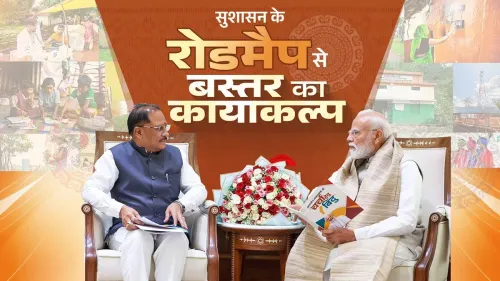
CM Sai credited Prime Minister Narendra Modi's 'visionary leadership' and positioned the initiative as a joint state-Centre achievement.
The government's messaging has shifted from security metrics to livelihood outcomes — farming, self-employment and skill development in former conflict zones.
Specific surrender numbers and individual rehabilitation data cited in the post remain unverified at this stage.
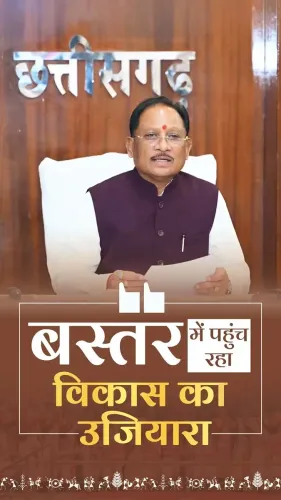
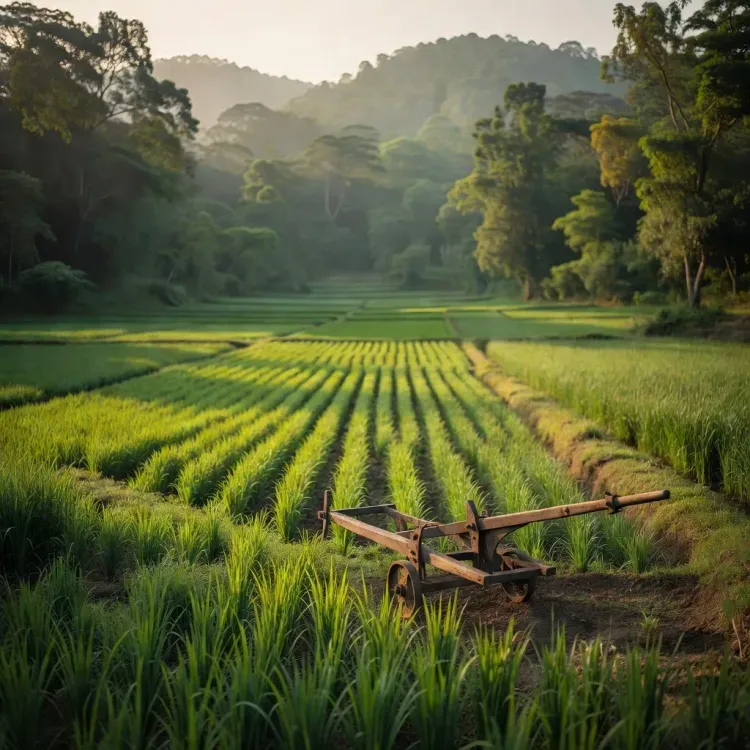
A region once synonymous with jungle ambushes and red-zone warnings is now being reimagined — and Chhattisgarh Chief Minister Vishnu Deo Sai wants the country to hear about it. On Tuesday, 17 November 2026, the CM took to X to describe Bastar as a place where former insurgents are trading weapons for ploughs and livelihoods, calling it 'a remarkable transformation.'
From Weapons to Farmland: What Sai Is Saying
In his post, CM Sai wrote that 'former Maoists who once carried weapons are now rebuilding their lives through farming, entrepreneurship and meaningful livelihoods, embracing peace and dignity.' He credited the direction of Prime Minister Narendra Modi and affirmed his government's commitment to ensuring 'those who renounce violence find opportunities for rehabilitation, self-reliance and a better future.'
The language is deliberate. This is not a law-and-order statement — it is a development pitch. Sai frames surrender not as defeat but as the beginning of something: aspiration, dignity, a last-mile state that actually arrives.
Bastar's Long Shadow and the Policy Machinery Behind the Pivot
Bastar division, a cluster of districts in southern Chhattisgarh, has been the heartland of Left-Wing Extremism in India for decades. The Indian state's answer has evolved considerably since the early 2000s, when Chhattisgarh first formalised its Maoist surrender-and-rehabilitation framework — offering financial assistance, land allotments and vocational training to those who defect.
At the national level, the central government's SAMADHAN doctrine and the revised Surrender-cum-Rehabilitation Scheme codified this dual-track approach: security pressure on one side, economic reintegration on the other. The logic is straightforward — make the cost of staying in the insurgency higher than the cost of leaving it.
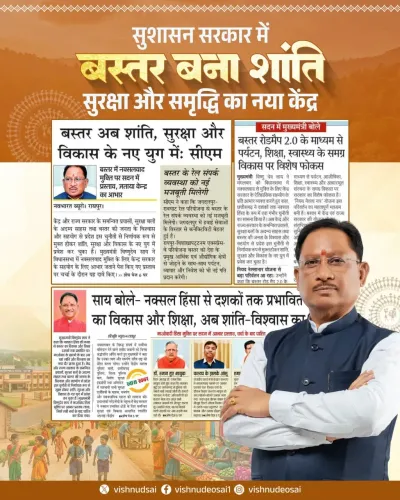
What has shifted under the current dispensation is the rhetorical and administrative emphasis. Where earlier governments tended to lead with security metrics — encounters, surrenders, weapons seized — the Sai government's messaging increasingly leads with livelihood outcomes: agriculture, self-employment, skill training in former conflict zones.
Why This Moment Matters for Tribal Chhattisgarh
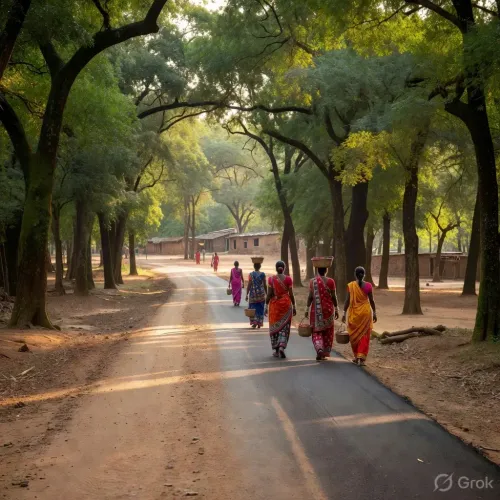
The communities at the centre of this story are predominantly tribal. Bastar's tribal population has historically been caught between insurgent coercion and state-security operations — a double displacement that made development both urgent and difficult to deliver. Targeted programmes for farming and entrepreneurship in LWE districts are designed precisely to break that cycle.
CM Sai, who has emphasised tribal development as a signature theme since taking office in December 2023, is using this post to signal continuity with that agenda — and to associate it directly with the Prime Minister's national framework. The political subtext is unmistakable: peace in Bastar is being positioned as a joint achievement of state and central leadership.
The ground-level details — specific surrender numbers, individual success stories, disbursement timelines — remain unverified. But the direction of policy, and the government's desire to tell a progress story, is clear and consistent.
Bastar has been a wound in India's map for half a century. If the pivot from kinetic to developmental is taking hold, the proof will show up not in press releases but in the next set of economic surveys from these districts — and in whether the peace holds.
Point of View
Particularly ahead of any potential review of LWE-district funding under centrally sponsored schemes. The explicit invocation of PM Modi ties the state's progress story to national leadership, reinforcing the party's unified narrative on tribal welfare. Whether the rehabilitation infrastructure is delivering at scale remains the critical question that this messaging leaves unanswered.
NationPress
17 Nov 2026
Frequently Asked Questions
What is the Maoist rehabilitation scheme in Chhattisgarh?
Chhattisgarh has operated a formal surrender-and-rehabilitation policy since the early 2000s, offering financial assistance, land allotments and vocational training to Maoists who renounce violence. The central government's Surrender-cum-Rehabilitation Scheme and the SAMADHAN doctrine provide the national framework.
What is Bastar known for in the context of Naxalism?
Bastar division in southern Chhattisgarh has been the core zone of Left-Wing Extremism in India for decades, with dense forests historically providing cover for Maoist operations. It has also been the focus of successive government rehabilitation and development programmes.
What did CM Vishnu Deo Sai say about Bastar in November 2026?
CM Sai posted on 17 November 2026 that former Maoists in Bastar are rebuilding their lives through farming, entrepreneurship and meaningful livelihoods, calling it a 'remarkable transformation' driven by the government's commitment to rehabilitation under PM Modi's leadership.
What is the SAMADHAN doctrine for Naxal areas?
SAMADHAN is the central government's strategic framework for dealing with Left-Wing Extremism, combining security operations with development initiatives, improved governance and rehabilitation schemes to reduce insurgent influence in affected districts.
Who is Vishnu Deo Sai and when did he become Chhattisgarh CM?
Vishnu Deo Sai is a BJP leader and tribal community representative who became Chief Minister of Chhattisgarh in December 2023, with tribal development and counter-insurgency rehabilitation among his administration's stated priorities.