CM Sai calls VB-G RAM G Yojana a milestone for Viksit Bharat 2047
Synopsis
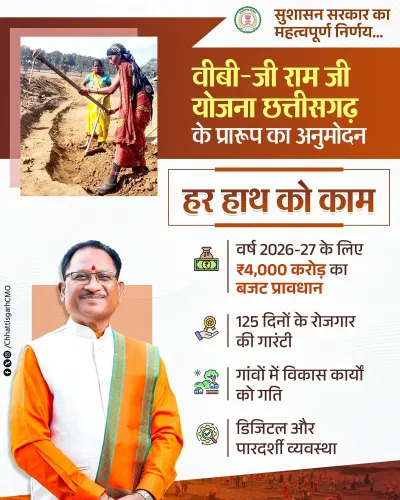
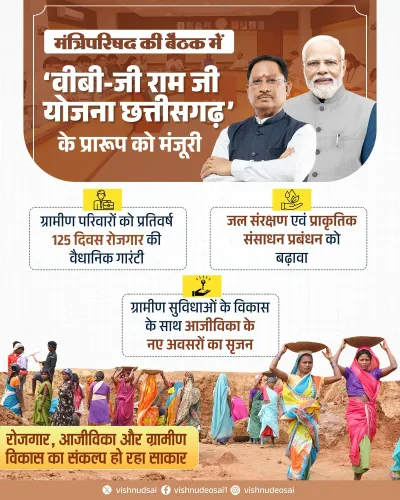
Chhattisgarh CM Vishnu Deo Sai has positioned the VB-G RAM G Yojana as more than a jobs programme — framing it as a cornerstone of PM Modi's Viksit Bharat 2047 vision and a new development paradigm for rural India.
Key Takeaways
CM Vishnu Deo Sai on 6 August 2026 publicly backed the VB-G RAM G Yojana as a milestone for rural India's development.
The scheme is framed as a vehicle for PM Modi 's Viksit Bharat 2047 goal of making India a developed nation by its centenary.
The BJP's governing approach repositions rural employment schemes from short-term relief to long-term asset creation — a deliberate departure from the MGNREGA safety-net model introduced in 2005 .
Chhattisgarh, with a large rural and tribal population, is a key testing ground for translating the 2047 vision into ground-level outcomes.
Exact launch dates, funding details, and operational guidelines for the scheme remain to be publicly established.
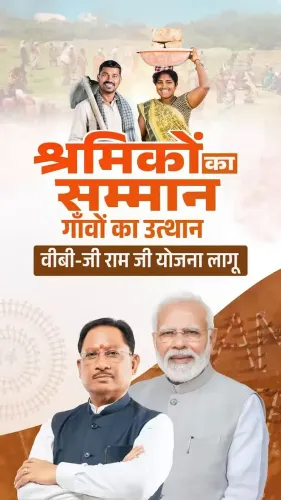
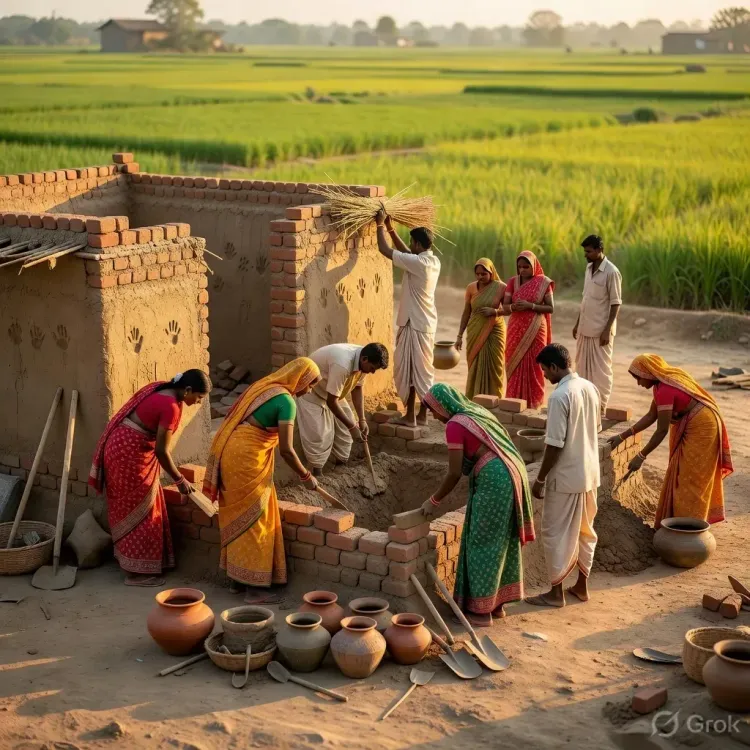
Rural employment in India has long been treated as a safety net — something to catch the falling, not to lift the standing. Chhattisgarh Chief Minister Vishnu Deo Sai is pushing a different frame: that the VB-G RAM G Yojana is not a jobs scheme but a full-scale development journey for rural India, one he says will prove to be a milestone in realising Prime Minister Narendra Modi's Viksit Bharat 2047 vision.
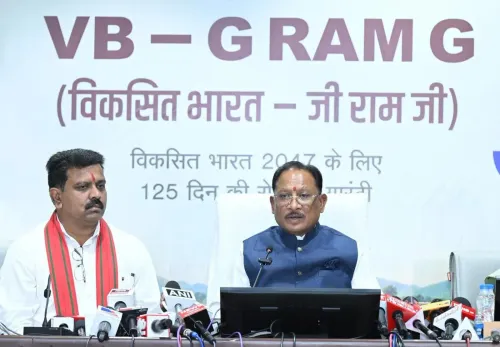
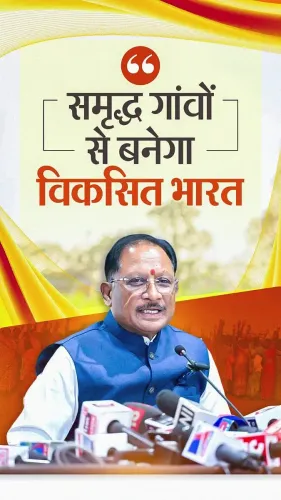
Posting on 6 August 2026, CM Sai wrote: 'The VB-G RAM G Yojana is not merely a scheme to provide employment — it is a powerful medium for rural India's new development journey. This scheme will prove to be a milestone in realising the resolve of respected Prime Minister Shri Narendra Modi Ji's Viksit Bharat 2047.' The post was accompanied by a video, signalling a deliberate communication push around the scheme.
From MGNREGA's safety net to a development engine
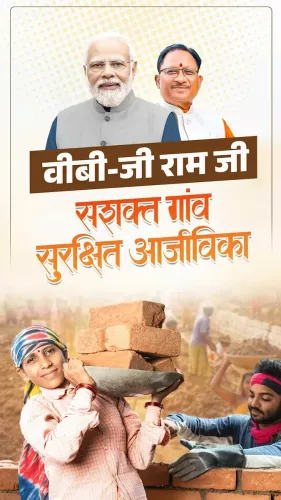
The policy lineage here runs deep. MGNREGA, enacted in 2005, guaranteed wage employment to rural households — a floor, not a ladder. The BJP-led framing, consistently applied at both the Centre and in states like Chhattisgarh, has been to reposition rural employment schemes as engines of long-term asset creation rather than short-term relief. The name itself — VB-G RAM G, where 'VB' echoes 'Viksit Bharat' — signals that branding choice is deliberate: every rural worker enrolled is cast as a participant in India's 2047 development story.
Viksit Bharat 2047 as the governing frame
PM Modi's Viksit Bharat 2047 goal — making India a fully developed nation by the centenary of its independence — has become the organising principle around which state governments across BJP-ruled states align their flagship announcements. Chhattisgarh, with a significant rural and tribal population, is a natural theatre for schemes that test whether that national ambition can be made tangible at the village level. CM Sai's framing positions the state as an active co-author of that vision, not merely an implementing agency.
The operational details — exact rollout timelines, funding structure, and convergence with existing central programmes — are still to be publicly established. What is clear is the political and developmental argument being made: that rural employment, done right, is not expenditure to be minimised but investment to be scaled.
The real test arrives at the gram panchayat level — when the scheme's promise meets the road, the field, and the worker waiting for wages that arrive on time.
Point of View
The state government signals alignment with Delhi's vision while asserting Chhattisgarh's role as an active co-architect. The shift in language — from 'employment guarantee' to 'development journey' — reflects a broader ideological move to reframe welfare spending as nation-building investment. Whether the scheme's on-ground delivery matches its rhetorical ambition will determine if this framing holds beyond the announcement cycle.
NationPress
6 Aug 2026
Frequently Asked Questions
What is the VB-G RAM G Yojana?
The VB-G RAM G Yojana is a rural scheme promoted by the Chhattisgarh government, positioned not merely as an employment programme but as a broader rural development initiative aligned with PM Modi's Viksit Bharat 2047 goal. Exact operational details and launch guidelines have not yet been officially published.
What is Viksit Bharat 2047?
Viksit Bharat 2047 is Prime Minister Narendra Modi's national vision to transform India into a fully developed country by 2047, the centenary of its independence. It serves as the overarching framework for a wide range of central and state government schemes.
What did Chhattisgarh CM Vishnu Deo Sai say about the scheme?
CM Vishnu Deo Sai said the VB-G RAM G Yojana is 'not merely a scheme to provide employment' but 'a powerful medium for rural India's new development journey,' and that it will prove to be a milestone in realising PM Modi's Viksit Bharat 2047 resolve.
How does VB-G RAM G Yojana differ from MGNREGA?
MGNREGA, enacted in 2005, guarantees a minimum of wage employment as a social safety net. The VB-G RAM G Yojana is being framed by the Chhattisgarh government as a long-term development instrument rather than a short-term relief measure, though detailed operational differences are yet to be publicly outlined.
Which state is implementing the VB-G RAM G Yojana?
The scheme is being championed by the Chhattisgarh state government under Chief Minister Vishnu Deo Sai, a BJP leader, as part of the state's contribution to the Viksit Bharat 2047 national vision.