CM Sai Champions Jan Dhan as Direct-Benefit Game-Changer
Synopsis
Chhattisgarh CM Vishnu Deo Sai invoked the famous '₹15 of every ₹100' leakage admission to contrast past governance failures with PM Modi's Jan Dhan Yojana, calling the scheme — once ridiculed — the backbone of direct welfare delivery to India's poor.
Key Takeaways
CM Vishnu Deo Sai posted on October 11, 2026 , praising PM Modi's Jan Dhan Yojana as a transformative direct-benefit tool.
He cited the historical quote — only ₹15 of every ₹100 reaching the poor — to frame the scale of pre-2014 governance leakage.
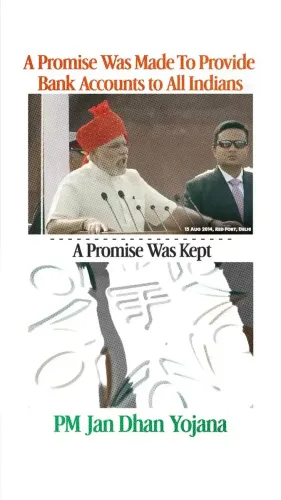
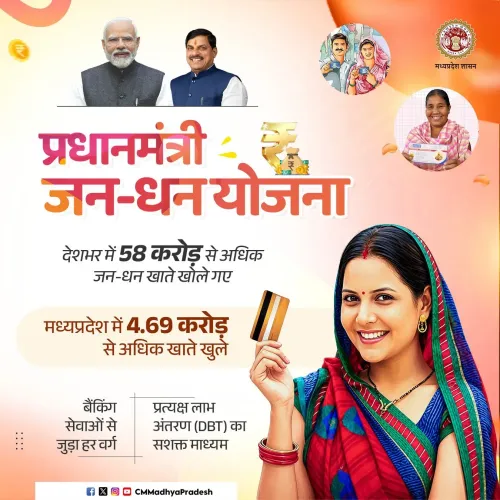
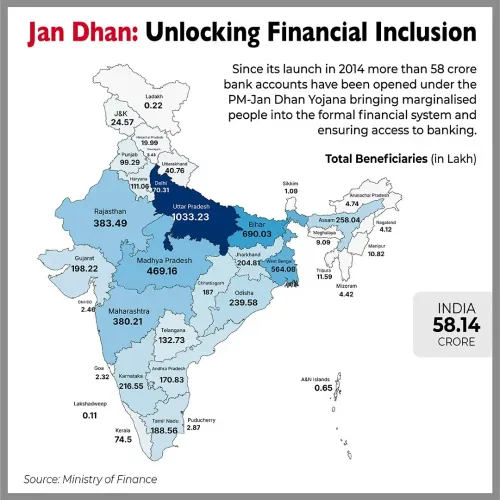
Pradhan Mantri Jan Dhan Yojana (PMJDY) was launched in August 2014 to bank India's unbanked population with zero-balance accounts.
Jan Dhan accounts became the infrastructure for Direct Benefit Transfers (DBT) , channelling LPG subsidies, MGNREGA wages, PM-KISAN payments, and pandemic relief without intermediaries.
Sai linked the national scheme to Chhattisgarh's tribal and rural welfare delivery, making it a state-level political argument as well.
The post, tagged #ChhattisgarthSalutesModiJi , is part of a broader BJP campaign highlighting Modi's governance record.
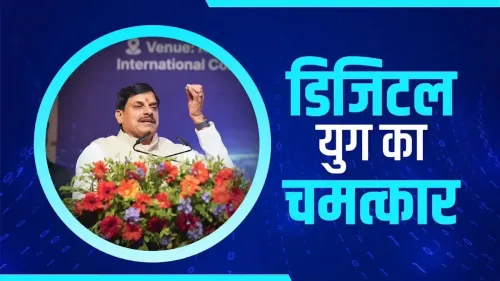
From a government that once admitted only ₹15 of every ₹100 reached the poor, to one that routes welfare directly into bank accounts — Chhattisgarh Chief Minister Vishnu Deo Sai on Sunday, October 11, 2026, used a pointed historical contrast to make the case for PM Narendra Modi's Jan Dhan Yojana as the most consequential anti-leakage reform in modern Indian governance.
The '₹15 out of ₹100' indictment — and who said it
The quote CM Sai invoked is one of Indian politics' most cited admissions. Former Prime Minister Rajiv Gandhi had famously acknowledged in the 1980s that systemic leakages meant barely 15 paise of every rupee of government spending reached its intended beneficiary. Sai deployed that line not to relitigate history but to frame the scale of the problem Modi inherited — and the ambition of the solution that followed.
'When the Jan Dhan Yojana was launched, it was ridiculed,' Sai wrote. 'But today, these very Jan Dhan accounts have become a powerful vehicle for delivering the benefits of government schemes directly to the poor.' The post, tagged #ChhattisgarhSalutesModiJi, is part of a coordinated BJP appreciation wave around Modi's governance record.
What Jan Dhan actually changed
Launched in August 2014, the Pradhan Mantri Jan Dhan Yojana (PMJDY) set out to bank India's unbanked — zero-balance accounts, RuPay debit cards, and overdraft facilities for households that had never touched the formal financial system. Critics at the time called it an expensive photo-op. What followed reframed that scepticism entirely.
The accounts became the backbone of Direct Benefit Transfers (DBT) — the plumbing through which LPG subsidies, MGNREGA wages, PM-KISAN instalments, and pandemic relief reached hundreds of millions of Indians without a middleman taking a cut. The architecture that was mocked as unnecessary turned out to be indispensable.
Sai's political signal from Raipur
For Chhattisgarh, a state where a significant share of the population belongs to tribal and rural communities historically underserved by formal banking, the Jan Dhan frame is not merely rhetorical. State-level welfare delivery — from ration entitlements to housing scheme transfers — runs on the same DBT rails that PMJDY built.
By anchoring his tribute to a concrete policy architecture rather than a generic salute, Sai signals something specific: that the BJP's development pitch in Chhattisgarh is inseparable from the central government's financial-inclusion story. The mockery-to-vindication arc he traces is also a deliberate political counter-narrative — if the scheme was ridiculed then and works now, the critics were wrong then and remain wrong now.
Twelve years after Jan Dhan's launch, the debate has moved from 'will it work?' to 'how much has it saved?' That shift in the question itself is the answer CM Sai is banking on.
Point of View
He grounds the tribute in policy history rather than sentiment, making it harder to dismiss as spin. For Chhattisgarh, where tribal and rural financial inclusion remains a live political issue, the Jan Dhan frame doubles as a local governance argument. The move also reveals how BJP state leaders are expected to reinforce the Centre's development story, tying their own political identity to Modi's landmark schemes ahead of any electoral cycle.
NationPress
11 Oct 2026
Frequently Asked Questions
What is the '₹15 of every ₹100' quote CM Sai referenced?
It refers to a remark attributed to former PM Rajiv Gandhi acknowledging that systemic corruption and leakages meant only about 15 paise of every rupee spent by the government actually reached the intended beneficiary — a damning indictment of the pre-reform welfare delivery system.
What is Pradhan Mantri Jan Dhan Yojana (PMJDY)?
PMJDY is a financial inclusion scheme launched by PM Narendra Modi in August 2014, providing zero-balance bank accounts, RuPay debit cards, and overdraft facilities to previously unbanked Indian households, particularly the rural and tribal poor.
How do Jan Dhan accounts help welfare delivery?
Jan Dhan accounts serve as the backbone of Direct Benefit Transfers (DBT), allowing the government to send subsidies and scheme payments — such as LPG subsidies, PM-KISAN instalments, and MGNREGA wages — directly to beneficiaries' accounts, eliminating middlemen and leakage.
Why did CM Vishnu Deo Sai post about Jan Dhan Yojana?
Sai used the post as a tribute to PM Modi's governance record under the hashtag #ChhattisgarhSalutesModiJi, contrasting the historic leakage problem with the scheme's success as a direct-benefit platform, while also reinforcing the BJP's development narrative in Chhattisgarh.
What is the significance of Jan Dhan for Chhattisgarh specifically?
Chhattisgarh has a large tribal and rural population historically underserved by formal banking. Jan Dhan accounts underpin state-level welfare transfers — from housing scheme payments to ration entitlements — making financial inclusion a direct governance priority for the state.