CM Sai Hails Sukma Science Park as Symbol of New Bastar
Synopsis
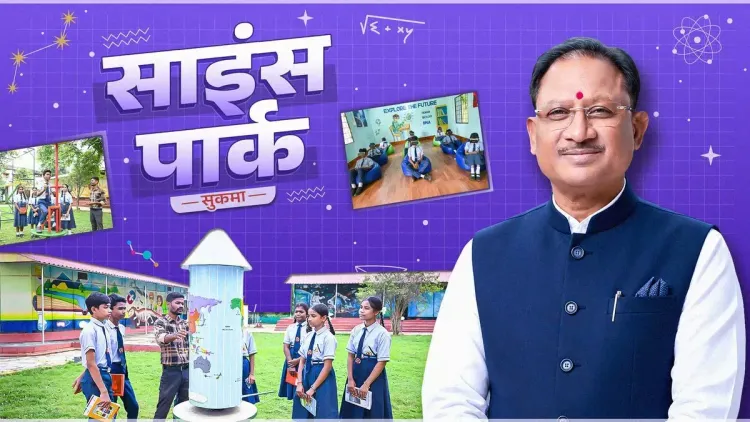
Chhattisgarh CM Vishnu Deo Sai highlighted the Sukma Science Park as a beacon of change for Bastar's tribal youth, saying curiosity and a hunger for learning are becoming the region's new identity.
Key Takeaways
CM Vishnu Deo Sai posted on November 18, 2026 celebrating the Science Park in Sukma , Bastar division.
Sukma is a district in southern Chhattisgarh historically challenged by left-wing extremism and educational underdevelopment.
The science park gives tribal children hands-on STEM exposure — a step beyond basic schooling access.
Chhattisgarh has pursued education infrastructure in tribal districts since the 2010s , with STEM facilities marking a qualitative upgrade.
CM Sai framed children's curiosity as 'Bastar's new identity,' signalling a deliberate shift in the region's national image.
Expansion of similar facilities to the remaining six districts of the Bastar division remains the key measure of the initiative's scale.
In one of India's most conflict-scarred tribal belts, children are now peering into telescopes and running science experiments. Chhattisgarh Chief Minister Vishnu Deo Sai on Wednesday, November 18, 2026, spotlighted the Science Park in Sukma as living proof that Bastar is writing a new chapter — one powered by curiosity, not conflict.
Posting on X, CM Sai wrote: 'Bastar ki nayi peedhi ab naye sapnon aur nayi sambhavanaon ke saath aage badh rahi hai' — 'Bastar's new generation is now moving forward with new dreams and new possibilities.' He described the Sukma Science Park as 'a beautiful picture of this change,' where children's eagerness to learn and their hunger to discover something new are becoming the hallmark of a transformed Bastar.
Sukma's Science Park: STEM in a Former Conflict Zone
Sukma sits deep inside the Bastar division of southern Chhattisgarh — a district long associated with security operations against left-wing extremism and among the most educationally underserved corners of the country. Introducing a science park here is not a routine infrastructure move; it is a deliberate signal. The facility gives local tribal children hands-on exposure to science and technology concepts that most government schools in remote areas have never offered.
Chhattisgarh governments have pursued education infrastructure in tribal districts since the 2010s, but the introduction of STEM-oriented spaces like science parks marks a qualitative shift — from basic schooling access to aspiration-building. The Sukma park fits a pattern emerging across the state: pair security stabilisation with visible, tangible investments in the region's youngest residents.
Bastar's Twin-Track Transformation
For decades, Bastar appeared in headlines almost exclusively for violence. The logic behind the current approach — running development investments in parallel with security operations — rests on a straightforward premise: tackle the socio-economic conditions that make recruitment into extremist networks possible. Education, and especially science education, chips away at that vulnerability from the ground up.
CM Sai's framing on X captures this pivot precisely. He calls the children's inquisitiveness and enthusiasm 'Bastar's new identity' — 'badlte Bastar ki nayi pehchaan' — and describes the district as a place 'where dreams get opportunity and talent gets a new flight.' The language is aspirational by design, aimed as much at changing the national perception of Bastar as at celebrating a local facility.
What Comes Next for Bastar's Children
The larger question now is replicability. Sukma is one district; the Bastar division spans seven. Whether science parks or comparable STEM exposure facilities roll out to Dantewada, Bijapur, Kondagaon, Kanker, Narayanpur, and Bastar districts will determine whether this becomes a transformative programme or remains a showcase project. Measurable shifts in school enrollment, learning outcomes, and eventually higher-education participation in the region will be the real scorecard.
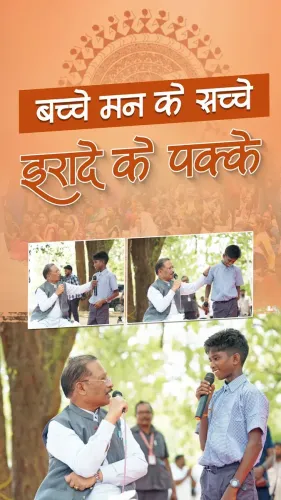
For now, the image CM Sai projects — tribal children leaning over exhibits in a science park in one of India's most difficult districts — lands as both a policy statement and a dare to the future.
The telescopes are pointed outward. The question is how many children get to look through them.
Point of View
The BJP-led state government is making a development-first argument for its Bastar policy. The move also aligns with the central government's broader tribal mainstreaming agenda, linking local STEM investment to national skill-development goals. If enrollment and learning-outcome data eventually backs the optics, Bastar could become a template for conflict-affected districts elsewhere in central India.
NationPress
18 Nov 2026
Frequently Asked Questions
What is the Sukma Science Park in Bastar?
The Sukma Science Park is a facility in Sukma district, Bastar division, designed to give local tribal children hands-on exposure to science and technology concepts — a form of STEM education rarely available in this remote region.
Why is a science park significant in Sukma?
Sukma is one of Chhattisgarh's most underdeveloped and conflict-affected districts. A science park here represents a shift from basic schooling access to aspiration-building, targeting the socio-economic conditions that have historically fuelled unrest.
What did CM Vishnu Deo Sai say about Bastar's education?
CM Sai said Bastar's new generation is moving forward with new dreams, and that children's curiosity and enthusiasm at the Sukma Science Park are becoming the region's new identity.
What is Chhattisgarh's education policy in tribal districts?
Since the 2010s, Chhattisgarh governments have invested in education infrastructure across tribal districts. Recent efforts have shifted towards STEM-oriented facilities like science parks to go beyond basic access and build skills.
Will science parks be opened in other Bastar districts?
That remains to be confirmed. The Bastar division has seven districts; Sukma is the first with this type of facility. Expansion to other districts will be the key measure of how wide the initiative's impact can reach.