CM Sai Flags Online Registry, Auto-Mutation Push in Chhattisgarh
Synopsis
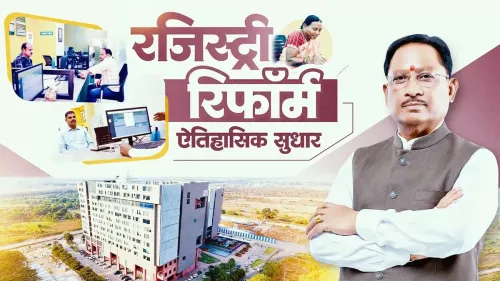
Chhattisgarh CM Vishnu Deo Sai announced that citizens can now register property online and that land-record mutation happens automatically after registration — cutting manual steps, saving time, and curbing fraud in the state's revenue services.
Key Takeaways
Vishnu Deo Sai , Chief Minister of Chhattisgarh , announced online property registration is now available to citizens from home.
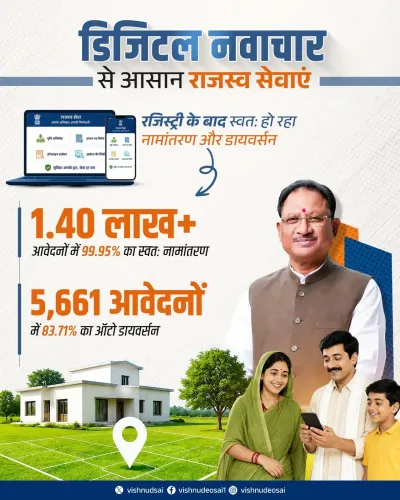
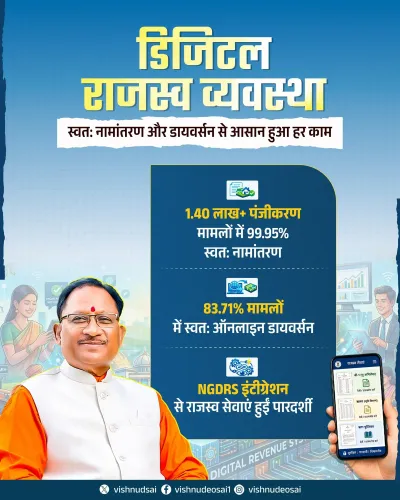
Post-registration mutation of land records is now triggered automatically, eliminating a historically separate and slow bureaucratic step.
The reforms aim to save citizens time and effort, remove unnecessary procedures, and reduce opportunities for fraud in revenue services.
Chhattisgarh joins several other Indian states integrating registration portals with land-record systems as part of broader e-governance drives.
CM Sai has framed technology-led simplification as a defining commitment of his administration since taking office in December 2023 .
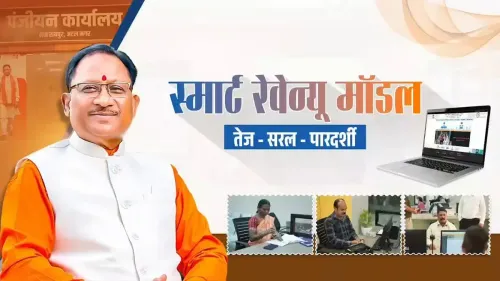
Property paperwork that once meant repeated trips to revenue offices can now be done from a living room — and Chhattisgarh Chief Minister Vishnu Deo Sai wants citizens to know it. On 13 August 2026, the Chief Minister took to X to highlight two interlocking reforms in the state's revenue administration: online property registration and automatic post-registration mutation, both designed to cut the friction that has long plagued land transactions in India.
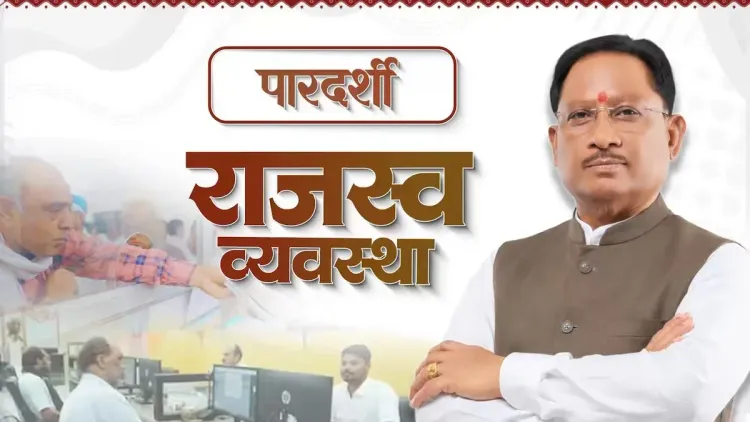
Posting in Hindi, CM Sai framed the reforms in direct terms: 'Saral prakriya, pardarshi vyavastha — yahi sushasan ki pehchaan hai' ('Simple process, transparent system — this is the hallmark of good governance'). He said citizens can now complete property registration from home via an online portal, and that the mutation — the formal transfer of land records into a new owner's name — follows automatically once registration is done, removing a step that historically required a separate, often slow, bureaucratic process.
Why Automatic Mutation Matters for Landowners
In conventional land administration, registration and mutation are two distinct events handled by two different departments. A buyer could complete registration at a sub-registrar office yet wait months — sometimes years — for the revenue department to update land records, leaving ownership in legal limbo. Automatic, system-triggered mutation collapses that gap. It also reduces the human touchpoints where, historically, delays and informal payments could accumulate.
CM Sai specifically cited three citizen-facing gains: savings in time and effort, freedom from unnecessary procedural steps, and a meaningful check on fraud. That last point carries particular weight in a state where land disputes have historically been a source of prolonged litigation and, in tribal belt areas, of deeper socio-economic vulnerability.
Chhattisgarh Joins a Broader State-Level E-Governance Wave
Several Indian states have pursued similar integrations — linking property registration portals with land-record mutation systems to reduce manual intervention. Chhattisgarh's push fits squarely within that national pattern, though the state is among the younger and more resource-constrained in central India, making the technology bet a more consequential governance signal. Chief Minister Sai, who took office in December 2023, has consistently framed digital reform as a pillar of his administration's 'good governance' identity.
The reforms arrive as rural and semi-urban landowners — the primary users of revenue services — increasingly have smartphone access, making online registration a practical option rather than a paper aspiration. Whether rollout metrics bear out the promise is the next test: processing-time data and dispute-rate trends in Chhattisgarh's revenue services will be the real scorecard.
Point of View
Positioning the BJP-led Chhattisgarh government as a technology-forward administration ahead of future electoral cycles. The pairing of online registration with automatic mutation is substantively significant — it targets a well-documented pain point in Indian land administration where the gap between two departments has historically bred both delay and corruption. If rollout data confirms reduced processing times and dispute rates, it hands the ruling party a concrete, citizen-visible deliverable in a state where land rights are politically and economically sensitive. The broader pattern of state-level e-governance integration suggests this is less an outlier and more a competitive race among states — but execution, not announcement, will determine the reform's lasting impact.
NationPress
13 Aug 2026
Frequently Asked Questions
What is the new online registry facility in Chhattisgarh?
Chhattisgarh has introduced an online property registration system that allows citizens to complete property registration from home without visiting a sub-registrar office in person.
What is automatic mutation after registration in Chhattisgarh?
After a property is registered online, the mutation — the formal update of land records to reflect the new owner — now happens automatically through a system-triggered process, removing the need for a separate manual application to the revenue department.
How does automatic mutation reduce fraud in land transactions?
By removing manual human touchpoints between registration and mutation, the system reduces the window in which delays could be exploited or informal payments demanded, making the process more transparent and harder to manipulate.
Which states in India have integrated property registration with land mutation?
Several Indian states have pursued integration of registration portals with land-record mutation systems as part of e-governance programmes; Chhattisgarh's move follows a broader national pattern, though specific state-by-state details vary.
When did Vishnu Deo Sai become Chief Minister of Chhattisgarh?
Vishnu Deo Sai took office as Chief Minister of Chhattisgarh in December 2023 after the BJP's victory in the state assembly elections.