CM Sai Hails Bhilai Students' Chhattisgarh Assembly Visit
Synopsis
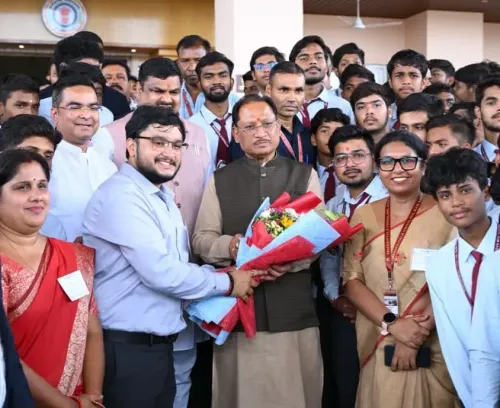
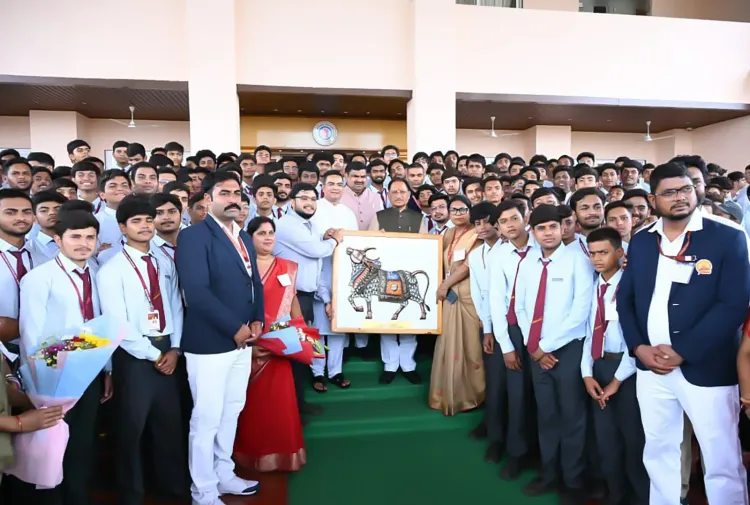
Chhattisgarh CM Vishnu Deo Sai on 14 July 2026 commended students of Shakuntala Vidyalaya, Bhilai, for visiting the state assembly to observe democratic proceedings, calling civic awareness a collective responsibility and wishing the students a bright future.
Key Takeaways
Chhattisgarh Chief Minister Vishnu Deo Sai posted on 14 July 2026 about a student visit to the Chhattisgarh Vidhan Sabha .
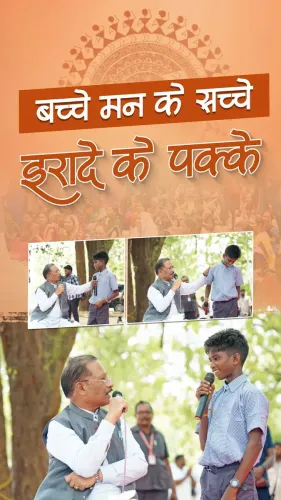
Students of Shakuntala Vidyalaya, Bhilai observed assembly proceedings and the responsibilities of elected representatives firsthand.
CM Sai described the legislature as 'लोकतंत्र का मंदिर' ('the temple of democracy') and called civic awareness the greatest democratic strength.
The initiative aligns with National Education Policy 2020 directives on experiential civic education in schools.
Chhattisgarh has run similar assembly outreach programmes for students since the state's formation in 2000 .
Possible next steps include expanding such visits to more districts and integrating civic modules into the Chhattisgarh Board curriculum.
Chhattisgarh Chief Minister Vishnu Deo Sai on Tuesday, 14 July 2026 lauded a civic education initiative in which students of Shakuntala Vidyalaya, Bhilai visited the state legislature to observe its proceedings firsthand, calling aware and responsible citizens the greatest strength of democracy.
Context
Posting in Hindi on X, CM Sai wrote: 'लोकतंत्र की सबसे बड़ी शक्ति जागरूक और उत्तरदायी नागरिक होते हैं' ('The greatest strength of democracy is aware and responsible citizens'). He described the visit to the Chhattisgarh Vidhan Sabha — which he termed 'लोकतंत्र का मंदिर' ('the temple of democracy') — as an opportunity for the young students to witness legislative proceedings directly. The Chief Minister extended warm wishes to all participating students for a bright future.
The students observed the functioning of the assembly, the responsibilities of elected representatives, and the broader democratic process, according to the post. Bhilai, located in Durg district, is one of Chhattisgarh's foremost industrial and educational hubs, home to the renowned Bhilai Steel Plant and a dense network of schools.
Policy Backdrop
The National Education Policy (NEP) 2020 explicitly directed states to incorporate experiential civic education and structured exposure to democratic institutions into school curricula. Assembly visit programmes of this kind align directly with that mandate, providing students with a ground-level understanding of legislative functioning that classroom instruction alone cannot replicate.
Since Chhattisgarh's formation in 2000, successive state governments have run outreach programmes enabling school and college students to observe assembly proceedings. These efforts have been part of a sustained attempt to build democratic literacy among the first generation born after statehood, and mirror similar initiatives undertaken by other newly carved-out states across India.
Stakeholders and Impact
The immediate beneficiaries are the school students of Shakuntala Vidyalaya, Bhilai, who gained direct exposure to the workings of the Chhattisgarh Vidhan Sabha — a unicameral legislature constituted in 2000 that enacts state laws and holds the executive accountable. For many students, such a visit represents their first tangible encounter with the institutions that govern their daily lives.
The state education department stands as a key stakeholder in scaling such programmes. Civic familiarisation at an early age is widely regarded by education researchers as a foundation for participatory citizenship, reducing the distance young people perceive between themselves and formal governance structures.
What's Next
Attention will now turn to whether the Chhattisgarh government moves to formalise and expand assembly visit programmes to additional districts beyond Durg, and whether experiential civic modules of this nature are formally integrated into the Chhattisgarh Board curriculum. If institutionalised at scale, such initiatives could meaningfully deepen democratic engagement among the state's student population well before they reach voting age.
Point of View
High-visibility signal of the BJP-led state government's commitment to civic education — a theme that resonates with the NEP 2020 framework the Centre has championed. By framing the legislature as a 'temple of democracy,' Sai invokes a vocabulary that simultaneously elevates institutional prestige and positions his administration as a steward of democratic values. The broader pattern of such visits across Indian states suggests this is as much about building long-term political legitimacy among young citizens as it is about pedagogical intent. Whether Chhattisgarh moves to formalise these visits at scale will be the real test of the government's stated commitment.
NationPress
14 Jul 2026
Frequently Asked Questions
Why did Shakuntala Vidyalaya Bhilai students visit Chhattisgarh Vidhan Sabha?
Students of Shakuntala Vidyalaya, Bhilai visited the Chhattisgarh Vidhan Sabha on 14 July 2026 to observe legislative proceedings firsthand as part of a civic education initiative, which CM Vishnu Deo Sai highlighted as a way to connect the new generation with democratic values.
What did CM Vishnu Deo Sai say about the student assembly visit?
CM Sai said the greatest strength of democracy is aware and responsible citizens, and described the visit as an experience that would inspire students toward active participation in nation-building. He also extended warm wishes to all participating students for a bright future.
What is the Chhattisgarh Vidhan Sabha?
The Chhattisgarh Vidhan Sabha is the unicameral state legislature of Chhattisgarh, constituted when the state was formed in 2000. It enacts state laws and holds the executive accountable.
How do Chhattisgarh student assembly visits relate to NEP 2020?
The National Education Policy 2020 directed states to incorporate experiential civic education and exposure to democratic institutions into school curricula. Assembly visit programmes like the one in Bhilai directly fulfil that mandate by giving students hands-on legislative exposure.
Will more Chhattisgarh schools get to visit the state assembly?
There is no official announcement yet, but the broader pattern suggests the government may look to expand such visits to additional districts and potentially integrate civic experiential modules into the Chhattisgarh Board curriculum.