CM Sai hails new Ambikapur-Hazrat Nizamuddin Express
Synopsis
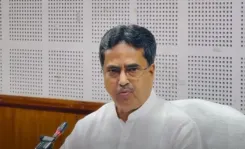
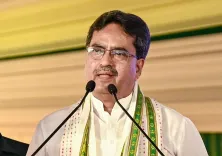
Chhattisgarh CM Vishnu Deo Sai has welcomed the new twice-weekly Ambikapur–Hazrat Nizamuddin Express, saying it will boost connectivity for the tribal Surguja region and open doors to education, employment, and trade with the national capital.
Key Takeaways
The Ambikapur–Hazrat Nizamuddin Express will operate twice a week , giving Surguja region its first direct rail link to New Delhi.
Chhattisgarh CM Vishnu Deo Sai announced the development on October 6, 2026 , crediting PM Modi's leadership for expanding the state's rail network.
The new service is expected to benefit passengers in Ambikapur and surrounding areas with faster, more affordable access to the national capital.
CM Sai highlighted expanded opportunities in education, employment, and trade as key socio-economic outcomes of the new train.
Union Railway Minister Ashwini Vaishnaw was thanked alongside PM Modi on behalf of all Chhattisgarh residents.
The Surguja region is one of Chhattisgarh's most remote and tribal districts, making direct Delhi connectivity a significant infrastructure milestone.
A tribal heartland long underserved by rail is getting a direct line to the national capital. Chhattisgarh Chief Minister Vishnu Deo Sai on Tuesday, October 6, 2026, welcomed the launch of the Ambikapur–Hazrat Nizamuddin Express, calling it a transformative gift for the Surguja region of northern Chhattisgarh.
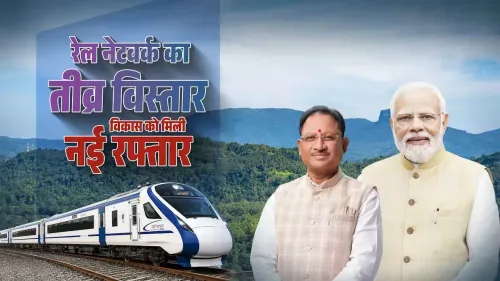
Posting on X, CM Sai wrote that under the leadership of Prime Minister Narendra Modi, 'Chhattisgarh ki rail connectivity ka nirantar vistar ho raha hai' — Chhattisgarh's rail connectivity is continuously expanding. The new express, he noted, will run twice a week, giving passengers in Ambikapur and surrounding areas far smoother access to New Delhi.
Surguja's long road to Delhi — now shorter
The Surguja region, anchored by Ambikapur, is one of Chhattisgarh's most geographically remote districts — a densely forested, largely tribal belt in the state's northern reaches. Until now, travellers bound for Delhi faced long, multi-leg journeys with no direct rail option. A twice-weekly express to Hazrat Nizamuddin, one of Delhi's busiest rail termini, changes that calculus entirely.
CM Sai specifically called out the ripple effects: better access to education, employment, and trade. Those three words are not rhetorical filler. For Surguja's young population — many of whom travel to Delhi or Raipur for college admissions, competitive exams, or job opportunities — a direct train cuts both cost and exhaustion. Traders who move goods between the region's forest-produce markets and larger urban centres stand to gain as well.
Centre's rail push into Chhattisgarh
CM Sai thanked Prime Minister Narendra Modi and Union Railway Minister Ashwini Vaishnaw on behalf of all Chhattisgarh residents for the new service. The framing is deliberate: this is a BJP state government crediting a BJP-led Centre, and the Ambikapur–Nizamuddin Express fits into a broader pattern of the Union government using rail expansion as a visible development instrument in aspirational districts.
Ambikapur, the headquarters of Surguja district, has historically lagged in rail infrastructure compared with Chhattisgarh's industrial corridor anchored by Raipur and Bilaspur. A direct connection to the capital — however limited to two days a week at launch — represents a meaningful step in closing that gap.
The Surguja belt is also politically significant: it houses a dense concentration of Scheduled Tribe constituencies, and improved connectivity is as much a governance metric as it is an electoral signal going into future assembly cycles.
Two days a week is a start. The question Surguja's residents will now ask — loudly — is when that becomes seven.
Point of View
CM Sai reinforces Centre–state alignment ahead of future electoral cycles in Scheduled Tribe-heavy Surguja constituencies. However, a twice-weekly frequency also signals this is a pilot — the real test of political will is whether the service scales to daily operations as ridership builds. Connectivity investments in remote regions tend to generate compounding returns: once a rail link normalises migration for education and work, local demand for more frequent services typically rises fast.
NationPress
7 Oct 2026
Frequently Asked Questions
When did the Ambikapur–Hazrat Nizamuddin Express launch?
The Ambikapur–Hazrat Nizamuddin Express launch was welcomed by Chhattisgarh CM Vishnu Deo Sai on October 6, 2026. The train operates twice a week.
How many days a week does the Ambikapur–Nizamuddin Express run?
The Ambikapur–Hazrat Nizamuddin Express runs twice a week, providing Surguja region passengers a direct rail link to New Delhi on those days.
What is the Surguja region and why is this train significant?
Surguja is a remote, largely tribal region in northern Chhattisgarh anchored by Ambikapur. It historically lacked direct rail access to Delhi, making the new express a major connectivity upgrade for education, employment, and trade.
Who approved the Ambikapur–Hazrat Nizamuddin Express?
CM Vishnu Deo Sai credited Prime Minister Narendra Modi and Union Railway Minister Ashwini Vaishnaw for the new train service on behalf of all Chhattisgarh residents.
What benefits will the Ambikapur–Delhi train bring to locals?
The new express is expected to provide residents of Ambikapur and surrounding areas with better access to education, employment opportunities, and trade with the national capital, while boosting overall development in the Surguja region.