CM Sai: Jashpur Rail Link Now Within Reach
Synopsis
Chhattisgarh Chief Minister Vishnu Deo Sai declared on 15 June 2026 that the tribal forest district of Jashpur is close to receiving its first railway connection, marking a potential end to the district's long isolation from India's rail network.
Key Takeaways
Chief Minister Vishnu Deo Sai stated on 15 June 2026 that Jashpur district will soon be connected by rail for the first time.
Jashpur is a predominantly tribal, forested district in northern Chhattisgarh bordering Jharkhand , historically served only by road.
Rail connectivity for tribal and forest districts has been a stated national priority across successive Union Railway Budgets.
The primary beneficiaries would be tribal communities and rural residents currently dependent on long road journeys to reach the nearest railhead.
Specific alignment, funding status, and a completion timeline for the Jashpur rail link have not yet been officially confirmed.
Key milestones to watch include survey reports, land acquisition, tendering, and budgetary allocations at state and central levels.
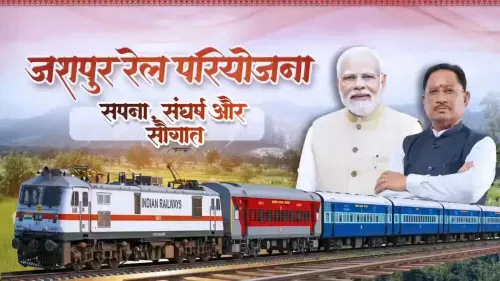
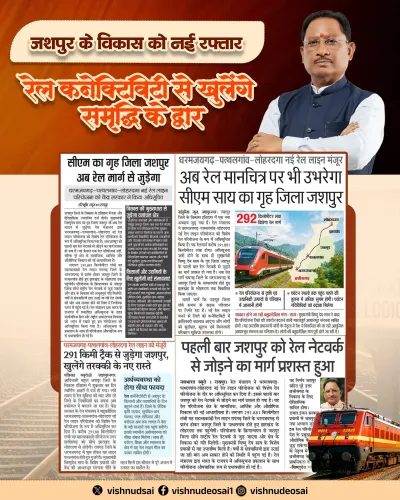
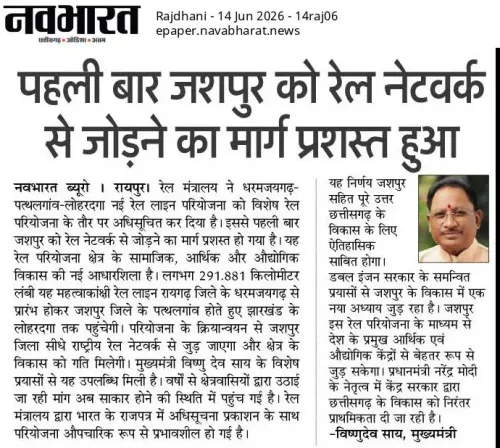
Chhattisgarh Chief Minister Vishnu Deo Sai expressed satisfaction on Monday, 15 June 2026, stating that the tribal forest district of Jashpur is now close to being connected by rail for the first time, ending its long isolation from the national railway network.
Posting in Hindi on X, the Chief Minister wrote: 'यह संतोष का विषय है कि अब वह दिन दूर नही जब वनांचल जिला जशपुर रेल मार्ग से अछूता नहीं रहेगा।' — translated: 'It is a matter of satisfaction that the day is not far when the forest district of Jashpur will no longer remain untouched by the railway line.'
Context
Jashpur is a predominantly tribal district in northern Chhattisgarh, bordering Jharkhand, characterised by dense forests and historically limited transport infrastructure. Since the formation of Chhattisgarh state in 2000, connectivity upgrades for its northern tribal belt have been a recurring policy priority, yet rail access to Jashpur has remained elusive for over two decades.
The district's communities have depended almost entirely on road transport, which constrains access to markets, healthcare, and economic opportunity. Chief Minister Sai's statement signals a shift in that long-standing reality.
Policy Backdrop
The push to connect forested and tribal districts by rail has been a consistent thread across successive Union Railway Budgets, with new lines sanctioned in comparable geographies across Jharkhand, Odisha, and Chhattisgarh through the 2010s and 2020s. National programmes targeting Left Wing Extremism-affected and forested districts have explicitly included rail connectivity as a tool for economic integration.
Indian Railways has been the primary national operator driving this expansion into remote central and eastern Indian districts. The broader pattern of such extensions reflects a strategic calculation: rail access reduces logistical costs, draws private investment, and strengthens state presence in geographically isolated areas.
Stakeholders and Impact
The primary beneficiaries of a Jashpur rail link would be the district's tribal communities and rural residents, who currently face long road journeys to reach the nearest railhead. Improved connectivity is expected to ease the movement of agricultural produce, reduce travel costs, and open the district to wider commercial activity.
Broader state economic interests are also at stake: Jashpur's forest belt holds potential for eco-tourism and minor forest produce trade, both of which depend on reliable transport links. For the BJP government in Chhattisgarh, delivering visible infrastructure in tribal areas carries direct political salience ahead of future electoral cycles.
What's Next
The immediate milestones to watch include the progress of any railway survey reports, land acquisition proceedings, and tendering processes for the proposed Jashpur rail corridor. Mention of the project in the next state or Union Budget would be a concrete indicator of forward movement.
Chief Minister Sai's public expression of confidence suggests that preliminary groundwork may already be under way, though specific alignment, funding allocation, and a projected completion timeline are yet to be officially confirmed. The coming months will test whether the optimism translates into scheduled construction activity on the ground.
Point of View
Forested, and LWE-sensitive geographies — a narrative that has electoral as well as developmental currency. The absence of specific project details keeps the announcement aspirational rather than accountable, which is a common feature of early-stage political signalling on infrastructure. The real test will come when survey reports and budget lines are made public, at which point the statement moves from sentiment to policy commitment.
NationPress
14 Sept 2026
Frequently Asked Questions
Will Jashpur district get a railway line?
Chhattisgarh Chief Minister Vishnu Deo Sai stated on 15 June 2026 that the day is 'not far' when Jashpur will be connected by rail, signalling that the project is in progress, though a confirmed timeline has not been officially announced.
Which districts in Chhattisgarh lack railway connectivity?
Several tribal and forested districts in northern and central Chhattisgarh, including Jashpur, have historically lacked direct rail access and have depended on road transport. Extending rail lines into these areas has been a recurring state and central government priority since Chhattisgarh's formation in 2000.
What is the importance of a railway line for Jashpur?
A rail connection would reduce travel costs and time for tribal and rural residents, ease the movement of agricultural and forest produce, attract investment, and improve access to healthcare and markets for one of Chhattisgarh's most geographically isolated districts.
Who is Vishnu Deo Sai?
Vishnu Deo Sai is the Chief Minister of Chhattisgarh and a senior BJP leader. He assumed office in December 2023 and previously served as a Union Minister. He belongs to a tribal community, which holds significance given his government's focus on tribal welfare and connectivity.
What is the status of railway expansion in tribal districts of central India?
Indian Railways has been extending lines into tribal and forested districts across Chhattisgarh, Jharkhand, and Odisha under successive Union Railway Budgets, with projects targeting LWE-affected and remote areas for economic integration. Progress varies by corridor, depending on survey completion, land acquisition, and funding allocation.