CM Sai leads Rath Yatra at Jashpur's Jagannath Temple
Synopsis
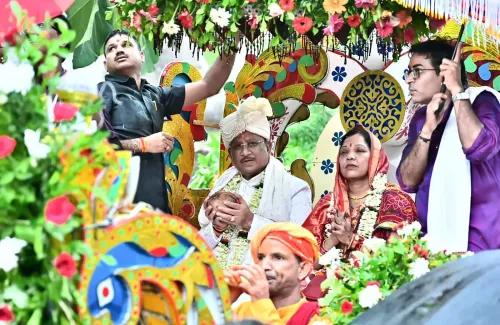
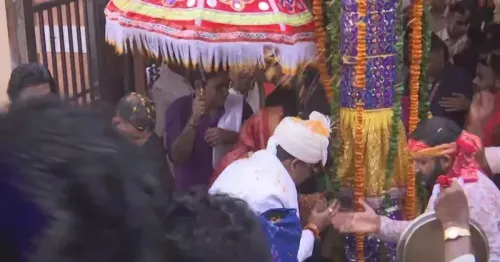
Chief Minister Vishnu Deo Sai took part in the annual Rath Yatra at the historic Shri Jagannath Temple in Dokra, Jashpur, assuming the ceremonial Gajapati Maharaja role and praying for the welfare of Chhattisgarh's people on 16 July 2026.
Key Takeaways
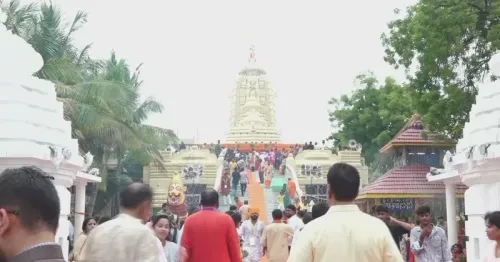
The annual Rath Yatra was held at the ancient Shri Jagannath Temple, Dokra , in Jashpur district on 16 July 2026 .
Chief Minister Vishnu Deo Sai participated in the traditional role of Gajapati Maharaja , the first servitor in the Jagannath tradition.
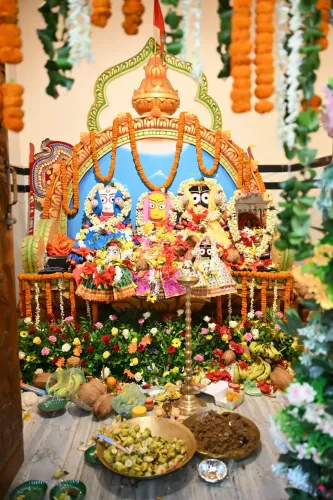
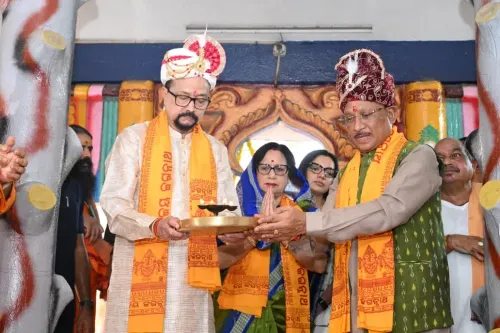
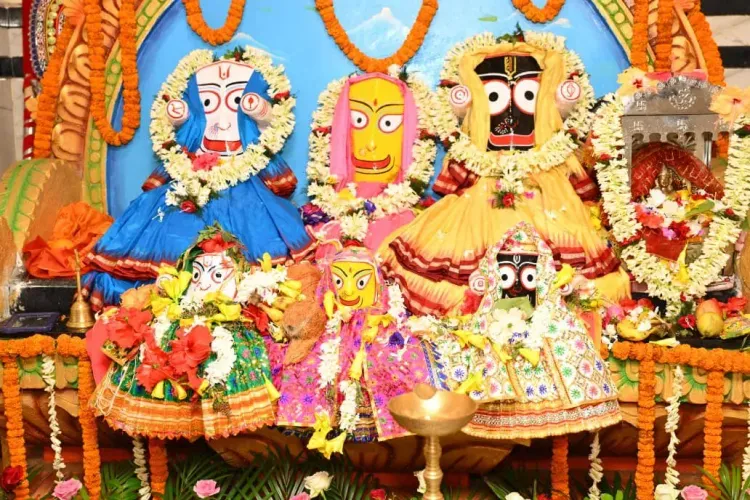
CM Sai and his wife performed rituals for Lord Jagannath , Lord Balabhadra , and Goddess Subhadra .
The CM prayed for the happiness, prosperity, peace, and well-being of all residents of Chhattisgarh .
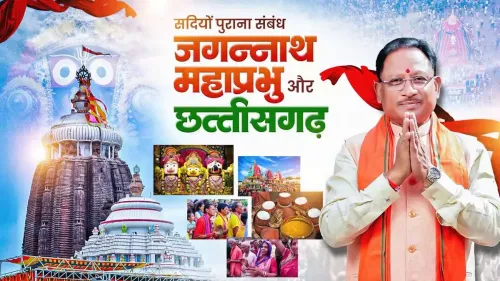
Jagannath worship in Chhattisgarh reflects historical cultural ties with neighbouring Odisha .
Jashpur is a tribal-majority district in northern Chhattisgarh with several historically significant religious sites.
The Chief Minister's Office of Chhattisgarh announced on 16 July 2026 that Chief Minister Vishnu Deo Sai personally participated in the sacred Rath Yatra at the ancient Shri Jagannath Temple, Dokra, in Jashpur district, fulfilling the traditional role of Gajapati Maharaja during the procession.
Context
The CMO's post states that the Rath Yatra was taken out this year as well at the historic and ancient Shri Jagannath Temple in Dokra with devotion, faith, and grandeur — 'श्रद्धा, आस्था और भव्यता के साथ' (with reverence, faith, and magnificence). Chief Minister Sai, accompanied by his wife, performed rituals and offered prayers to Lord Jagannath, Lord Balabhadra, and Goddess Subhadra, seeking happiness, prosperity, peace, and an auspicious life for the people of Chhattisgarh.
Policy Backdrop
Jagannath worship has deep roots in parts of Chhattisgarh owing to historical and cultural ties with neighbouring Odisha. Since the state's formation in 2000, successive governments have encouraged participation in such regional religious events to highlight heritage sites and strengthen community bonds. The Gajapati Maharaja role — traditionally the first servitor of Lord Jagannath — carries significant ritual importance in the Jagannath tradition; a Chief Minister assuming this symbolic role underscores the state government's engagement with local religious customs.
Jashpur district, located in the northern reaches of Chhattisgarh, is home to a substantial tribal population and several historically significant religious sites. The Dokra temple's annual Rath Yatra draws large numbers of devotees from across the district and beyond, making it one of the region's prominent cultural events.
Stakeholders and Impact
Devotees and residents of Jashpur are the primary participants in this annual celebration. The Chief Minister's presence in a ceremonial priestly role elevates the event's visibility and signals state-level recognition of the region's cultural heritage. For the tribal and mixed communities of Jashpur, the Rath Yatra represents a convergence of faith and local identity.
State leaders across India regularly participate in regional religious festivals as a way of connecting with community traditions. CM Sai, who took office in December 2023 after serving as a Member of Parliament, has positioned cultural and religious engagement as part of his administration's outreach in a state with diverse tribal and Hindu traditions.
What's Next
The state government's continued participation in events like the Dokra Rath Yatra may feed into broader tourism and heritage promotion initiatives for Jashpur. Observers will watch whether the administration follows up with infrastructure or tourism investment around the ancient temple site, which could boost the district's profile as a religious and cultural destination within Chhattisgarh.
Point of View
Visible participation in regional festivals serves a dual purpose: reinforcing grassroots cultural legitimacy and spotlighting heritage districts like Jashpur that have historically received less administrative attention. The move fits a broader pattern of state executives in India using religious festivals as soft-power tools for community outreach. Whether this translates into tangible heritage or tourism policy for Jashpur will be the real measure of intent.
NationPress
16 Jul 2026
Frequently Asked Questions
Where is the Shri Jagannath Temple Dokra located?
The Shri Jagannath Temple is located in Dokra village, Jashpur district , in northern Chhattisgarh. It is considered one of the district's ancient and historically significant religious sites.
What is the Gajapati Maharaja role in Rath Yatra?
The Gajapati Maharaja is traditionally regarded as the first servitor of Lord Jagannath, responsible for performing the ceremonial sweeping of the chariot — a role of high ritual importance in the Jagannath tradition. Chief Minister Sai assumed this symbolic role at the Dokra Rath Yatra.
Why does Chhattisgarh celebrate Jagannath Rath Yatra?
Chhattisgarh shares historical and cultural ties with neighbouring Odisha, which is the heartland of Jagannath worship. Several communities in Chhattisgarh have long observed Jagannath traditions, and the Dokra temple's annual Rath Yatra is one of the most prominent such events in the state.
Who is Vishnu Deo Sai?
Vishnu Deo Sai is the Chief Minister of Chhattisgarh, representing the BJP. He assumed office in December 2023 after previously serving as a Member of Parliament.
What did CM Sai pray for at the Rath Yatra?
Chief Minister Sai, accompanied by his wife, performed prayers for Lord Jagannath , Lord Balabhadra , and Goddess Subhadra , seeking happiness, prosperity, peace, and an auspicious life for all residents of Chhattisgarh.