CM Sai Marks Partition Horrors Remembrance Day
Synopsis
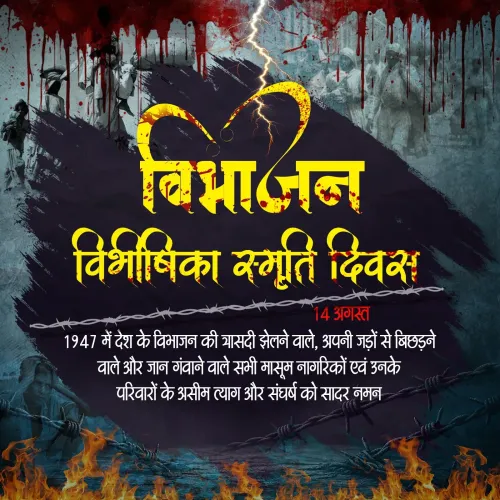
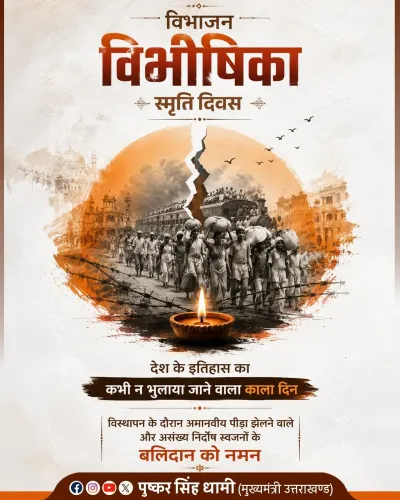
On Partition Horrors Remembrance Day, Chhattisgarh CM Vishnu Deo Sai saluted families who endured the 1947 Partition and called for a united, self-reliant India where every citizen lives with dignity, security, and trust.
Key Takeaways
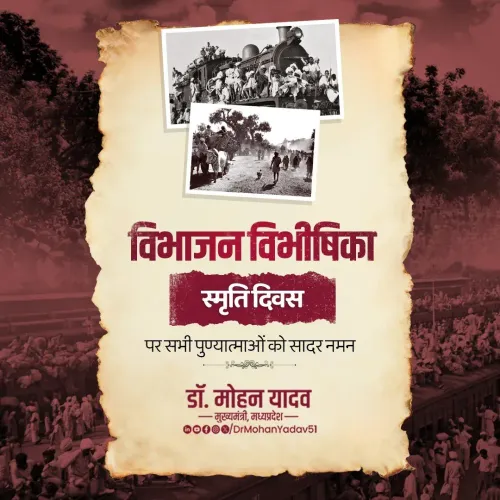
Chhattisgarh Chief Minister Vishnu Deo Sai posted a tribute on 14 August 2026 marking Partition Horrors Remembrance Day .
He offered a shat-shat naman (hundredfold salute) to all families who endured the pain, struggle, and displacement of the 1947 Partition .
CM Sai called for national unity and social harmony, describing them as 'a nation's greatest strengths.' He invoked the spirit of Atmanirbhar Bharat , urging citizens to resolve to build a developed, empowered, and self-reliant India.
The Government of India declared 14 August as Partition Horrors Remembrance Day in August 2021 , institutionalising annual observances across the country.
Seventy-nine years after one of history's most traumatic mass migrations, the wounds of 1947 are still worth pausing over — and Chhattisgarh Chief Minister Vishnu Deo Sai did exactly that on 14 August 2026, marking Partition Horrors Remembrance Day with a message of tribute, unity, and national resolve.
Writing in Hindi, CM Sai offered a shat-shat naman — a hundredfold salute — to every family that endured the unbearable pain of Partition, honouring their courage, struggle, and patience. He framed the day not as an occasion for grief alone, but as a call to purpose: 'Let us resolve to build a developed, empowered, and self-reliant India where every citizen moves forward with dignity, security, and trust.'
A Day Carved from Collective Sorrow
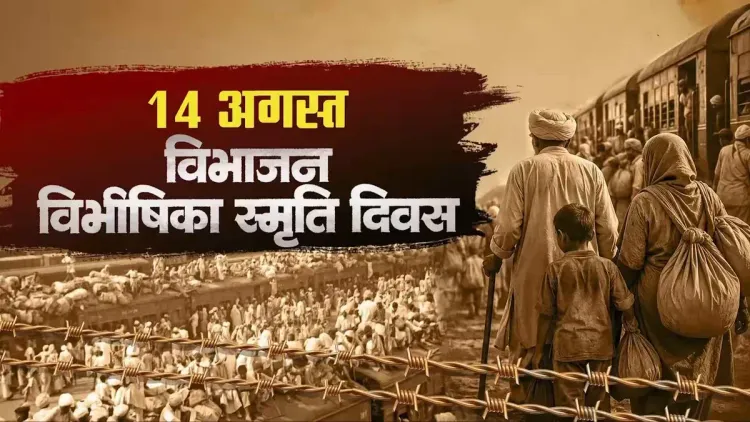
The observance has a deliberate institutional origin. In August 2021, the Government of India declared 14 August — the eve of Independence Day — as Partition Horrors Remembrance Day, to ensure the suffering of an estimated 10–20 million displaced people and the deaths of hundreds of thousands are never quietly forgotten. The date sits one day before the celebration of freedom, a conscious juxtaposition of grief and gratitude.
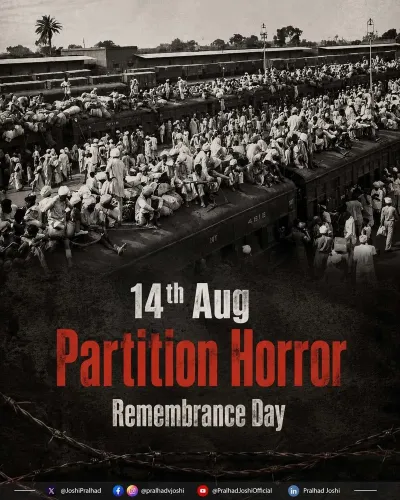
The 1947 Partition of British India into independent India and Pakistan remains one of the largest forced migrations in recorded history. Entire communities were uprooted overnight; violence swept across Punjab and Bengal. Families that survived carried that rupture across generations — in memory, in silence, in stories told and untold.
Unity and Atmanirbharta as the Answer
CM Sai linked the memory of Partition directly to a contemporary imperative: that national unity and social harmony are a nation's greatest strengths. His message also invoked the spirit of Atmanirbhar Bharat — the Central government's 2020 self-reliance initiative — framing economic sovereignty and social cohesion as twin pillars of the India that Partition survivors and their descendants deserve.
This is a pattern recognisable across BJP-governed states: on 14 August, leaders anchor remembrance to the present-day agenda of national strength, turning historical pain into political and developmental resolve. The message is consistent — history is a teacher, not just a wound.
As India marks another year since independence, the question Partition Horrors Remembrance Day quietly insists on asking remains sharp: have the lessons of division — what hatred and fracture cost a people — truly been absorbed? CM Sai's answer, at least, is a public commitment to building a nation where they have.
Point of View
Self-reliance, and majoritarian solidarity. The 2021 decision to mark 14 August as a day of remembrance was itself a deliberate counter-narrative to the eve of Independence, repositioning grief as a founding lesson rather than a footnote. For state leaders like Sai, these annual statements serve a dual function: they honour genuine suffering while reinforcing the BJP's claim to be the custodian of undivided India's memory. The Atmanirbhar Bharat reference grounds the tribute firmly in present-day policy, making remembrance feel programmatic rather than purely ceremonial.
NationPress
14 Aug 2026
Frequently Asked Questions
What is Partition Horrors Remembrance Day?
Partition Horrors Remembrance Day is observed every year on 14 August in India. The Government of India declared this date in August 2021 to commemorate the suffering, displacement, and violence caused by the 1947 Partition of British India into India and Pakistan.
Why is 14 August chosen for Partition Horrors Remembrance Day?
14 August is the eve of India's Independence Day on 15 August. The date was chosen deliberately to juxtapose the grief of Partition with the celebration of freedom, ensuring the human cost of independence is not forgotten.
What did Chhattisgarh CM Vishnu Deo Sai say on Partition Horrors Remembrance Day?
CM Vishnu Deo Sai paid tribute to all families who suffered during the 1947 Partition, honouring their courage and patience. He called on citizens to resolve to build a developed, empowered, and self-reliant India where every person can live with dignity, security, and trust.
What is Atmanirbhar Bharat and why did CM Sai mention it?
Atmanirbhar Bharat is a Central government initiative launched in 2020 aimed at making India economically self-reliant. CM Sai referenced it to connect the memory of Partition to a forward-looking national goal, framing self-reliance and unity as the appropriate response to historical suffering.
Who is Vishnu Deo Sai?
Vishnu Deo Sai is a BJP leader who has served as the Chief Minister of Chhattisgarh since December 2023. He is a prominent tribal leader from the state.