CM Vishnu Deo Sai Meets Bastar Maharaja's Delegation
Synopsis
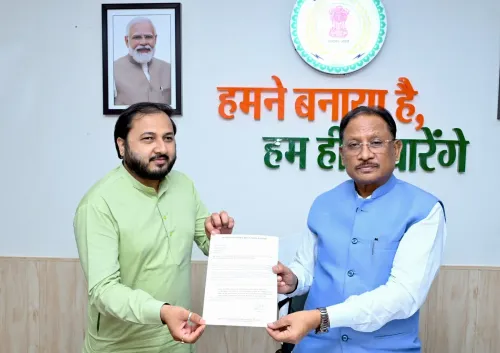
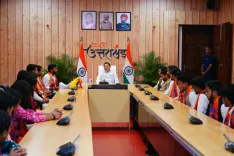
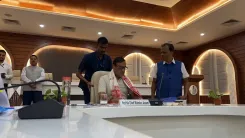
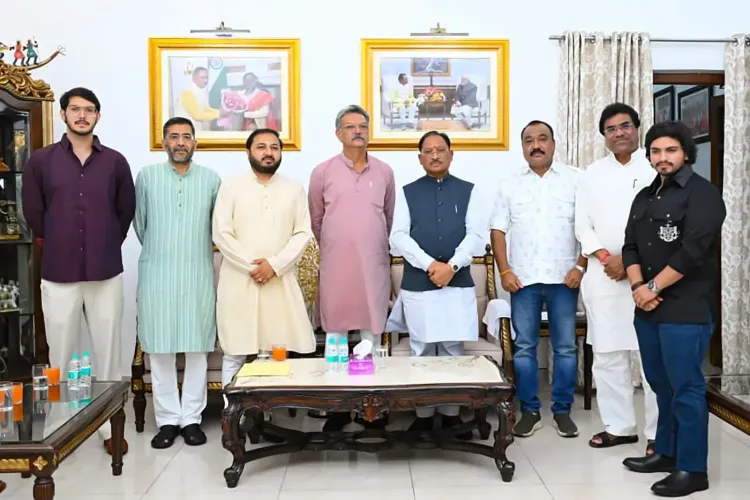
Chhattisgarh Chief Minister Vishnu Deo Sai met with a delegation led by Kamalachandra Bhanjdev, the titular Bastar Maharaja, on 7 July 2026. The courtesy call reflects the state government's continued engagement with traditional community figures in the tribal-dominated Bastar region.
Key Takeaways
CM Vishnu Deo Sai held a formal courtesy meeting with the delegation of Kamalachandra Bhanjdev (Bastar Maharaja) on 7 July 2026 .
The meeting was described as a shishṭāchār bheṇṭ — a protocol-level courtesy call with no specific policy outcomes disclosed.
Kamalachandra Bhanjdev is the titular head of the erstwhile Bastar princely family and retains significant cultural influence in southern Chhattisgarh.
Bastar is a multi-district region with a large tribal population and is a key focus area for Chhattisgarh's development and security agenda.
Such engagements follow a broader pattern across Indian states of maintaining links between elected governments and traditional community figures in tribal belts.
Possible follow-up coordination on Bastar-specific welfare and infrastructure schemes may emerge from the engagement.
Chhattisgarh Chief Minister Vishnu Deo Sai held a courtesy meeting with a delegation accompanying Kamalachandra Bhanjdev, the titular head of the erstwhile Bastar princely family, on Tuesday, 7 July 2026. The CM acknowledged the visit on X, tagging Bhanjdev's official handle @kcbbastar.
In his post, the Chief Minister wrote: 'श्री कमलचंद्र भंजदेव जी (बस्तर महाराज) के साथ आए प्रतिनिधिमंडल से शिष्टाचार भेंट हुई' — translated as 'A courtesy meeting was held with the delegation accompanying Shri Kamalachandra Bhanjdev (Bastar Maharaja).'
Context
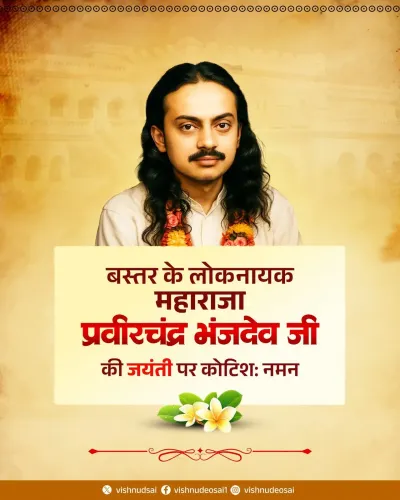
Kamalachandra Bhanjdev is widely referred to as the Bastar Maharaja, the titular head of the erstwhile Bastar princely family. Though the princely order was formally dissolved after Indian independence, the Bhanjdev family continues to hold significant cultural and community standing across the Bastar region of southern Chhattisgarh. The family's influence is particularly notable among the region's large tribal population.
The meeting was described as a shishṭāchār bheṇṭ — a formal courtesy call — indicating a protocol-level engagement rather than a policy negotiation. No specific agenda or outcomes were disclosed in the post.
Policy Backdrop
Since Chhattisgarh's formation as a separate state in November 2000, successive state governments have maintained engagement with descendants of former princely rulers, particularly in regions such as Bastar where traditional figures retain deep community trust. These interactions are seen as a bridge between elected administration and local cultural institutions.
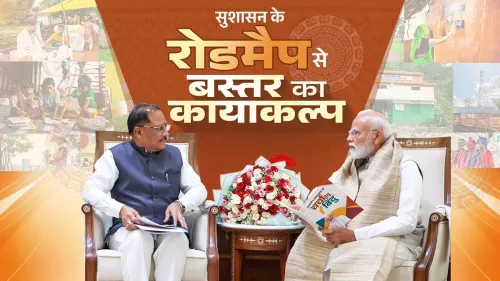
Bastar comprises multiple districts in southern Chhattisgarh and has historically been a focal point for tribal welfare, infrastructure development, and internal security. Chief Minister Vishnu Deo Sai, who assumed office in December 2023, has repeatedly emphasised outreach to tribal-dominated areas as a governance priority.
Stakeholders and Impact
The primary stakeholders in such courtesy engagements are the tribal communities of Bastar, for whom the Bhanjdev family represents a cultural touchstone. Local cultural organisations and community groups that operate under the family's patronage also stand to benefit from any goodwill generated by state-level recognition.
State governments across India with significant Scheduled Tribe populations — including Jharkhand, Odisha, and Madhya Pradesh — follow a comparable pattern of engaging titular royal families to reinforce cultural linkages alongside formal governance structures.
What's Next
Courtesy meetings of this nature often precede or accompany district-level coordination on development and welfare schemes. Observers will watch for any follow-up announcements on Bastar-specific infrastructure projects, tribal welfare initiatives, or cultural programmes that may emerge from the broader engagement. No specific announcements have been made public at the time of writing.
Point of View
The CM signals both respect for traditional institutions and a broader outreach strategy in a region that has long been at the centre of security and development challenges. This fits a wider national pattern where ruling parties cultivate relationships with titular royal families to consolidate community goodwill ahead of local governance decisions. The absence of any disclosed agenda keeps the meeting firmly in the realm of protocol, but the optics carry clear political weight in Bastar's tribal landscape.
NationPress
6 Oct 2026
Frequently Asked Questions
Who is Bastar Maharaja Kamalachandra Bhanjdev?
Kamalachandra Bhanjdev is the titular head of the erstwhile Bastar princely family in southern Chhattisgarh. Though the princely order was dissolved after Indian independence, he retains significant cultural and community influence in the Bastar region.
Why did CM Vishnu Deo Sai meet the Bastar Maharaja's delegation?
The meeting was a courtesy call — a formal protocol-level engagement. State governments in India routinely hold such meetings with titular royal families to maintain cultural linkages, especially in tribal-dominated regions like Bastar.
What is the significance of Bastar in Chhattisgarh politics?
Bastar is a multi-district region in southern Chhattisgarh with a large Scheduled Tribe population. It is a major focus area for tribal welfare, infrastructure development, and internal security, making community outreach there politically and administratively significant.
When did Vishnu Deo Sai become Chief Minister of Chhattisgarh?
Vishnu Deo Sai was sworn in as Chief Minister of Chhattisgarh in December 2023 after the BJP won the state assembly elections.
Will there be any follow-up to the CM's meeting with the Bastar delegation?
No specific outcomes or follow-up announcements have been made public. Observers are watching for possible district-level coordination on Bastar-specific infrastructure and tribal welfare schemes.