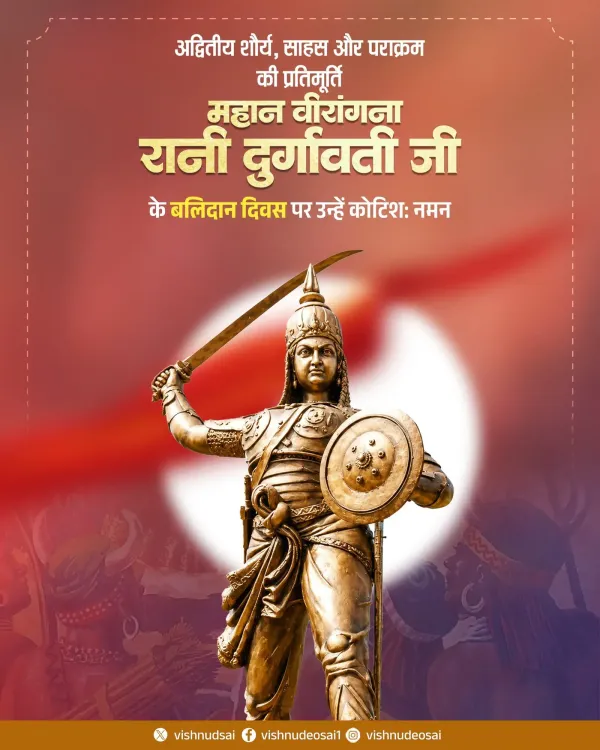
CM Sai Pays Tribute to Rani Durgavati on Balidan Diwas
Synopsis
Chhattisgarh Chief Minister Vishnu Deo Sai marked Rani Durgavati's Balidan Diwas on 24 June 2026, honouring the 16th-century Gond warrior queen who died resisting Mughal forces in 1564 as a timeless symbol of courage and national self-respect.
Key Takeaways
CM Vishnu Deo Sai posted a tribute to Rani Durgavati on her Balidan Diwas on 24 June 2026 .
Rani Durgavati was a Gond queen who died in battle in 1564 near present-day Jabalpur , resisting Mughal forces under Akbar.
The CM described her as an embodiment of 'unmatched bravery, indomitable courage and extraordinary valour.' He said her legacy would continue to inspire future generations toward patriotism, self-respect and duty.
BJP -led governments in central India regularly mark such anniversaries to highlight indigenous martial heritage and connect with Scheduled Tribe communities.
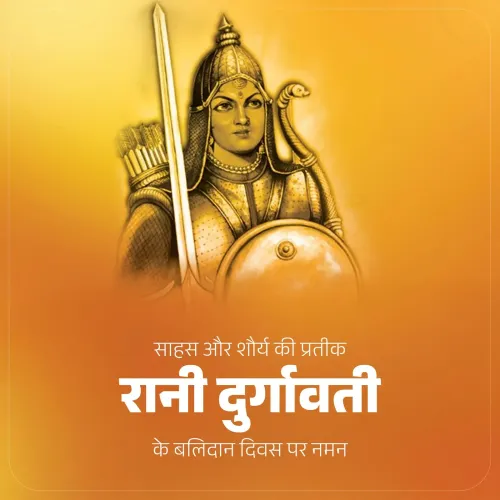
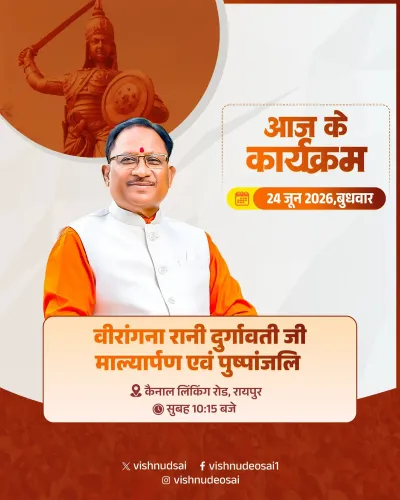
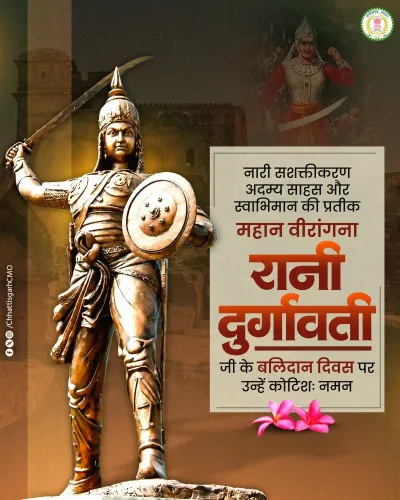
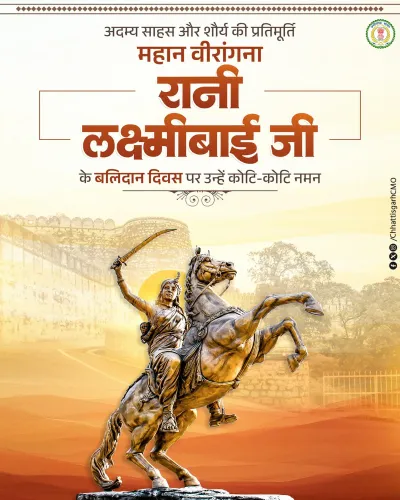
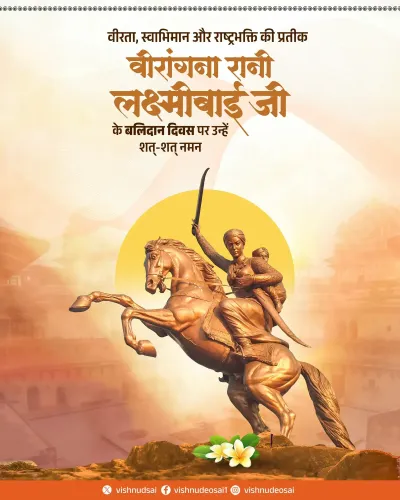
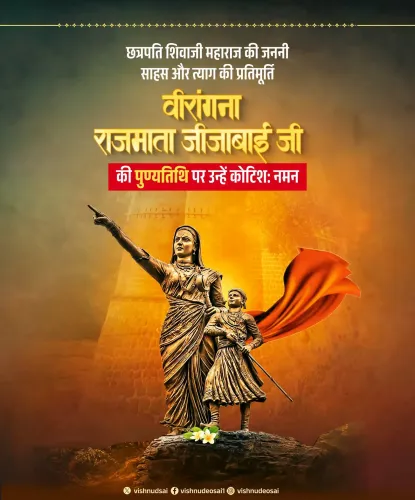
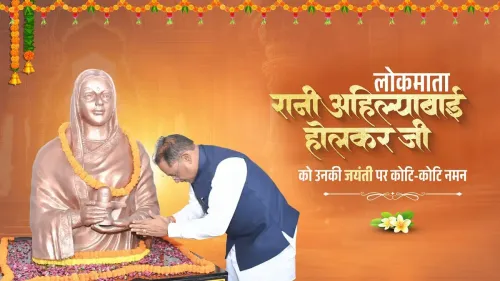
Chhattisgarh Chief Minister Vishnu Deo Sai on Wednesday, 24 June 2026 paid homage to the 16th-century Gond warrior queen Rani Durgavati on her Balidan Diwas (martyrdom anniversary), hailing her as an embodiment of unparalleled valour and a symbol of Indian self-respect.
Context
In his post, CM Sai wrote: 'अप्रतिम शौर्य, अदम्य साहस एवं अद्भुत वीरता की प्रतिमूर्ति' — describing Rani Durgavati as 'the embodiment of unmatched bravery, indomitable courage and extraordinary valour, a symbol of Indian self-respect.' He expressed that her 'glorious saga, courage and devotion to the nation will forever inspire future generations toward patriotism, self-respect and dedication to duty.'
Rani Durgavati ruled the Gond kingdom in central India during the 16th century. She led fierce resistance against Mughal forces under Emperor Akbar and fell in battle in 1564 near present-day Jabalpur, choosing death over surrender — an act that has cemented her place in the pantheon of Indian martial heroines.
Policy Backdrop
BJP-led state governments have consistently observed the anniversaries of pre-colonial rulers and warriors from central and eastern India, framing them as icons of indigenous resistance and regional pride. Chhattisgarh, which has a large Scheduled Tribe population, shares deep cultural and historical ties with the Gond kingdom that once spanned regions of modern Chhattisgarh and Madhya Pradesh.
Since taking office in December 2023, CM Sai has positioned his administration as one attentive to tribal heritage and history. Tributes to figures such as Rani Durgavati serve to reinforce that positioning, connecting the state government's identity to a broader narrative of Adivasi pride and martial tradition.
Stakeholders and Impact
The tribute resonates most directly with tribal communities across Chhattisgarh and neighbouring Madhya Pradesh, for whom Rani Durgavati is a revered ancestral figure. Her story is taught in regional schools and commemorated at local memorials, particularly around Jabalpur, the site of her last battle.
Broader civil society and residents of Chhattisgarh see in such observances an affirmation of regional identity within the national mainstream. For the BJP, the tribute also signals continued outreach to Adivasi voters, a constituency that proved decisive in the 2023 Chhattisgarh assembly elections.
What's Next
State-level commemorations on Balidan Diwas have in recent years been accompanied by announcements on statues, cultural programmes, and educational initiatives highlighting Gond rulers. Observers will watch for any formal government programme linked to this year's observance. Efforts to incorporate Rani Durgavati's legacy more prominently into school curricula or public infrastructure in Chhattisgarh remain a space to monitor in the months ahead.
Point of View
' the tribute draws a direct line between 16th-century Gond resistance and contemporary ideas of nationalist identity — a framing that resonates strongly in a state where Adivasi voters are a key electoral constituency. The observance also reflects a broader pattern of competitive heritage politics in central India, where historical figures increasingly serve as anchors for both governance messaging and community outreach. How the Sai government translates such symbolic gestures into concrete tribal welfare or cultural programmes will be the real measure of this political investment.
NationPress
24 Jun 2026
Frequently Asked Questions
Who was Rani Durgavati?
Rani Durgavati was a 16th-century queen of the Gond kingdom in central India who led resistance against Mughal forces under Emperor Akbar and died in battle in 1564 near present-day Jabalpur, choosing death over surrender.
When is Rani Durgavati Balidan Diwas observed?
Rani Durgavati's Balidan Diwas, marking her martyrdom in 1564, is observed on 24 June each year across Madhya Pradesh, Chhattisgarh and other parts of central India.
Why did Chhattisgarh CM Vishnu Deo Sai pay tribute to Rani Durgavati?
CM Vishnu Deo Sai paid tribute on her annual Balidan Diwas, honouring her as a symbol of Indian self-respect and martial courage, and expressing that her legacy will inspire future generations.
What is the connection between Rani Durgavati and Chhattisgarh?
The Gond kingdom that Rani Durgavati ruled spanned regions of present-day Chhattisgarh and Madhya Pradesh, making her a revered historical figure for tribal communities in the state.
Who is Vishnu Deo Sai?
Vishnu Deo Sai is the Chief Minister of Chhattisgarh and a BJP leader who assumed office in December 2023 following the party's victory in the state assembly elections.