CM Sai Pledges Dignity and Self-Reliance for Chhattisgarh Women on Navratri
Synopsis
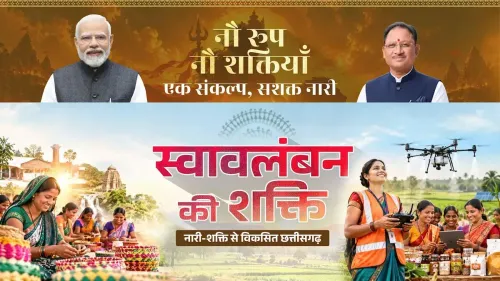
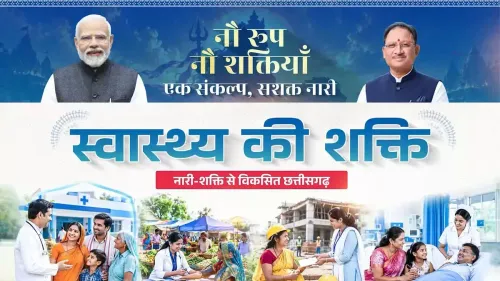
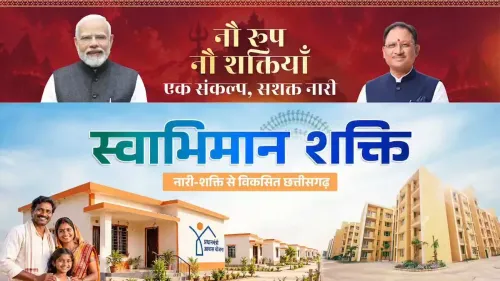
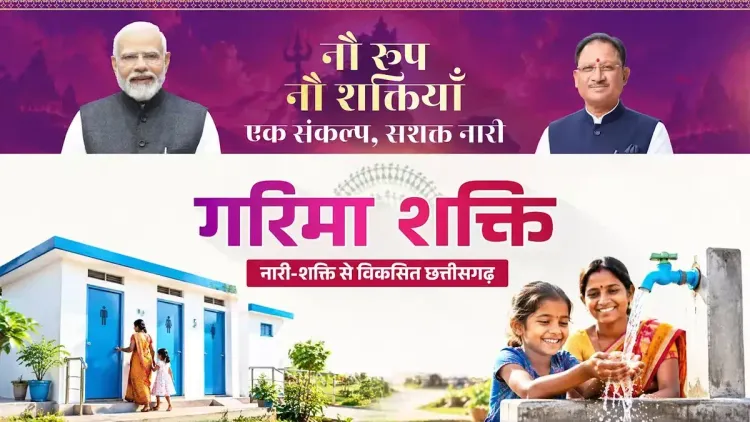
On Navratri 2026, Chhattisgarh Chief Minister Vishnu Deo Sai pledged dignity, self-confidence, and self-reliance for every woman in the state, framing women's welfare as the core resolve of his 'Sushasan' government and invoking the cultural mahtari identity central to BJP's Chhattisgarh narrative.
Key Takeaways
CM Vishnu Deo Sai posted a Navratri message on 17 October 2026 reaffirming the state government's commitment to women's dignity and self-reliance.
The post used the Chhattisgarhi word mahtari (mother), consistent with the government's branding around the Mahtari Vandan Yojana welfare scheme.
Sai described growing respect for women and positive change in their lives as the 'true fulfilment' of his government's efforts.
The hashtags #महतारी_का_सम्मान and #महतारी_के_मान place the message within a sustained governance and political narrative, not just a seasonal greeting.
The BJP government in Chhattisgarh has highlighted women-centric welfare as a core priority since assuming office in December 2023 .
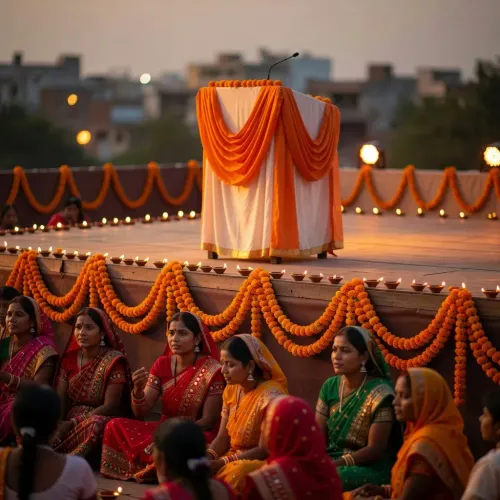
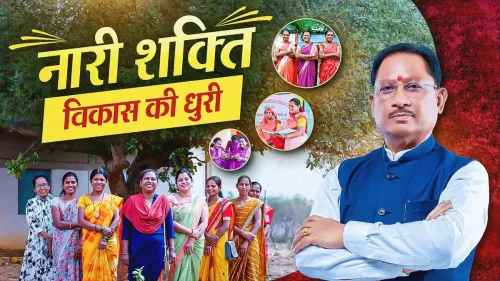
As Navratri 2026 fills Chhattisgarh with devotion and colour, Chief Minister Vishnu Deo Sai has turned the occasion into a public reaffirmation of his government's commitment to women's dignity — promising that every mother and sister in the state will have the opportunity to live with honour and grow with confidence.
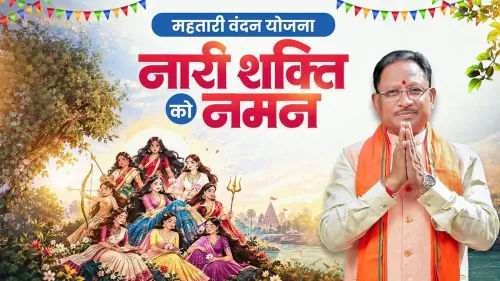
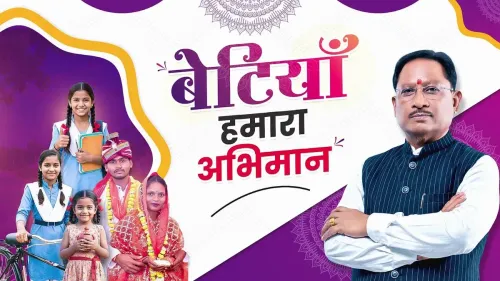
Posting on Saturday, 17 October 2026, CM Sai wrote in Hindi: 'हर महतारी, हर बहन को सम्मान और गरिमा के साथ जीवन जीने का अवसर मिले' — 'Let every mother, every sister get the opportunity to live with respect and dignity.' He added that the growing respect for women and the positive change in their lives is the 'true fulfilment' of his government's efforts, closing with the verse: 'शक्ति स्वरूपा का वंदन, नारी गरिमा का अभिनंदन' — 'Salutation to the embodiment of Shakti, celebration of women's dignity.'
The 'Mahtari' Frame: More Than Festive Rhetoric
The word mahtari — the Chhattisgarhi term for 'mother' — is not incidental here. Since the BJP formed the government in Chhattisgarh in December 2023, the Sai administration has consistently used the mahtari framing to anchor its women-centric welfare identity, most visibly through the Mahtari Vandan Yojana, a direct financial assistance scheme for married women in the state. The hashtags #महतारी_का_सम्मान and #महतारी_के_मान — 'respect for the mother' and 'honour of the mother' — signal that this Navratri message is part of a sustained political and governance narrative, not a one-off seasonal post.
Navratri as a Governance Platform Across Indian States
State leaders across India have increasingly used Navratri — nine nights dedicated to the goddess Shakti — as a moment to publicly renew pledges on women's welfare. The timing is deliberate: the festival's theological core, the celebration of feminine power, gives political messaging on self-reliance and dignity an organic, culturally resonant backdrop. CM Sai's invocation of aatmavishwas (self-confidence) and aatmanirbhar (self-reliance) echoes the broader national vocabulary of women's economic empowerment that has defined welfare delivery in the BJP-governed states through the mid-2020s.
Whether this Navratri message is accompanied by fresh scheme announcements or state-level events in Chhattisgarh remains to be confirmed — but the political intent is clear: for the Sai government, the festival is both a moment of cultural salutation and a reminder of the governance promise it has staked to women across the state.
The goddess is being invoked. The government's scorecard on delivery is the real measure of that invocation.
Point of View
Reinforcing scheme recall without naming it explicitly. This approach serves a dual purpose: it deepens the cultural legitimacy of welfare delivery while keeping the government's women-centric identity visible between election cycles. The real test, as always, lies in measurable outcomes — income gains, safety indicators, and scheme penetration — that will determine whether the salutation translates into substantive change.
NationPress
17 Oct 2026
Frequently Asked Questions
What did Chhattisgarh CM Vishnu Deo Sai say on Navratri 2026?
CM Vishnu Deo Sai posted a message on 17 October 2026 pledging that every mother and sister in Chhattisgarh will get the opportunity to live with dignity and grow with self-confidence, calling women's empowerment the core resolve of his government.
What is the Mahtari Vandan Yojana in Chhattisgarh?
Mahtari Vandan Yojana is a women-centric direct financial assistance scheme launched by the BJP government in Chhattisgarh after it assumed office in December 2023, aimed at providing economic support to married women in the state.
Why does CM Sai use the word 'mahtari' in his posts?
'Mahtari' is the Chhattisgarhi word for 'mother' and has become a central branding term for the Sai government's women-welfare narrative, most prominently associated with the Mahtari Vandan Yojana scheme.
When did BJP form the government in Chhattisgarh?
The BJP formed the government in Chhattisgarh in December 2023 after winning the state assembly elections, with Vishnu Deo Sai sworn in as Chief Minister.
What is the significance of Navratri for political messaging on women's welfare in India?
Navratri, dedicated to the goddess Shakti — an embodiment of feminine power — provides a culturally resonant moment for state leaders to publicly renew pledges on women's dignity, self-reliance, and empowerment, aligning governance messaging with popular sentiment.