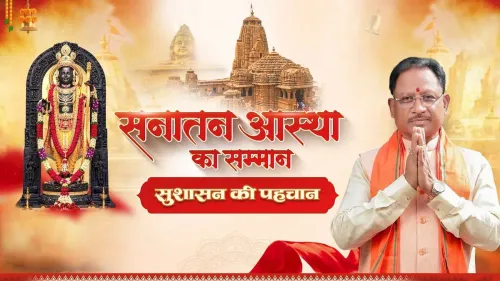
CM Sai Hails Ramgarh as Symbol of Chhattisgarh's Cultural Heritage
Synopsis
Chhattisgarh Chief Minister Vishnu Deo Sai on 1 July 2026 reaffirmed his government's commitment to preserving Ramgarh — linked to Lord Ram's forest exile and poet Kalidasa — and pledged to take the site's cultural identity to national and global audiences.
Key Takeaways
CM Vishnu Deo Sai described Ramgarh as a glorious symbol of Chhattisgarh's rich cultural heritage on 1 July 2026 .
Ramgarh is traditionally associated with Lord Ram's forest exile ( van gaman ) and with the works of classical Sanskrit poet Kalidasa .
The CM pledged that Ramgarh's dignity would remain intact and its identity would reach audiences across India and the world .
The statement aligns with the BJP-led Chhattisgarh government's ongoing promotion of the Ram Van Gaman Path tourism circuit.
No specific new scheme or budget figure was announced; concrete follow-up actions are yet to be confirmed.
Possible future steps include inclusion of Ramgarh under central schemes such as Swadesh Darshan or the PRASAD pilgrimage programme .
Chhattisgarh Chief Minister Vishnu Deo Sai on Wednesday, 1 July 2026, reaffirmed his government's commitment to preserving and promoting Ramgarh — a hill site in the state — describing it as a sacred land tied to the memory of Lord Ram's forest exile and the creative birthplace of classical Sanskrit poet Kalidasa.
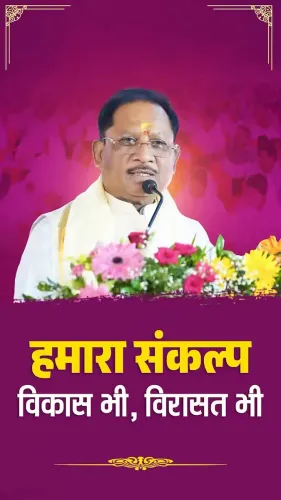
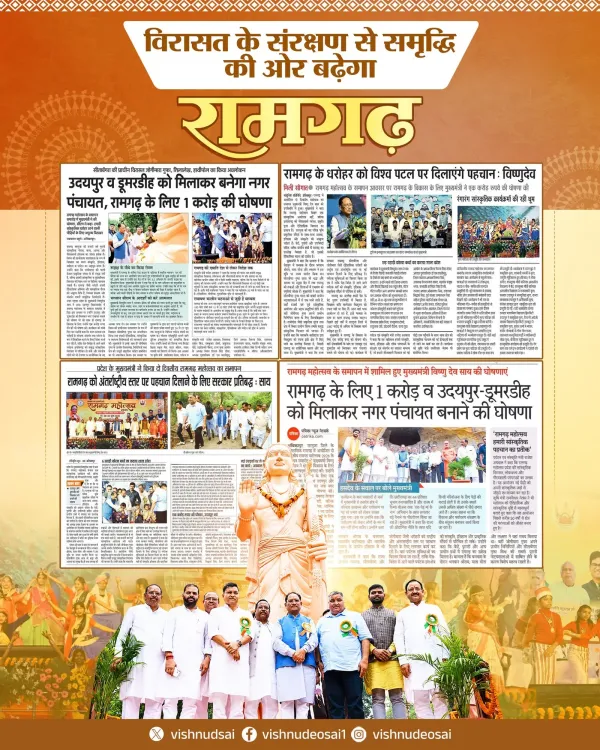
Posting on X, CM Sai wrote: 'रामगढ़ हमारी समृद्ध सांस्कृतिक विरासत का गौरवशाली प्रतीक है' ['Ramgarh is a glorious symbol of our rich cultural heritage']. He called the site an invaluable repository of Sanatan tradition, art, and history, and pledged that its dignity would remain intact and its identity would reach audiences across the country and the world.
Context
Ramgarh, located in Chhattisgarh, holds a dual significance in Indian cultural memory. It is traditionally associated with episodes from the Ramayana — specifically the period of Lord Ram's van gaman (forest journey) — and is cited in local tradition and literary scholarship as a site connected to the composition of works by Kalidasa, widely regarded as the greatest poet of classical Sanskrit literature. CM Sai's post underlines both these threads, framing Ramgarh not merely as a relic of the past but as a living source of cultural consciousness for future generations.
Policy Backdrop
The statement fits squarely within the BJP-led Chhattisgarh government's broader push to develop the Ram Van Gaman Path — a tourism circuit tracing the route associated with Lord Ram's forest exile through the state. This initiative, which gained momentum after the 2023 state assembly elections that brought the BJP back to power, aims to position Chhattisgarh as a key node on India's religious and cultural tourism map. Similar efforts to identify, map, and publicise Ramayana-linked sites have been undertaken by BJP-governed states across the country, reflecting a coordinated approach to heritage tourism rooted in Hindu epic traditions.
Central government schemes such as Swadesh Darshan and the PRASAD pilgrimage programme have previously provided funding frameworks for such circuits. Ramgarh's potential inclusion under these schemes remains a possibility that heritage tourism stakeholders and local communities are watching closely.
Stakeholders and Impact
The communities living near Ramgarh stand to benefit most directly from any infrastructure or tourism investment that follows such high-profile political attention. Heritage tourism operators, pilgrims, and cultural researchers also have a stake in how the site is developed and presented. CM Sai's emphasis on taking Ramgarh's identity to a 'desh-duniya' (national and international) audience signals an aspiration to attract not just domestic pilgrims but also scholars and tourists interested in classical Indian literature and Ramayana geography.
At the same time, heritage conservationists will be watching to ensure that development activity does not compromise the archaeological and ecological integrity of the site.
What's Next
CM Sai's post stops short of announcing a specific scheme, budget allocation, or project timeline. However, the language of 'commitment' and 'reaching the world' suggests that concrete policy follow-through — whether through state budget provisions or an application to central tourism schemes — may be forthcoming. As Chhattisgarh continues to build its cultural tourism identity, Ramgarh's dual association with the Ramayana and Kalidasa gives it a unique positioning that could anchor a distinct heritage corridor in central India.
Point of View
Giving the site a more versatile identity. This fits a wider BJP pattern of using epic geography to build state identity and attract central scheme funding. The absence of any specific commitment, however, means the post functions primarily as political intent rather than actionable policy — the real test will be whether budget allocations or project announcements follow.
NationPress
30 Sept 2026
Frequently Asked Questions
Why is Ramgarh in Chhattisgarh historically significant?
Ramgarh is significant because it is traditionally associated with episodes from the Ramayana — specifically Lord Ram's forest exile — and is also cited as a site connected to the works of classical Sanskrit poet Kalidasa, making it important for both religious pilgrims and literary scholars.
What is the Ram Van Gaman Path in Chhattisgarh?
The Ram Van Gaman Path is a tourism circuit developed by the Chhattisgarh government that traces the route associated with Lord Ram's forest journey through the state, linking multiple sites including Ramgarh as part of a broader cultural and religious tourism initiative.
What did CM Vishnu Deo Sai say about Ramgarh?
CM Vishnu Deo Sai called Ramgarh a 'glorious symbol' of Chhattisgarh's rich cultural heritage and pledged that its dignity would be preserved and its identity taken to national and international audiences.
Is Kalidasa connected to Chhattisgarh?
Local tradition and some literary scholarship associate the classical Sanskrit poet Kalidasa with the Ramgarh region of Chhattisgarh, citing it as a possible site of composition for some of his works, though this remains a subject of academic discussion.
Which central government schemes could benefit Ramgarh's development?
Ramgarh could potentially benefit from central government schemes such as Swadesh Darshan and the PRASAD pilgrimage programme, both of which fund infrastructure and tourism development at heritage and religious sites across India, though no formal inclusion has been announced.