CM Vishnu Deo Sai Returns to His Fields in Jashpur
Synopsis
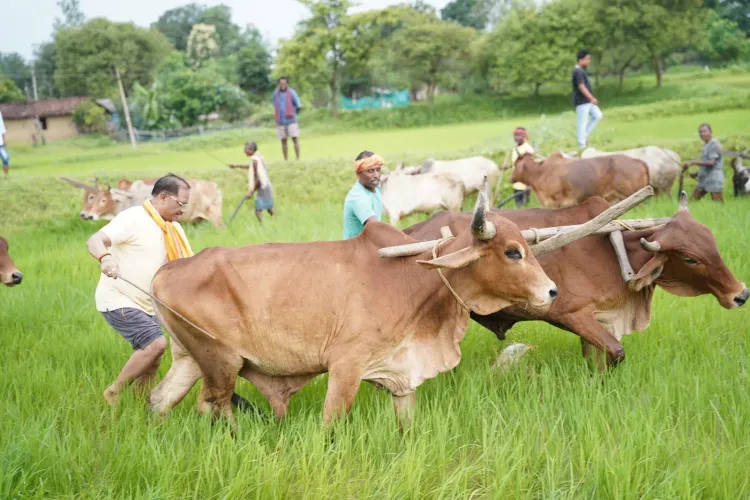
Chhattisgarh Chief Minister Vishnu Deo Sai returned to his ancestral village of Bagiya in Jashpur on 17 August 2026, ploughing his fields with bullocks and performing biyasi — calling farming not a livelihood but 'a value woven into life'. He signed off with 'Jai Johar! Jai Chhattisgarh!'
Key Takeaways
CM Vishnu Deo Sai visited his ancestral village Bagiya, Jashpur district on 17 August 2026 .
He ploughed his fields using bullocks and performed biyasi , the traditional second tilling for paddy cultivation.
Sai described farming as 'jeevan ka sanskar' — a value woven into life — not merely a source of livelihood.
He credited the soil of Chhattisgarh with teaching 'the dignity of labour, harmony with nature, and staying connected to one's roots.' The post concluded with 'Jai Johar!
Jai Chhattisgarh!' — invoking the tribal greeting that underlines his Adivasi community ties.
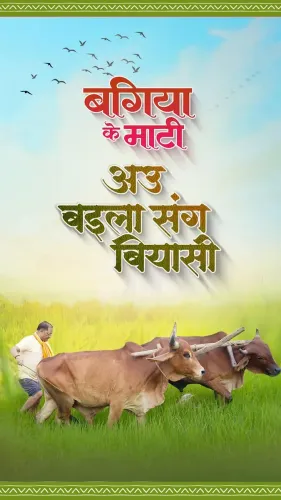
There are politicians who talk about farmers — and then there is Chhattisgarh Chief Minister Vishnu Deo Sai, who on Monday, 17 August 2026, walked into his ancestral fields in Bagiya village, Jashpur district, gripped a plough, and worked the earth himself.
Posting images of the moment on X, Sai described the experience in his own words: 'Apne gaon, apni maati aur apne khet se judaav ka sukh hi alag hai' — 'The joy of being connected to one's village, one's soil, and one's fields is something else entirely.' He ploughed the land with bullocks and performed biyasi — the traditional second tilling of paddy fields — a practice central to Chhattisgarh's agrarian calendar.
The plough, the memory, and the message
The Chief Minister wrote that the moment his hands gripped the handle of the plough, old memories of farming life came flooding back. 'The earthy fragrance of the soil and the greenery of the fields filled my mind with boundless peace and fresh energy,' he said. For Sai, who comes from a farming family in the tribal belt of Jashpur, the gesture is rooted in biography, not performance.
He was explicit about what farming means to him: not merely a livelihood, but 'jeevan ka sanskar' — a value woven into life itself. 'This soil taught us the dignity of labour, harmony with nature, and the lesson of staying connected to our roots,' he wrote.
Jashpur's fields and Chhattisgarh's farming soul
Jashpur district, tucked in the north-eastern corner of Chhattisgarh bordering Jharkhand, is a predominantly tribal and agrarian region. The district's paddy cultivation and its close-knit village culture make it emblematic of the rural Chhattisgarh that Sai frequently invokes in his public identity. Biyasi — the second ploughing that aerates the soil and prepares it for transplanting paddy seedlings — marks the heart of the kharif sowing season, placing this visit squarely in the rhythm of the farming year.
Sai closed his post with the twin salutations that anchor his political identity in the state: 'Jai Johar! Jai Chhattisgarh!' — the tribal greeting 'Jai Johar' a deliberate signal of solidarity with the state's Adivasi communities.
Point of View
Sai's return to the plough in Jashpur is a carefully authentic act — he is from a farming family in this very region, lending the gesture biographical weight rather than mere optics. The use of 'Jai Johar,' the Adivasi salutation, alongside the imagery of bullocks and biyasi, reinforces the BJP's sustained effort to consolidate its base among Chhattisgarh's Scheduled Tribe communities ahead of any future electoral cycle. It also positions the Chief Minister as a leader who governs from lived experience of rural hardship — a contrast the party frequently draws with urban political rivals.
NationPress
2 Oct 2026
Frequently Asked Questions
Why did Chhattisgarh CM Vishnu Deo Sai visit Jashpur?
CM Vishnu Deo Sai visited his ancestral village Bagiya in Jashpur district on 17 August 2026 to plough his family fields with bullocks and perform biyasi, the traditional second tilling of paddy fields during the kharif season.
What is biyasi in Chhattisgarh farming?
Biyasi is the second ploughing of paddy fields, a traditional agricultural practice in Chhattisgarh that aerates the soil and prepares it for transplanting paddy seedlings during the kharif sowing season.
What does 'Jai Johar' mean?
'Jai Johar' is a traditional greeting used by Adivasi (tribal) communities across Jharkhand, Chhattisgarh, and Odisha. CM Sai frequently uses it to express solidarity with Chhattisgarh's tribal population.
Where is Bagiya village located?
Bagiya is in Jashpur district, situated in the north-eastern corner of Chhattisgarh bordering Jharkhand. It is CM Vishnu Deo Sai's ancestral home village.
What did CM Sai say about farming and his roots?
CM Sai said farming is not merely a livelihood but 'jeevan ka sanskar' — a value woven into life — and credited the soil of Chhattisgarh with teaching him the dignity of labour, harmony with nature, and staying connected to one's roots.