CM Sai Pushes for Faster Rice Lifting, 250 Monthly Rakes
Synopsis
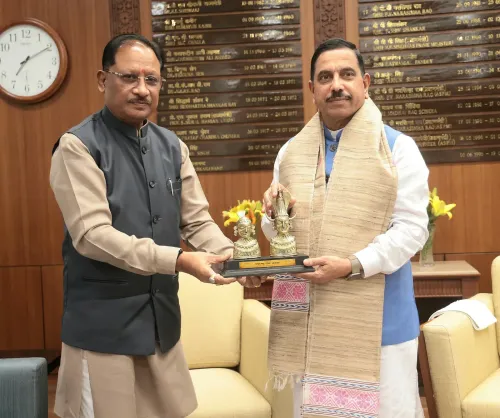
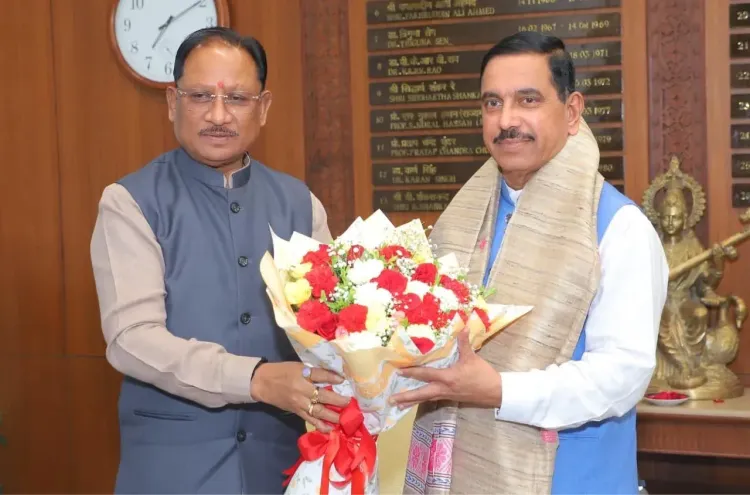
Chhattisgarh CM Vishnu Deo Sai met Union Minister Prahlad Joshi in New Delhi on 31 July 2026, seeking swift lifting of 5 lakh MT of rice and 250 monthly railway rakes to meet the state's 73 lakh tonne central pool target for Kharif Marketing Year 2025-26.
Key Takeaways
Chhattisgarh's central pool rice target for Kharif Marketing Year 2025-26 stands at 73 lakh tonnes .
CM Vishnu Deo Sai met Union Minister Prahlad Joshi in New Delhi on 31 July 2026 to resolve logistics bottlenecks.
The state has sought immediate lifting of 5 lakh metric tonnes of already-procured rice.
250 railway rakes per month are needed to transport the annual quota within the marketing season's timeline.
Minister Joshi gave a positive assurance of cooperation on rake availability, per CM Sai's account.
Timely lifting is critical to free warehouse capacity before the new kharif crop arrives at procurement centres.
Storage silos filling up, a new harvest on the horizon, and 73 lakh tonnes of rice to move — Chhattisgarh Chief Minister Vishnu Deo Sai flew to New Delhi on Friday, 31 July 2026, to press the Centre on one of the state's most time-sensitive logistical challenges.
In a meeting with Union Minister for Consumer Affairs, Food and Public Distribution Prahlad Joshi, CM Sai sought two things: the swift lifting of 5 lakh metric tonnes of rice already procured, and a guaranteed supply of 250 railway rakes every month to keep the larger annual target on track. Joshi, according to the Chief Minister's post, responded with a positive assurance of cooperation.
73 Lakh Tonnes and a Ticking Clock
Chhattisgarh has been assigned a central pool target of 73 lakh tonnes of rice for the Kharif Marketing Year 2025-26 — a substantial ask that demands military-grade logistics. The arithmetic is unforgiving: to clear that volume within the marketing season, the state needs 250 railway rakes per month, each loaded and dispatched on schedule. A shortfall in rake availability does not just slow paperwork — it backs up warehouses, blocks space for incoming paddy, and can trigger distress among farmers waiting to sell.
This is precisely the pressure point CM Sai flagged: without adequate rakes, the new kharif crop arrives at procurement centres that are still holding last season's grain. The logjam cascades downward to the farmer's doorstep.
Chhattisgarh's Role in India's Foodgrain Architecture
The state is not a peripheral player in India's food security chain. Since achieving statehood in 2000, Chhattisgarh has been a consistent contributor to the central pool under the Decentralised Procurement Scheme, with paddy farmers across the rice belt of the state depending on government procurement as their primary price backstop. The Food Corporation of India then draws on this pool to supply deficit states and fuel the Public Distribution System mandated under the National Food Security Act, 2013.
The coordination challenge is not unique to Chhattisgarh — Punjab and Haryana navigate the same annual rake-allocation negotiations with Indian Railways. But the scale of this year's target sharpens the urgency for the state.
What a Positive Assurance Means in Practice
Ministerial assurances are the opening move, not the final word. The real test will be whether Indian Railways translates the commitment into actual monthly rake allocations as the season progresses. Monthly lifting figures and warehouse occupancy data will be the ground-level scoreboard. If rakes arrive on schedule, farmers get paid faster, storage frees up, and the state meets its central pool commitment. If they don't, the pressure will return — louder.
CM Sai has put the ask on record, publicly, with the minister tagged. The clock on the kharif season is already running.
Point of View
The state government creates an accountability trail before the season peaks. The 73 lakh tonne target, if met, would reinforce Chhattisgarh's standing as a reliable central pool contributor and strengthen the BJP government's farmer-outreach narrative ahead of future electoral cycles. The real policy test, however, lies with Indian Railways' operational capacity: rake shortages have historically been the weakest link in India's post-procurement foodgrain chain, and no ministerial assurance substitutes for an actual allocation order.
NationPress
1 Aug 2026
Frequently Asked Questions
What did Chhattisgarh CM Vishnu Deo Sai discuss with Prahlad Joshi?
CM Sai met Union Minister Prahlad Joshi in New Delhi on 31 July 2026 to seek the quick lifting of 5 lakh metric tonnes of procured rice and a guaranteed supply of 250 railway rakes per month to meet Chhattisgarh's 73 lakh tonne central pool target for Kharif Marketing Year 2025-26.
What is Chhattisgarh's rice procurement target for 2025-26?
Chhattisgarh has been assigned a target of 73 lakh tonnes of rice for the central pool under Kharif Marketing Year 2025-26, one of the larger annual targets the state has received under the Decentralised Procurement Scheme.
Why are railway rakes important for rice procurement in Chhattisgarh?
Railway rakes are the primary mode of transporting bulk foodgrain from surplus states like Chhattisgarh to deficit regions and Food Corporation of India storage depots. Without adequate rakes, warehouses fill up and there is no space to store newly procured paddy, creating a bottleneck for farmers.
What is the Decentralised Procurement Scheme for rice?
The Decentralised Procurement Scheme allows state governments to procure rice and wheat directly on behalf of the central government for the national food pool, rather than routing everything through the Food Corporation of India. Chhattisgarh has operated under this scheme since becoming a state in 2000.
Did Prahlad Joshi agree to provide railway rakes to Chhattisgarh?
According to CM Vishnu Deo Sai's post, Union Minister Prahlad Joshi gave a positive assurance of cooperation regarding the supply of 250 railway rakes per month. Actual rake allocations will depend on Indian Railways' operational scheduling during the kharif marketing season.