CM Sai Reaffirms Chhattisgarh's Commitment to Quality Education
Synopsis
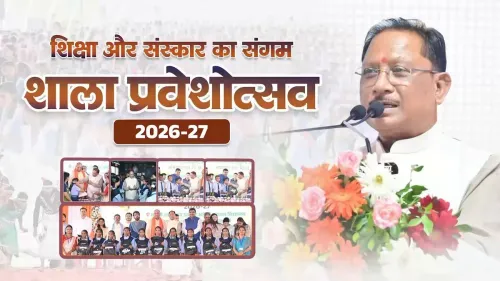
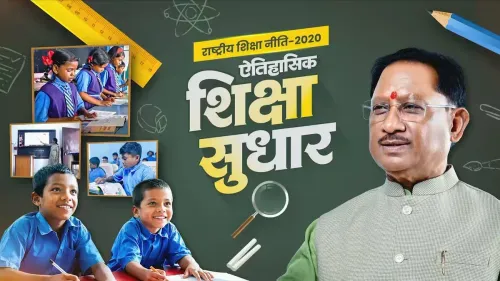
Chhattisgarh Chief Minister Vishnu Deo Sai on 20 July 2026 reaffirmed his government's pledge to deliver quality education to every child in the state, framing the goal within India's rich tradition of knowledge and ancient civilisation.
Key Takeaways
CM Vishnu Deo Sai publicly reaffirmed the Chhattisgarh government's commitment to quality education for every child on 20 July 2026 .
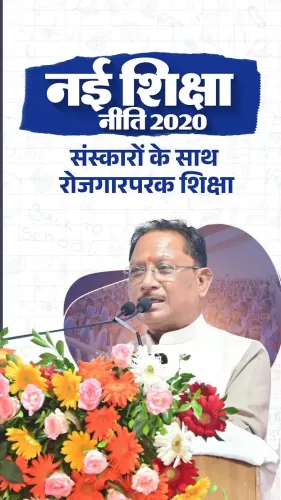
He linked the education agenda to India's ancient knowledge traditions , echoing themes central to the National Education Policy 2020 .
Chhattisgarh has a significant tribal population, making equitable school access a key governance challenge for the BJP government.
The NEP 2020 framework, which stresses mother-tongue instruction and Indian knowledge systems, underpins education policy in BJP -governed states.
State budget allocations for school infrastructure and teacher recruitment will be the practical test of this stated commitment.
Chhattisgarh Chief Minister Vishnu Deo Sai on Monday, 20 July 2026, reaffirmed his government's commitment to delivering quality education to every child in the state, invoking India's ancient knowledge heritage as the foundation for modern schooling goals.
Context
In his post, CM Sai wrote: 'Bharat ki pahchaan kewal uski prachin sabhyata se nahin, balki uski samriddh gyan parampara se bhi rahi hai' ['India's identity has never been defined by its ancient civilisation alone, but also by its rich tradition of knowledge']. He added that his government is committed to ensuring quality education reaches every child, carrying that heritage forward.
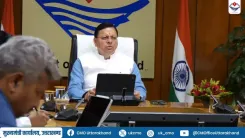
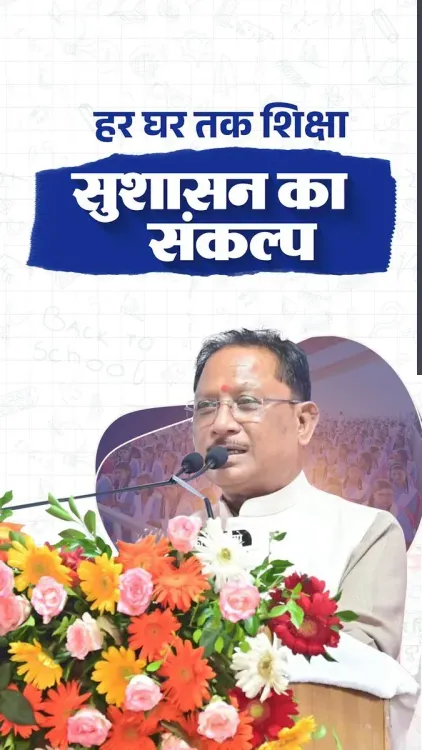
The statement positions Chhattisgarh's education agenda within a cultural framework — linking the state's schooling goals to India's classical intellectual traditions. The post was accompanied by a video, the contents of which were not independently detailed in the source material.
Policy Backdrop
The message aligns closely with the spirit of the National Education Policy (NEP) 2020, approved by the Union Cabinet to restructure both school and higher education. The NEP emphasises multidisciplinary learning, mother-tongue instruction, and the integration of Indian knowledge systems into modern curricula — themes that resonate directly with CM Sai's post.
Chhattisgarh, a central Indian state with a significant tribal population, has been governed by the BJP since late 2023. Across BJP-ruled states, official education messaging has increasingly invoked India's traditional knowledge systems to frame policy priorities. The earlier Sarva Shiksha Abhiyan, launched in 2001 to universalise elementary education, was later consolidated under the Samagra Shiksha framework in 2018, which continues to guide school-level implementation.
Stakeholders and Impact
The primary beneficiaries of any education push in Chhattisgarh would be school-going children, their families — particularly in rural and tribal districts — and the state's teaching workforce. Uneven infrastructure and teacher availability across districts remain persistent challenges that policy commitments must translate into on-ground action to address.
For rural families in Chhattisgarh, access to quality schooling is tied directly to economic mobility. The government's stated commitment, if backed by budget allocations and teacher recruitment, could have meaningful consequences for lakhs of students across the state.
What's Next
Observers will look to Chhattisgarh's state budget allocations for school infrastructure and teacher recruitment as the concrete measure of this commitment. Possible updates to the state's curriculum framework to align with NEP 2020 goals are also anticipated. Whether the government's rhetoric translates into measurable improvements in enrolment, retention, and learning outcomes will determine the lasting impact of this policy direction.
Point of View
A rhetorical pattern common across BJP-governed states since the rollout of NEP 2020. The invocation of India's 'rich knowledge tradition' serves a dual purpose: it signals ideological continuity with the Centre while projecting a state-level education agenda. For Chhattisgarh, where tribal and rural communities face structural barriers to schooling, the stakes of this commitment are concrete and measurable. The statement's significance will ultimately be judged against budget decisions and district-level outcomes, not the sentiment it expresses.
NationPress
21 Jul 2026
Frequently Asked Questions
What did Chhattisgarh CM Vishnu Deo Sai say about education?
CM Vishnu Deo Sai stated on 20 July 2026 that his government is committed to ensuring quality education reaches every child in Chhattisgarh, rooting this goal in India's ancient knowledge tradition.
What is the National Education Policy 2020 and how does it relate to Chhattisgarh?
The National Education Policy 2020 is a Union Cabinet-approved framework that restructures school and higher education, emphasising Indian knowledge systems and mother-tongue instruction. Chhattisgarh, under its BJP government, has aligned its education messaging with NEP 2020's goals.
What are the education challenges in Chhattisgarh?
Chhattisgarh has a significant tribal and rural population, and education delivery faces challenges including uneven school infrastructure, teacher shortages, and varying access across districts.
What is Samagra Shiksha and is it active in Chhattisgarh?
Samagra Shiksha is a centrally sponsored scheme launched in 2018 that consolidated earlier programmes like Sarva Shiksha Abhiyan to provide a unified approach to school education. It serves as the primary implementation framework for school-level education across Indian states, including Chhattisgarh.
What should we watch for next on Chhattisgarh education policy?
Key indicators to watch include Chhattisgarh's state budget allocations for school infrastructure and teacher recruitment, as well as any curriculum updates aligned with NEP 2020 goals.