CM Vishnu Deo Sai Pays Tribute to Martyr Madan Lal Dhingra
Synopsis
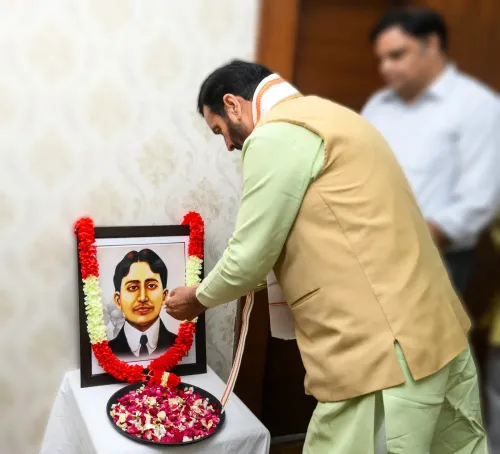
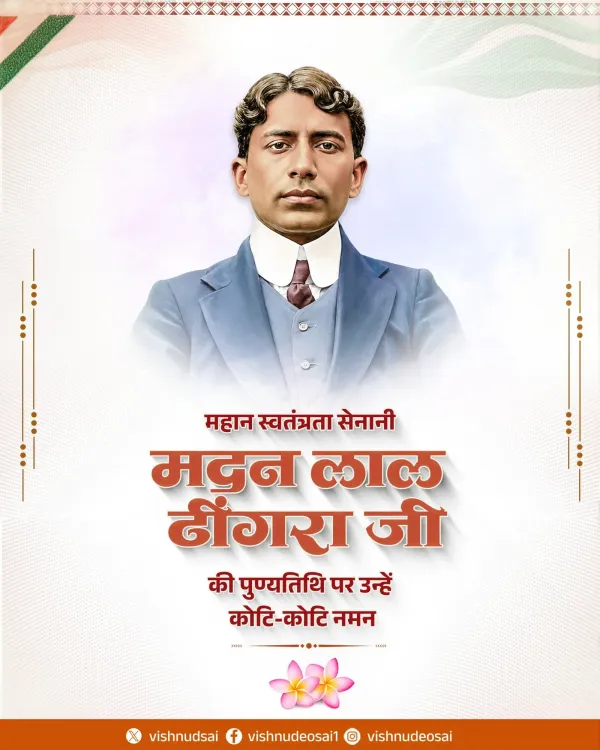
Chhattisgarh Chief Minister Vishnu Deo Sai paid tribute to revolutionary martyr Madan Lal Dhingra on his death anniversary, 17 August 2026, saluting the 24-year-old who was hanged in London in 1909 for assassinating a British India Office official in an act of open defiance against colonial rule.
Key Takeaways
Chhattisgarh CM Vishnu Deo Sai paid tribute to martyr Madan Lal Dhingra on his death anniversary, 17 August 2026 .
Madan Lal Dhingra was hanged on 17 August 1909 in London at the age of 24 , making this the 117th anniversary of his martyrdom.
Dhingra shot British India Office official Sir William Hutt Curzon Wyllie at the Imperial Institute, London, on 1 July 1909 .
CM Sai's tribute highlighted Dhingra's 'courage, sacrifice, and devotion to the motherland' as a lasting source of national inspiration.
The tribute came two days after Independence Day , within the BJP's broader tradition of honouring the armed revolutionary stream of India's freedom movement.
He was 24 years old, standing in a London hall, and he fired the shot that would make him immortal. On the death anniversary of revolutionary martyr Madan Lal Dhingra, Chhattisgarh Chief Minister Vishnu Deo Sai offered a solemn tribute on Monday, 17 August 2026, honouring a young man who gave everything for a country he would never see free.
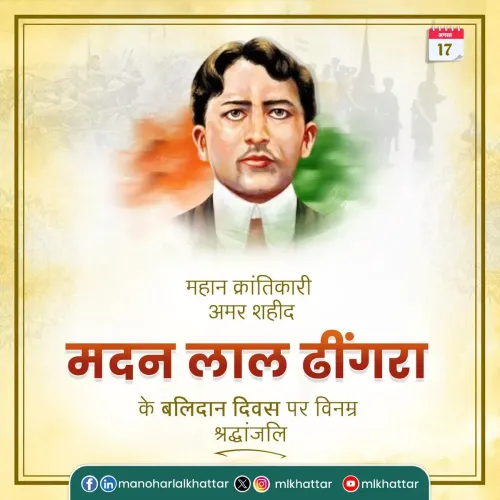
Posting in Hindi, CM Sai wrote: 'देश की स्वतंत्रता के लिए अल्पायु में ही अपना सर्वोच्च बलिदान देने वाले महान क्रांतिकारी अमर शहीद मदन लाल ढींगरा जी की पुण्यतिथि पर उन्हें शत्-शत् नमन।' — 'Heartfelt salutations to great revolutionary immortal martyr Madan Lal Dhingra, who made the supreme sacrifice for the nation's independence at a young age.' He added that Dhingra's courage, sacrifice, and devotion to the motherland would continue to inspire the people of India.
A 24-Year-Old Who Shook the British Empire
Madan Lal Dhingra was born in 1883 in Amritsar into a prosperous family — yet chose a path that led him far from comfort. Studying in London, he grew close to the circle of revolutionary nationalists around Vinayak Damodar Savarkar. On 1 July 1909, at the Imperial Institute in London, he shot and killed Sir William Hutt Curzon Wyllie, a senior British India Office official, in an act of open political defiance. Arrested immediately, Dhingra refused to show remorse. He was hanged on 17 August 1909 — making today's date the 117th anniversary of his martyrdom.
His final statement in court remains one of the most quoted declarations of early Indian nationalism: a young man insisting that a subject people had every right to resist their occupiers, even at the cost of their own life.
The BJP and the Militant Nationalist Memory
Tributes to figures like Dhingra carry a particular resonance within the BJP's ideological tradition, which has long sought to centre the armed, revolutionary stream of the independence movement alongside the better-known non-violent one. For the party, martyrs like Dhingra represent a form of patriotism that demanded total personal sacrifice — a narrative that sits naturally within the mid-August commemorative cycle, just two days after Independence Day.
CM Sai's tribute follows a well-established pattern among BJP leaders of issuing statements on the death anniversaries of early 20th-century revolutionary figures. What gives it weight is the calendar: the nation is barely two days past the Independence Day flag-hoisting, and the memory of what that freedom cost is still fresh.
At 24, Madan Lal Dhingra paid the highest price. The least a free nation can do is remember his name.
Point of View
When nationalist sentiment is at its annual peak. The BJP has consistently worked to elevate revolutionary martyrs like Dhingra within the official memory of the freedom movement, positioning armed resistance as equally legitimate to the Gandhian mainstream. This is not merely commemoration; it is a quiet but persistent act of historical framing. For a party that governs Chhattisgarh — a state with its own complex history of insurgency and sacrifice — invoking a figure who chose defiance over deference carries an unmistakable political and cultural charge.
NationPress
1 Oct 2026
Frequently Asked Questions
Who was Madan Lal Dhingra?
Madan Lal Dhingra was an Indian revolutionary born in 1883 in Amritsar who assassinated British India Office official Sir William Hutt Curzon Wyllie in London on 1 July 1909. He was hanged on 17 August 1909 at the age of 24 and is remembered as one of the earliest martyrs of India's militant nationalist movement.
Why is 17 August significant for Madan Lal Dhingra?
17 August marks the death anniversary of Madan Lal Dhingra, who was executed by the British on this date in 1909 in London after being convicted for the assassination of Curzon Wyllie. Indian leaders pay tribute to him on this day each year.
What did Chhattisgarh CM Vishnu Deo Sai say about Madan Lal Dhingra?
CM Vishnu Deo Sai offered 'heartfelt salutations' to Dhingra on his death anniversary, stating that his courage, sacrifice, and devotion to the motherland would continue to inspire the people of India for generations.
Why do BJP leaders frequently tribute Madan Lal Dhingra?
BJP leaders have long sought to highlight the armed revolutionary stream of India's independence movement alongside the non-violent Gandhian tradition. Figures like Dhingra, who chose direct action against colonial rule, are central to this narrative of total patriotic sacrifice.
What is the connection between Madan Lal Dhingra and Savarkar?
While studying in London, Madan Lal Dhingra moved in the circle of revolutionary nationalists around Vinayak Damodar Savarkar, who was a significant ideological influence on him before his assassination of Curzon Wyllie in 1909.