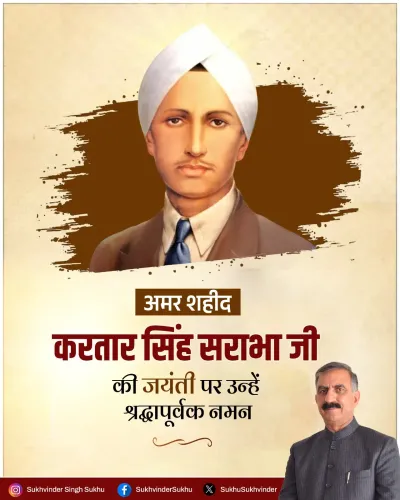
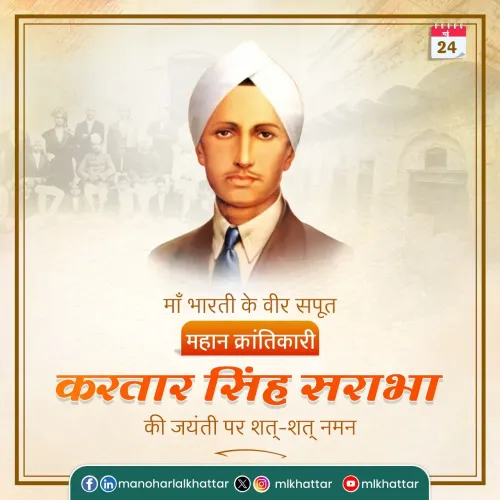
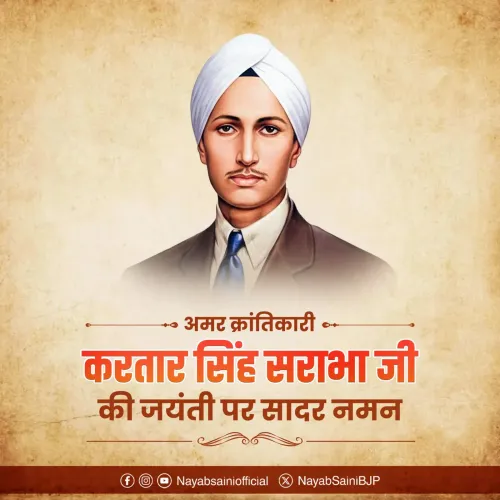
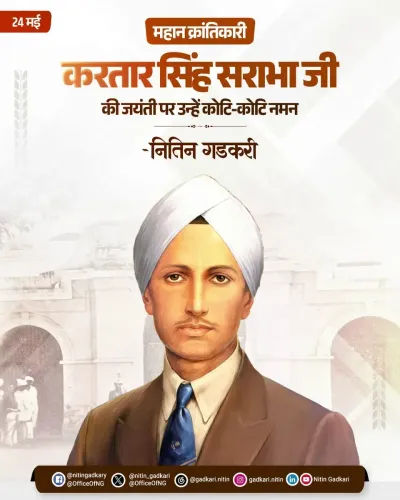
CM Sai Pays Tribute to Kartar Singh Sarabha on Birth Anniversary
Synopsis
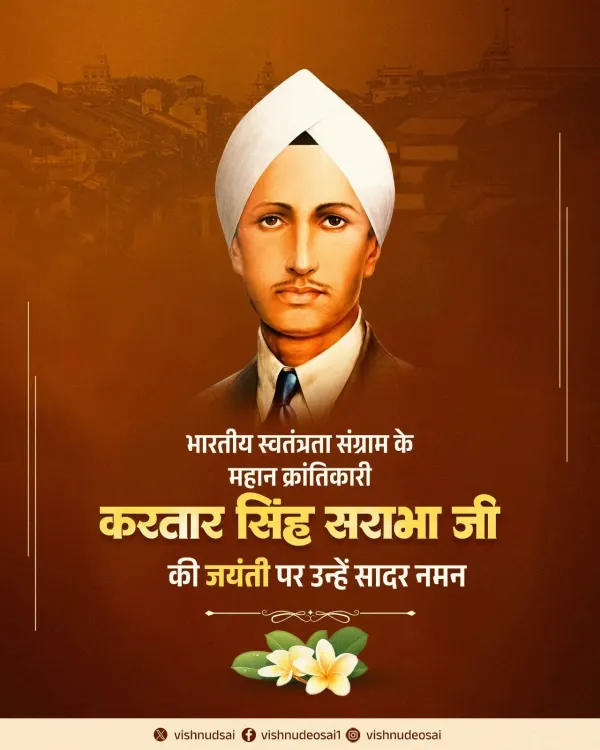
Chhattisgarh Chief Minister Vishnu Deo Sai on 24 May 2026 honoured revolutionary martyr Kartar Singh Sarabha on his birth anniversary, calling the Ghadar Movement icon's courage and sacrifice a timeless inspiration for Indian youth.
Key Takeaways
CM Vishnu Deo Sai paid tribute to Kartar Singh Sarabha on his birth anniversary on 24 May 2026 .
Sarabha was born in 1896 in Ludhiana, Punjab and was hanged by British authorities at Lahore Central Jail in 1915 , aged 19 .
He was a leading figure in the Ghadar Party , founded in 1913 in San Francisco to organise an armed uprising against British colonial rule.
The Government of India held centenary commemorations of the Ghadar Party in 2013 , including commemorative stamps and national seminars.
The tribute from Chhattisgarh reflects a pattern of BJP -led governments framing Ghadar revolutionaries as part of a national, not merely regional, independence legacy.
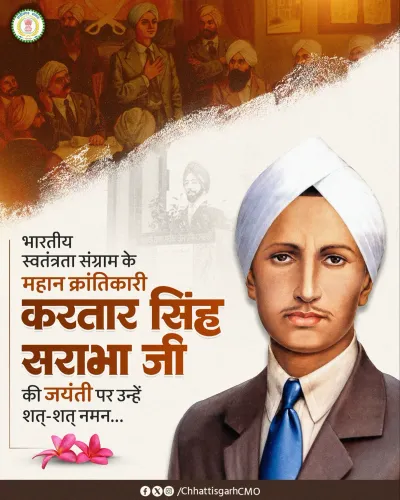
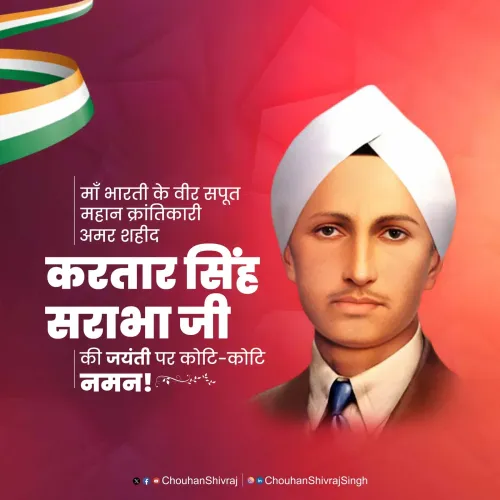
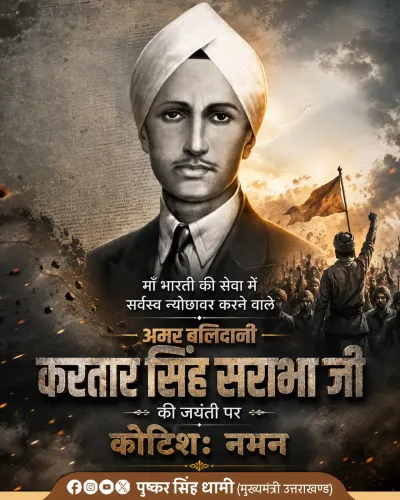
Chhattisgarh Chief Minister Vishnu Deo Sai on Sunday, 24 May 2026 paid homage to revolutionary martyr Kartar Singh Sarabha on his birth anniversary, hailing him as a leading warrior of the Ghadar Movement whose courage and patriotism remain an enduring source of inspiration for India's youth.
Context
In his post, CM Sai offered 'kotishaः naman' — salutations a crore-fold — to Sarabha, describing him as a great revolutionary who sacrificed his life for the freedom of the motherland in his youth. He wrote that Sarabha's bravery, patriotism, and selflessness as a frontline warrior of the Ghadar Movement 'will always remain a source of inspiration for the youth of the country.'
Sarabha was born in 1896 in the Ludhiana district of Punjab. He was hanged by British colonial authorities at Lahore Central Jail in 1915 at the age of just 19, making him one of the youngest martyrs of India's independence movement.
Policy Backdrop
The Ghadar Party was founded in 1913 in San Francisco by Sohan Singh Bhakna and other Indian expatriates in North America with the aim of coordinating an armed uprising against British rule in India. The party used its publication, Ghadar, to mobilise overseas Indians and plan a revolt that ultimately drew hundreds back to the subcontinent.
Kartar Singh Sarabha joined the movement as a student in the United States and became one of its most active organisers, returning to India to participate in the planned 1915 uprising. The Government of India marked the centenary of the Ghadar Party in 2013 with nationwide commemorations, including exhibitions, seminars, and the release of commemorative postage stamps.
Stakeholders and Impact
BJP-led state governments and central leaders have consistently issued public tributes to Ghadar revolutionaries on birth and martyrdom anniversaries. These observances are seen as part of a broader effort to widen the recognised pantheon of independence heroes and emphasise the contributions of armed nationalists alongside the mainstream Congress-led freedom movement.
The tribute from a Chhattisgarh-based leader — a state geographically distant from Punjab — signals a deliberate national framing of Sarabha's legacy rather than a regional one. Sarabha's story holds particular resonance for India's youth, given that he was executed as a teenager and is frequently cited in school curricula and cultural programmes across Punjab and beyond.
What's Next
Sarabha's martyrdom anniversary falls in November, and state governments in Punjab and Chhattisgarh, along with the Ministry of Culture, may announce further commemorative programmes, new memorials, or additions to school curricula focused on Ghadar figures in the months ahead. The consistent political attention to this legacy suggests that institutional recognition — through museums, curriculum modules, or public infrastructure — could follow these annual tributes.
Point of View
As it frames a 110-year-old revolutionary story as directly relevant to contemporary civic values. Over time, such tributes tend to precede institutional steps: curriculum changes, new memorials, or state-sponsored cultural programmes.
NationPress
20 Sept 2026
Frequently Asked Questions
Who was Kartar Singh Sarabha?
Kartar Singh Sarabha was a Punjab-born revolutionary, born in 1896 , who joined the Ghadar Party in the United States and returned to India to participate in an armed uprising against British rule. He was hanged at Lahore Central Jail in 1915 at the age of 19 .
What was the Ghadar Movement?
The Ghadar Movement was a revolutionary campaign launched between 1913 and 1917 by Indian expatriates in North America to incite armed revolt against British colonial rule in India. The Ghadar Party was founded in San Francisco in 1913 by Sohan Singh Bhakna and others.
Why did Chhattisgarh CM Vishnu Deo Sai pay tribute to Kartar Singh Sarabha?
CM Vishnu Deo Sai posted the tribute on 24 May 2026 to mark Sarabha's birth anniversary, honouring him as a martyr whose courage and sacrifice in the Ghadar Movement remain an inspiration for Indian youth.
When is Kartar Singh Sarabha's birth anniversary?
Kartar Singh Sarabha's birth anniversary falls on 24 May . He was born in 1896 in the Ludhiana district of Punjab.
What did the Government of India do to commemorate the Ghadar Party?
The Government of India organised nationwide centenary commemorations of the Ghadar Party in 2013 , including exhibitions, seminars, and the release of commemorative postage stamps.