CM Vishnu Deo Sai Pays Tribute to Tricolour Designer Pingali Venkayya
Synopsis
Chhattisgarh Chief Minister Vishnu Deo Sai marked the birth anniversary of Pingali Venkayya on 2 August 2026, saluting the freedom fighter who designed India's national flag, adopted by the Constituent Assembly on 22 July 1947.
Key Takeaways
Chhattisgarh CM Vishnu Deo Sai posted a tribute to Pingali Venkayya on his birth anniversary, 2 August 2026 .
Pingali Venkayya , born in 1879 , designed the Indian Tricolour adopted as the national flag on 22 July 1947 .
CM Sai described Venkayya's contribution as 'invaluable' and 'always to be remembered.' Tributes to Venkayya are increasingly common in the weeks around 15 August Independence Day .
The Constituent Assembly's formal adoption of the flag predated Independence by just over three weeks.
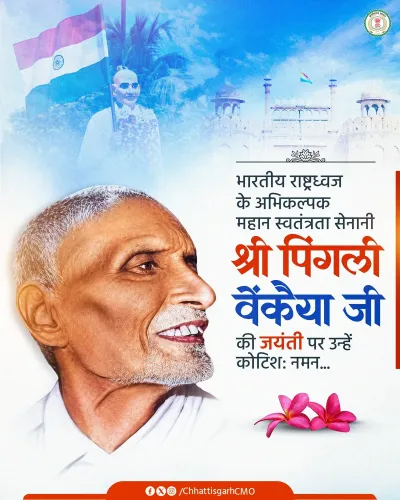
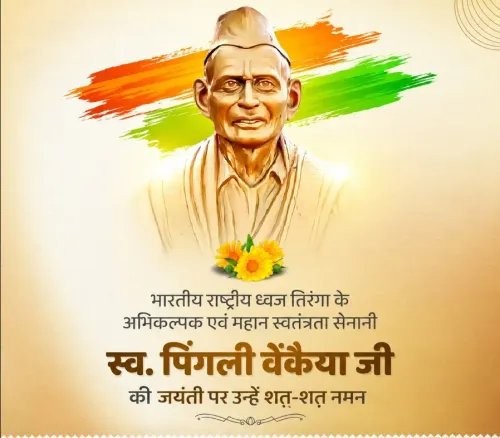
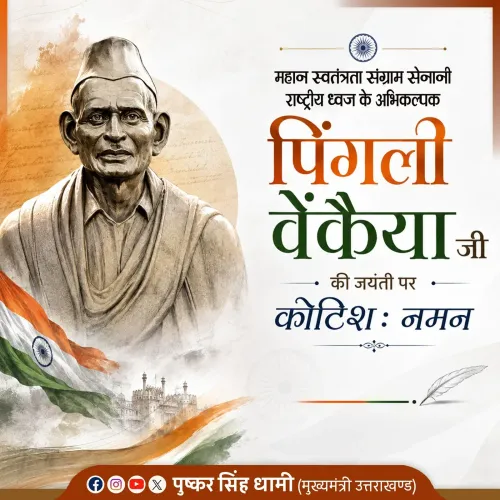
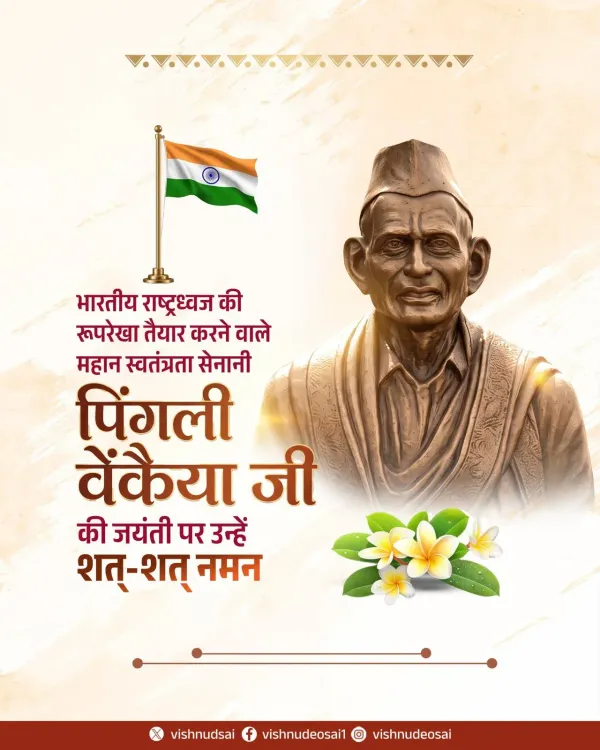
The man who gave India its flag deserves more than a footnote in history — and on his birth anniversary, Chhattisgarh Chief Minister Vishnu Deo Sai ensured that debt was publicly acknowledged. On 2 August 2026, CM Sai took to X to pay homage to Pingali Venkayya, the freedom fighter and visionary who designed the Tricolour that now flies over every institution of the Indian republic.
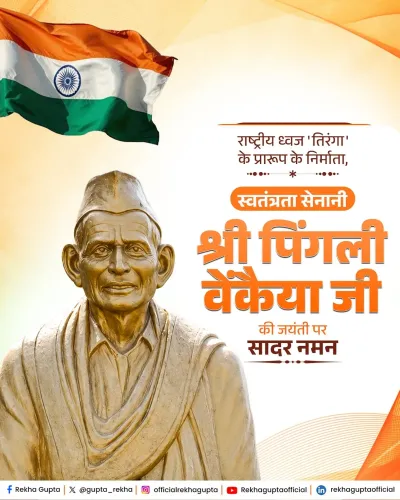
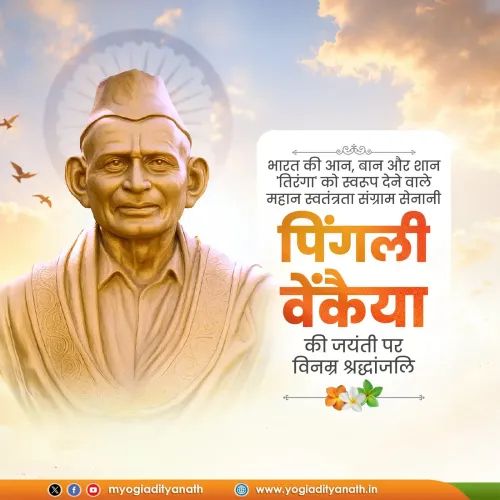
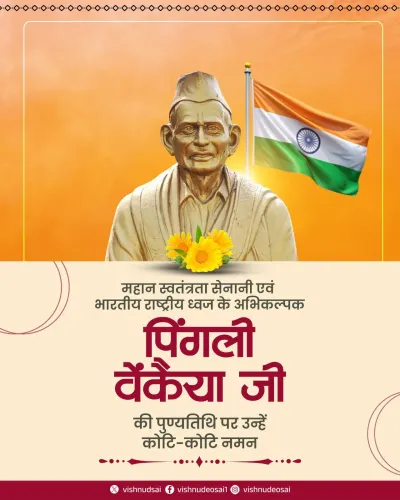
In his post, CM Sai wrote: 'Rashtriya dhwaj ke abhikalpaak, mahaan swatantrata senani Shri Pingali Venkayya ji ki jayanti par unhe kotishaha naman' — offering 'countless salutations on the birth anniversary of the great freedom fighter and designer of the national flag, Shri Pingali Venkayya.' He added that Venkayya's 'invaluable contribution in charting the outline of the Tricolour and the nation's independence will always be remembered.'
The man behind the Tricolour
Pingali Venkayya, born in 1879 in present-day Andhra Pradesh, was a polymath — linguist, agriculturist, and ardent nationalist — whose singular contribution to Indian identity was the design of the flag that the Constituent Assembly formally adopted on 22 July 1947, weeks before Independence. The saffron, white, and green horizontal bands, anchored by the Ashoka Chakra, became the visual covenant of a new nation. Yet for much of independent India's history, Venkayya remained a relatively unsung figure outside specialist circles.
A tradition of remembrance around the flag's story
Tributes to Venkayya have grown more prominent in recent years, particularly in the weeks bracketing 15 August Independence Day, as political leaders across the spectrum have leaned into the symbolism of national icons and the freedom struggle. CM Sai's post fits that broader pattern — a deliberate act of public memory that keeps the flag's human origin story visible to citizens who may know the Tricolour intimately but not the man who drew it.
The Tricolour is not merely cloth and colour; it is a designed argument for what India chose to be. Remembering its architect, year after year, is how that argument stays alive.
Point of View
Reflecting a broader BJP-era emphasis on rehabilitating underrecognised figures of the freedom movement as part of national identity-building. CM Sai's post, timed weeks ahead of Independence Day, is part of a deliberate calendar of remembrance that keeps the flag's human story — not just its symbolism — in public view. The pattern signals that anniversaries of pre-Independence icons are now treated as meaningful political moments, not mere formalities. Whether that translates into institutional recognition for Venkayya beyond social-media tributes is the question the coming years will answer.
NationPress
16 Sept 2026
Frequently Asked Questions
Who was Pingali Venkayya?
Pingali Venkayya was an Indian freedom fighter born in 1879 who designed the Tricolour that became India's national flag. The Constituent Assembly formally adopted his design on 22 July 1947 .
When is Pingali Venkayya's birth anniversary?
Pingali Venkayya's birth anniversary falls on 2 August , and it is marked annually with tributes from political leaders and institutions across India.
What did Chhattisgarh CM Vishnu Deo Sai say about Pingali Venkayya?
CM Sai offered 'countless salutations' to Venkayya on his birth anniversary, calling his contribution to designing the Tricolour and the freedom struggle 'invaluable' and 'always to be remembered.'
When was India's national flag officially adopted?
India's Tricolour national flag, designed by Pingali Venkayya, was officially adopted by the Constituent Assembly on 22 July 1947 — weeks before Independence on 15 August 1947.
Why do Indian leaders pay tribute to Pingali Venkayya?
Venkayya is honoured as the designer of India's national flag, a foundational symbol of the republic. Tributes are especially common around his 2 August birth anniversary and 15 August Independence Day.