CM Sai Sets 'Zero Fatality' Target for Chhattisgarh Roads
Synopsis
Chief Minister Vishnu Deo Sai directed Transport, Police, Health, Public Works, and Urban Bodies to build a unified Zero Fatality road-safety plan for Chhattisgarh, while also pushing for rural bus expansion under the Mukhya Mantri Gramin Bus Yojana.
Key Takeaways
Zero Fatality target : CM Vishnu Deo Sai has set an explicit zero road-fatality goal for Chhattisgarh's transport overhaul.
Five-department mandate : Transport, Police, Health, Public Works, and Urban Local Bodies are directed to prepare a single coordinated action plan.
Mukhya Mantri Gramin Bus Yojana : The scheme is to be expanded to improve bus connectivity in remote and tribal areas of the state.
Technology and vehicle fitness : Modern technology use, fit vehicles, and trained drivers are listed as non-negotiable pillars of the plan.
Rapid trauma response : Faster emergency medical care at accident sites is a distinct directive alongside prevention measures.
Tourist route connectivity : The review also flagged improved transport links to Chhattisgarh's tourism destinations as a priority.
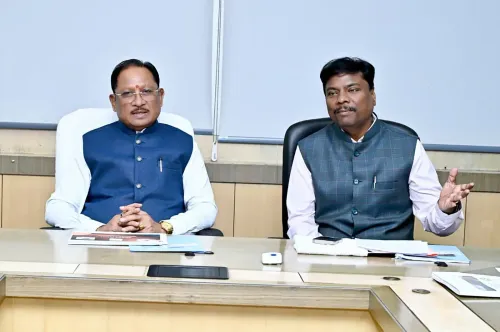
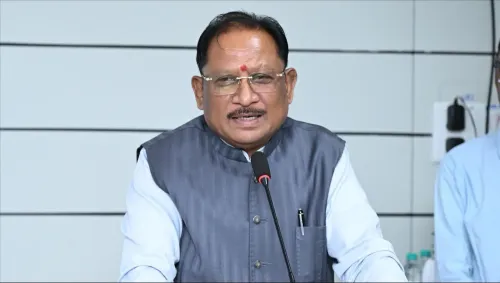
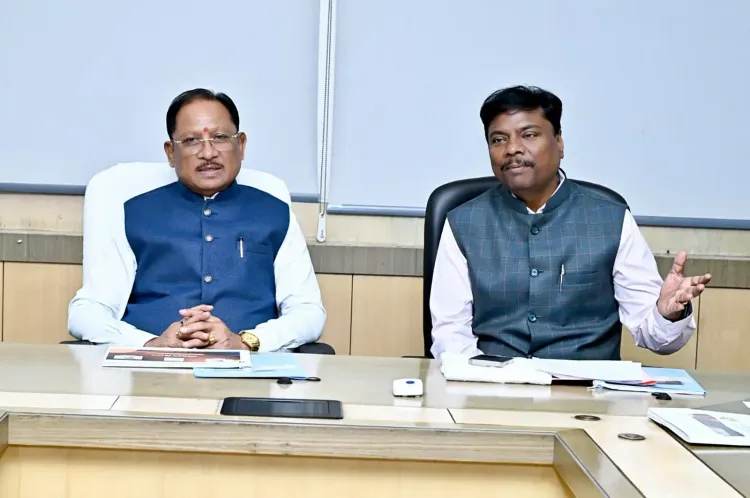
Road deaths are not inevitable — and Chief Minister Vishnu Deo Sai of Chhattisgarh is making that case official policy. On Tuesday, 29 September 2026, the Chief Minister's Office of Chhattisgarh announced that CM Sai chaired a comprehensive review of the state's transport department, directing five government departments to build a unified action plan anchored to a single, unambiguous goal: zero road fatalities.
Five departments, one plan — the 'Zero Fatality' mandate
CM Sai instructed the departments of Transport, Police, Health, Public Works, and Urban Local Bodies to prepare a coordinated action plan aimed at minimising road accidents across the state. The directive covers the full chain of road safety — from vehicle fitness checks and driver training to faster emergency medical response at crash sites. 'The safety and convenience of the ordinary citizen must be at the centre of every arrangement in the transport department,' Sai said during the meeting, according to the CMO post.
The Zero Fatality framing is deliberate. Several Indian states have adopted similar headline targets in recent years as national road accident figures have remained stubbornly high. By naming the target explicitly and routing it through five departments simultaneously, the Chhattisgarh government is signalling that road safety can no longer be treated as a single-department problem.
Gramin Bus Yojana expansion and the rural connectivity push
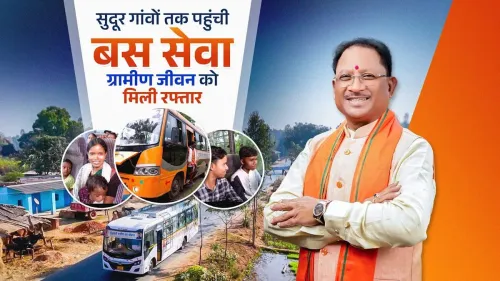
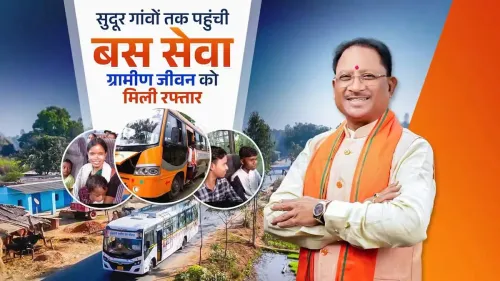
The meeting also focused sharply on rural reach. CM Sai pushed for an expansion of the Mukhya Mantri Gramin Bus Yojana, the state scheme designed to bring public bus services to villages and remote blocks that private operators typically skip. Better connectivity to tourist destinations and a broader technology-driven transport infrastructure were also flagged as priorities.
Chhattisgarh's tribal and forested hinterland — home to a significant share of the state's population — has historically faced acute public transport gaps. Extending safe, scheduled bus services into those areas addresses both an equity concern and a road-safety one: where formal public transport is absent, overloaded informal vehicles fill the gap, raising accident risk.
Where this fits India's road-safety push
India's National Road Safety Policy of 2010 and successive central campaigns have urged states to move from siloed enforcement to multi-departmental coordination — exactly the model Sai is now institutionalising in Chhattisgarh. The specific emphasis on modern technology, vehicle fitness, and rapid trauma care echoes the framework that central guidelines have long recommended but states have implemented unevenly.
For Sai's administration — which has governed Chhattisgarh since December 2023 after the BJP's assembly victory — a visible governance deliverable on road safety carries both public-welfare and political weight ahead of the next performance audit by voters.
The real test now is execution: whether the five-department coordination produces measurable reductions in accident mortality, and how quickly the Gramin Bus Yojana's new routes reach the state's most isolated communities.
Point of View
Forcing departments that rarely coordinate to own a shared outcome metric. For CM Sai, who came to power promising 'Sushasan' (good governance), binding diverse agencies to a single measurable target is a calculated way to demonstrate administrative seriousness. The Gramin Bus Yojana push simultaneously addresses tribal equity and accident risk, doubling the political dividend. Whether the machinery can sustain inter-departmental coordination beyond the review meeting is the central question this initiative must answer.
NationPress
29 Sept 2026
Frequently Asked Questions
What is the Zero Fatality target announced by CM Vishnu Deo Sai?
CM Vishnu Deo Sai has directed Chhattisgarh's Transport, Police, Health, Public Works, and Urban Local Bodies departments to jointly prepare a coordinated action plan with the explicit goal of reducing road accident deaths to zero across the state.
What is the Mukhya Mantri Gramin Bus Yojana in Chhattisgarh?
The Mukhya Mantri Gramin Bus Yojana is a Chhattisgarh state scheme that aims to extend public bus services to rural and remote areas of the state, improving connectivity for communities that lack access to formal public transport.
Which departments are involved in Chhattisgarh's road safety action plan?
Five departments — Transport, Police, Health, Public Works, and Urban Local Bodies — have been instructed to coordinate on a unified road-safety action plan under the direction of Chief Minister Vishnu Deo Sai.
Why is Chhattisgarh focusing on rural bus connectivity?
Chhattisgarh has large tribal and forested regions where public transport is sparse. Expanding scheduled bus services reduces reliance on overloaded informal vehicles, lowering both connectivity gaps and road accident risk.
How does Chhattisgarh's plan align with India's national road safety policy?
India's National Road Safety Policy of 2010 has long urged states to adopt multi-departmental, coordinated approaches to cutting fatalities. Chhattisgarh's five-department Zero Fatality mandate directly mirrors that framework.