CM Sai Spotlights Jashpur Women Turning Craft Into Livelihood
Synopsis
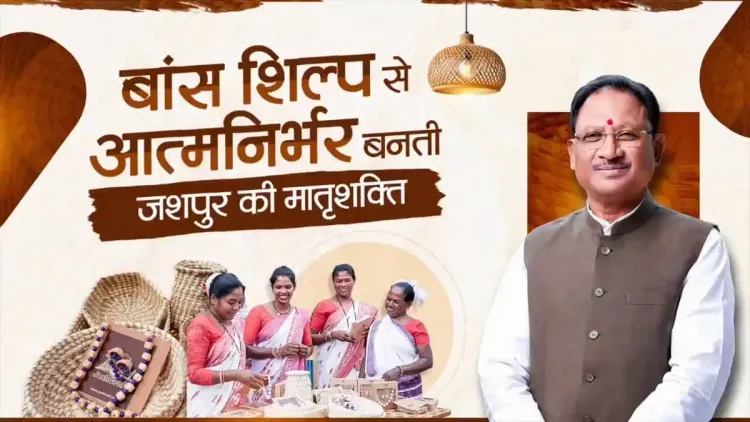
Chhattisgarh CM Vishnu Deo Sai on 18 August 2026 highlighted how Jashpur's women are achieving self-reliance through JashCraft, an initiative connecting their traditional craft skills to commercial markets and offering recognition, dignity, and financial support.
Key Takeaways
CM Vishnu Deo Sai publicly celebrated the women of Jashpur district on 18 August 2026 for their growing economic self-reliance.
JashCraft is the named initiative connecting Jashpur's artisan women to commercial markets.
The programme is described as delivering 'recognition, respect, and economic support' to participating women.
Sai pledged that Chhattisgarh's women will be 'strong partners' in the state's broader prosperity, not just household welfare.
Jashpur , a tribal-majority district bordering Jharkhand and Odisha, has been a recurring focus of state livelihood efforts.
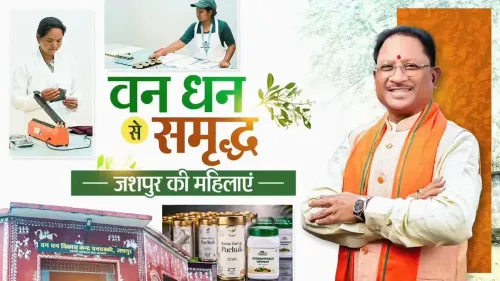
In the forested districts of Chhattisgarh, a quiet economic shift is under way — and Chhattisgarh Chief Minister Vishnu Deo Sai wants the country to notice. On 18 August 2026, the Chief Minister took to X to celebrate the women of Jashpur, who are converting generations-old craft skills into financial independence, powered by an initiative called JashCraft.
Sai's post, written in Hindi, declared: 'Hunar se aatmnirbhar ban rahi Jashpur ki matrishakti' — 'The mother-power of Jashpur is becoming self-reliant through skill.' He described how the women of the district are 'setting a new example of self-reliance through their talent, hard work, and confidence.'
JashCraft: Bridging Traditional Skill and the Open Market
At the centre of the Chief Minister's message is JashCraft, a local initiative designed to connect artisan women in Jashpur district with commercial markets. The programme targets a persistent gap: rural women in tribal and forest-belt districts often possess sophisticated craft traditions — weaving, bamboo work, embroidery — but lack the supply-chain access to turn those skills into stable income. JashCraft positions itself as that bridge, giving products a marketable identity and the makers a platform for recognition.
Sai framed the initiative in the language of dignity as much as economics, noting that the programme gives women 'recognition, respect, and economic support' — three things that formal employment in remote districts has historically failed to deliver at scale.
The State's Pledge on Women-Led Prosperity
The Chief Minister closed with a direct commitment: his government's resolve is that the women of Chhattisgarh use their skills to become 'strong partners not just in their families' wellbeing, but in the state's prosperity.' The framing is deliberate — it positions women's economic participation not as welfare, but as a structural pillar of the state's growth story.
Jashpur, a district that borders Jharkhand and Odisha, has a predominantly tribal population and has long been a focus of livelihood programmes. The Chief Minister's public spotlight on the district signals continued political attention to its development — and to women-led self-help and artisan models as the vehicle of choice.
If JashCraft scales, Jashpur's craftswomen will not just feed families — they will write the next chapter of Chhattisgarh's rural economy.
Point of View
Which frames women's economic agency as both a welfare achievement and a political dividend ahead of state cycles. By naming a specific district programme — JashCraft — rather than invoking a generic central scheme, the Chief Minister signals an intent to build locally branded success stories that can be showcased on the campaign trail. The focus on Jashpur, a tribal-majority district with historical developmental deficits, also reflects a conscious effort to consolidate support in a region that has seen competitive mobilisation from opposition parties. Whether JashCraft delivers at scale will determine if this is policy momentum or political optics.
NationPress
18 Aug 2026
Frequently Asked Questions
What is JashCraft in Chhattisgarh?
JashCraft is an initiative in Jashpur district, Chhattisgarh that connects women artisans' traditional craft skills to commercial markets, providing them with income, recognition, and economic support.
What did CM Vishnu Deo Sai say about Jashpur women?
CM Vishnu Deo Sai praised Jashpur's women on 18 August 2026 , saying they are 'setting a new example of self-reliance through their talent, hard work, and confidence' via initiatives like JashCraft.
Where is Jashpur district located?
Jashpur is a tribal-majority district in northeastern Chhattisgarh , bordering the states of Jharkhand and Odisha.
How does JashCraft help women in Chhattisgarh?
JashCraft bridges the gap between rural artisan women's traditional craft skills and formal markets, giving their products a commercial identity and offering the makers financial independence and social recognition.
What is CM Sai's commitment to women's empowerment in Chhattisgarh?
CM Sai has stated his government's resolve that women of Chhattisgarh become strong partners in the state's prosperity — not just in household welfare — through skill-based livelihood programmes.