CM Sai transfers ₹632 cr to 67 lakh women under Mahatari Vandan
Synopsis
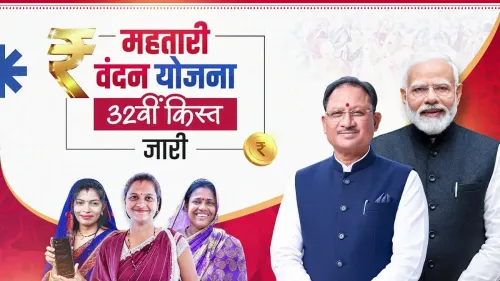
Chhattisgarh CM Vishnu Deo Sai has released the 32nd monthly instalment of Mahatari Vandan Yojana, transferring ₹632.40 crore to over 67 lakh women via DBT, pushing cumulative payouts past ₹20,708 crore since the scheme's launch.
Key Takeaways
32nd consecutive monthly instalment of Mahatari Vandan Yojana released on 26 October 2026 .
Over 67 lakh women in Chhattisgarh received ₹1,000 each directly into their bank accounts via DBT.
Total amount transferred in this instalment: ₹632.40 crore .
Cumulative disbursement under the scheme has crossed ₹20,708 crore since inception.
The scheme provides an annual benefit of ₹12,000 per beneficiary , framed as a tool for economic self-reliance.
Launched after the December 2023 Chhattisgarh assembly elections by the BJP government under CM Vishnu Deo Sai .
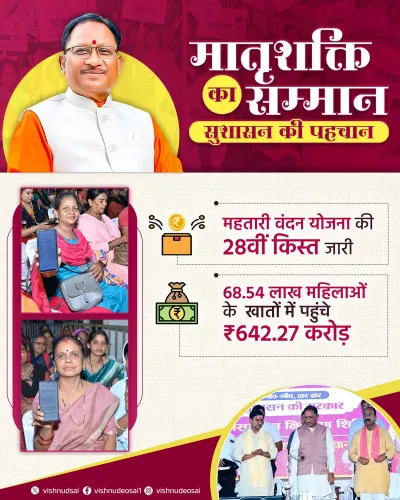
Over 67 lakh women in Chhattisgarh received a direct bank transfer on Monday, 26 October 2026 — the 32nd consecutive monthly instalment of the state's flagship welfare scheme. Chhattisgarh Chief Minister Vishnu Deo Sai announced that ₹632.40 crore had been pushed through the Direct Benefit Transfer (DBT) pipeline in a single day, bringing the cumulative payout under the Mahatari Vandan Yojana past the ₹20,708 crore mark.
What Mahatari Vandan puts in a woman's hand
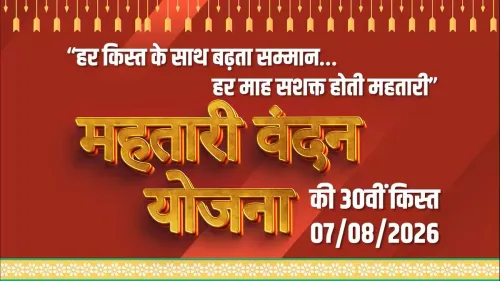
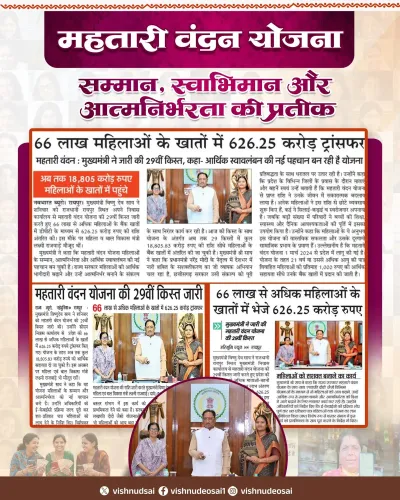
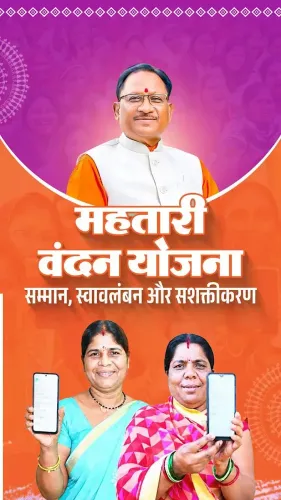
The scheme is straightforward by design: ₹1,000 every month, ₹12,000 every year, wired directly into the beneficiary's bank account — no middleman, no queue. CM Sai framed the transfer in his post with the phrase 'छत्तीसगढ़ की नारी, शान हैं हमारी' ('The women of Chhattisgarh are our pride'), describing the scheme as a vehicle for 'सम्मान, स्वाभिमान और आत्मनिर्भरता' — dignity, self-respect, and self-reliance.
Launched by the BJP-led Chhattisgarh government after Chief Minister Vishnu Deo Sai took office following the December 2023 assembly elections, Mahatari Vandan has become one of the most visible planks of what the government brands its 'Sushasan' (good governance) agenda. Paying out an unbroken run of 32 monthly instalments without a gap is the operational detail the government is now leaning into.
₹20,708 crore and the DBT architecture behind it
The cumulative figure — more than ₹20,708 crore disbursed since inception — underlines the scale of the state's fiscal commitment. DBT eliminates the leakages that historically plagued cash-welfare programmes by routing money directly to verified, Aadhaar-linked accounts. For a state like Chhattisgarh, where a significant share of rural women have historically been outside formal financial systems, each instalment is also a nudge toward sustained banking habits.
The broader pattern matters here. Since 2023, several Indian states — from Madhya Pradesh to Karnataka to Maharashtra — have rolled out monthly cash-assistance schemes for women, making direct transfers to female beneficiaries a defining feature of competitive state-level politics. Chhattisgarh's version targets economic empowerment explicitly, pitching the annual ₹12,000 not as a handout but as a foundation for financial independence.
What the 32nd instalment signals
Consistency is the political message. Reaching a 32nd unbroken monthly release — nearly three years of payouts — shifts the narrative from launch-day promise to delivery track record. The government will be watching the next state budget session closely: any revision to the monthly amount or expansion of the beneficiary base would reset that story entirely. For now, the number that matters is 67 lakh women who saw ₹1,000 hit their accounts today.
In a state where women's economic participation remains a work in progress, that monthly credit — however modest — is, for millions of families, the most tangible proof that a government kept its word.
Point of View
708 crore figure also signals that the fiscal pipeline is holding, which matters as the scheme approaches budget-revision season. Whether the monthly amount is revised upward — as competing states have done — will be the next litmus test of political will.
NationPress
26 Oct 2026
Frequently Asked Questions
What is Mahatari Vandan Yojana in Chhattisgarh?
Mahatari Vandan Yojana is a Chhattisgarh state government scheme that provides eligible women with a monthly cash transfer of ₹1,000 (₹12,000 annually) directly into their bank accounts via the Direct Benefit Transfer (DBT) mechanism, aimed at promoting economic self-reliance.
How many women benefit from Mahatari Vandan Yojana?
As of the 32nd instalment released on 26 October 2026, over 67 lakh (6.7 million) women in Chhattisgarh are enrolled as beneficiaries of the scheme.
How much money has been distributed under Mahatari Vandan Yojana so far?
A cumulative amount of more than ₹20,708 crore has been distributed since the scheme's launch. The 32nd instalment alone transferred ₹632.40 crore to beneficiaries.
When was Mahatari Vandan Yojana launched?
The scheme was introduced by the BJP-led Chhattisgarh government after Chief Minister Vishnu Deo Sai took office following the December 2023 state assembly elections.
What does DBT mean in the context of Mahatari Vandan Yojana?
DBT stands for Direct Benefit Transfer — a system that routes government payments directly into beneficiaries' Aadhaar-linked bank accounts, bypassing intermediaries and reducing leakage.