CM Sai Urges Chhattisgarh Parents to Join Pulse Polio Drive
Synopsis
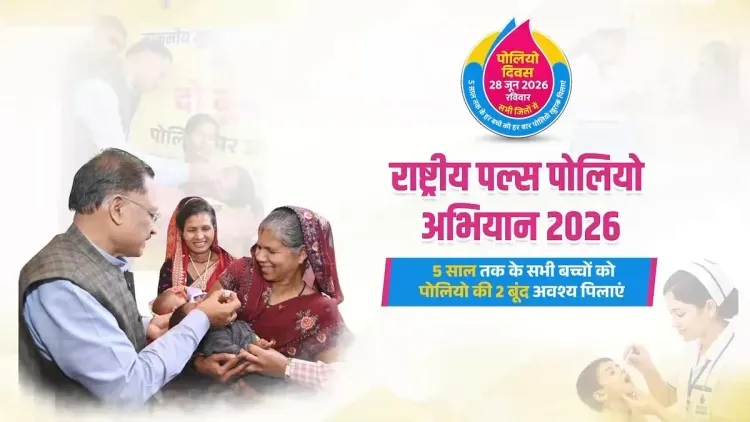
Chief Minister Vishnu Deo Sai, through the Chhattisgarh CMO's official X account, appealed to all state residents on 28 June 2026 to ensure children under five receive oral polio vaccine during the National Pulse Polio Immunisation Campaign, invoking the phrase 'Do Boond Zindagi Ki' — Two Drops of Life.
Key Takeaways
The Chief Minister's Office of Chhattisgarh issued a public appeal on 28 June 2026 for the National Pulse Polio Immunisation Campaign .
Chief Minister Vishnu Deo Sai urged parents to give every child up to five years of age two drops of oral polio vaccine.
The appeal opened with 'Jai Johar' , a traditional Adivasi greeting, signalling outreach to Chhattisgarh's tribal communities.
India has been polio-free since March 2014 ; pulse polio rounds continue to prevent re-importation and maintain herd immunity.
Chhattisgarh deploys mobile teams to reach children in tribal, remote, and migrant labour settlements on immunisation days.
Post-campaign house-to-house follow-up visits are conducted to cover children missed at fixed booths.
The Chief Minister's Office of Chhattisgarh, on behalf of Chief Minister Vishnu Deo Sai, on Sunday, 28 June 2026, issued a public appeal urging parents across the state to ensure every child under the age of five receives the polio vaccine as part of the National Pulse Polio Immunisation Campaign being held on the same day.
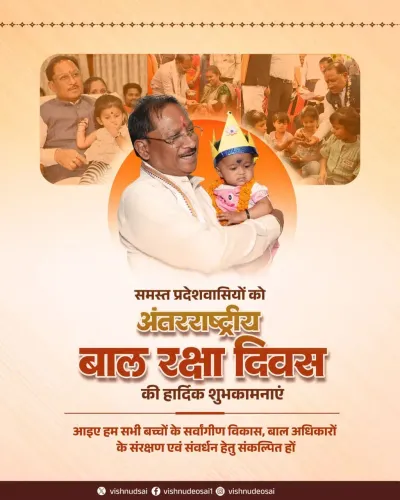
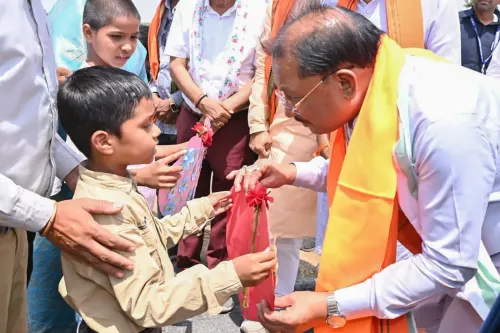
In the post, Chief Minister Sai wrote — 'Jai Johar!' [a traditional greeting of Chhattisgarh's tribal communities] — before stating: 'The healthy and safe future of our children is our greatest responsibility. A small step taken today for their smiles and a better tomorrow can become a lifetime of protection.' He specifically urged all residents of the state (pradeshwasiyon) to ensure that every child up to five years of age receives the two drops of polio vaccine — invoking the iconic campaign phrase 'Do Boond Zindagi Ki' [Two Drops of Life].
Context
The National Pulse Polio Immunisation Programme is a Government of India initiative conducted in coordination with state governments, the World Health Organization, and UNICEF. On designated national immunisation days, booths are set up at health centres, anganwadis, and public locations across the country to administer oral polio vaccine (OPV) to children aged zero to five years. The 28 June 2026 round is part of a continuing calendar of sub-national and national immunisation days maintained to keep India's polio-free status intact.
India was officially certified polio-free by the World Health Organization in March 2014, after three consecutive years without a reported wild poliovirus case. However, health authorities continue annual and sub-annual pulse polio rounds to prevent re-importation of the virus and to sustain high population immunity, particularly among children in remote and underserved areas.
Policy Backdrop
Chhattisgarh, with a significant proportion of its population living in tribal and forest-covered districts, has historically required focused outreach to achieve full immunisation coverage. The state's health machinery deploys mobile vaccination teams to reach children in inaccessible villages, transit points such as railway stations and bus stands, and migrant labour settlements on pulse polio days.
Chief Minister Sai's appeal carries particular weight as it opens with 'Jai Johar', a salutation rooted in the culture of Chhattisgarh's Adivasi communities — a deliberate choice that signals the message is directed at all segments of the state's population, including those in tribal belts where vaccine hesitancy and access gaps have historically posed challenges.
Stakeholders and Impact
The primary beneficiaries of the campaign are children aged zero to five years across Chhattisgarh's 33 districts. Frontline health workers — ASHAs, anganwadi workers, and auxiliary nurse midwives — form the operational backbone of the drive, conducting door-to-door rounds in addition to fixed booth sessions. Parents and guardians are the critical decision-makers whose participation determines coverage rates.
A high turnout on 28 June directly strengthens the state's immunity firewall against poliovirus, which remains endemic in neighbouring countries. Each child missed in a round represents a potential gap in herd immunity, making the Chief Minister's direct public appeal a standard but important mobilisation tool.
What's Next
Health teams across Chhattisgarh are expected to compile booth-wise and district-wise coverage data in the days following the drive. Children who are missed during the fixed-day campaign are typically followed up through house-to-house visits in subsequent days. The state health department is likely to report aggregate figures on the number of children vaccinated, which will feed into national immunisation dashboards maintained by the Union Ministry of Health and Family Welfare.
Sustained high coverage across successive rounds remains the cornerstone of India's strategy to maintain its polio-free certification and contribute to the global goal of complete polio eradication.
Point of View
Using the emotive 'Do Boond Zindagi Ki' framing that has defined India's polio communication for decades. The opening salutation 'Jai Johar' is a deliberate cultural signal aimed at tribal communities in Chhattisgarh's interior districts, where coverage gaps have historically been widest. The post reflects a broader pattern among state governments of using the Chief Minister's personal voice — rather than the health department's institutional channel — to drive last-mile participation on national health days. Sustaining polio-free status requires near-universal coverage in every round, making such political endorsement a measurable public-health tool, not merely a ceremonial gesture.
NationPress
28 Jun 2026
Frequently Asked Questions
When is the National Pulse Polio Campaign in Chhattisgarh in 2026?
The National Pulse Polio Immunisation Campaign in Chhattisgarh was held on 28 June 2026 , as announced by Chief Minister Vishnu Deo Sai through the official CMO account.
Which children should receive the polio vaccine during the Pulse Polio drive?
All children from birth up to five years of age are eligible and should receive two drops of oral polio vaccine (OPV) on the campaign day, regardless of their previous vaccination history.
Is India still polio-free in 2026?
Yes. India was certified polio-free by the World Health Organization in March 2014 and has maintained that status. Pulse polio rounds continue to sustain high immunity and prevent re-importation of the virus.
What does 'Do Boond Zindagi Ki' mean?
'Do Boond Zindagi Ki' translates to 'Two Drops of Life' in English. It is the long-standing slogan of India's oral polio vaccination campaign, referring to the two drops of OPV given to each child.
What is 'Jai Johar' and why did CM Sai use it in the polio appeal?
'Jai Johar' is a traditional greeting used by Chhattisgarh's Adivasi (tribal) communities. CM Sai used it to open his appeal as a cultural acknowledgement of the state's large tribal population, many of whom live in districts where health outreach is most challenging.