CM Sai vows to implement UCC in Chhattisgarh soon
Synopsis
Chhattisgarh Chief Minister Vishnu Deo Sai on 25 July 2026 declared his government will implement the Uniform Civil Code in the state soon, citing the UCC committee's rapid progress through public consultations and study, reinforcing the BJP's push for equal civil rights for all citizens.
Key Takeaways
Chief Minister Vishnu Deo Sai announced on 25 July 2026 that Chhattisgarh will implement the Uniform Civil Code soon.
A dedicated UCC committee formed by the state government is completing its work through extensive public consultations and in-depth study.
The commitment centres on ensuring equal rights and equal justice for every citizen of the state regardless of religion.
Uttarakhand became the first Indian state to enact a UCC law in February 2024 , setting the legislative precedent Chhattisgarh is now following.
The UCC is rooted in Article 44 of the Indian Constitution as a Directive Principle, first adopted in 1950 .
The draft report of the Chhattisgarh UCC committee and a possible assembly bill are the immediate milestones to watch.
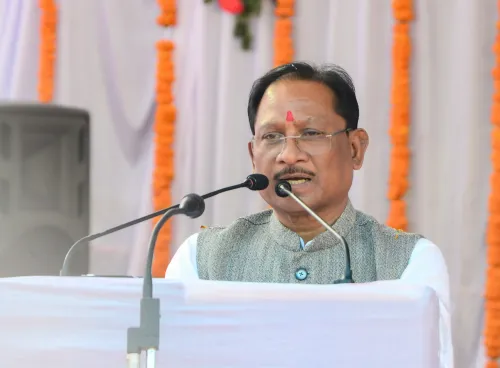
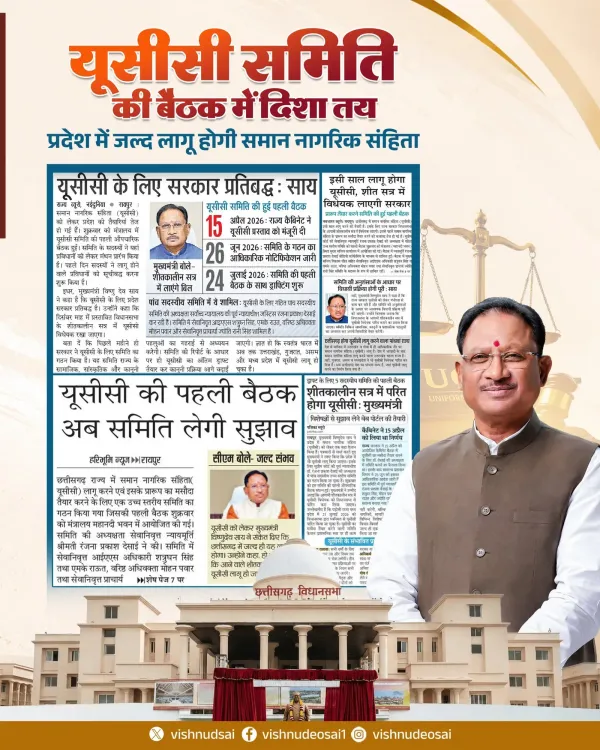
Chhattisgarh Chief Minister Vishnu Deo Sai on Saturday, 25 July 2026 pledged that his government will implement the Uniform Civil Code (UCC) in the state shortly, stating that a dedicated committee formed for this purpose is rapidly completing its work through extensive public consultations and in-depth study.
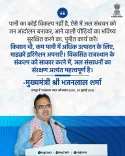
In his post on X, Chief Minister Sai wrote: 'प्रदेश के प्रत्येक नागरिक को समान अधिकार और समान न्याय मिले, यही हमारी सरकार का संकल्प है' — 'Equal rights and equal justice for every citizen of the state — this is the resolve of our government.' He added that the UCC committee constituted to fulfil this resolve is completing its work swiftly, and the government will implement the Uniform Civil Code in the state soon.
Context
The Uniform Civil Code refers to a common set of laws governing personal matters such as marriage, divorce, inheritance, and adoption for all citizens, irrespective of religion. It is enshrined as a Directive Principle of State Policy under Article 44 of the Indian Constitution, adopted in 1950, which directs the state to endeavour to secure a uniform civil code for citizens across the country.
Chhattisgarh has been governed by the Bharatiya Janata Party (BJP) since the 2023 assembly elections, with Sai assuming charge as Chief Minister in December 2023. His government's push for the UCC aligns with the party's long-standing national position on civil law reform.
Policy Backdrop
Uttarakhand became the first Indian state to enact a Uniform Civil Code law in February 2024 under its BJP government, setting a legislative precedent for other states. Goa has historically maintained a common civil code rooted in Portuguese law, serving as a pre-existing model. The BJP's 2019 and 2024 national election manifestos both reiterated a commitment to implementing the UCC at the national level, though no central legislation has yet been introduced.
Multiple BJP-led states have since formed expert committees or initiated legislative processes of their own, reflecting a coordinated state-level approach to personal law reform. Chhattisgarh's UCC committee has been gathering public suggestions and conducting detailed study before finalising its recommendations.
Stakeholders and Impact
The proposed legislation would affect all residents of Chhattisgarh by standardising personal laws currently governed by separate religious codes for Hindu, Muslim, Christian, and tribal communities. Proponents argue it would advance gender equality and simplify legal processes; critics and minority groups have raised concerns about the impact on religious personal laws and tribal customary practices.
The UCC committee has been conducting broad-based public consultations to incorporate diverse perspectives before submitting its draft report to the state government.
What's Next
The immediate focus will be on the Chhattisgarh UCC committee's draft report and whether the state government tables a bill during an upcoming assembly session. Legal challenges in the High Court or the Supreme Court questioning the constitutional validity of state-specific UCC provisions remain a possibility once legislation is introduced. The pace of Chhattisgarh's process will be closely watched by other BJP-governed states considering similar measures.
Point of View
Using Uttarakhand's 2024 enactment as both a legal template and a political signal. By emphasising public consultation and committee-driven drafting, the Chhattisgarh government is attempting to insulate the legislation from charges of haste or majoritarianism. The framing around 'equal rights and equal justice' is deliberate — it repositions the UCC as a civil-equality measure rather than a religious one, a rhetorical shift that has become standard across BJP-governed states. How the committee navigates the concerns of tribal communities, who hold significant demographic and constitutional weight in Chhattisgarh, will be the real test of whether the eventual bill can withstand legal scrutiny.
NationPress
25 Jul 2026
Frequently Asked Questions
What is the Uniform Civil Code and why is Chhattisgarh pursuing it?
The Uniform Civil Code is a proposed common legal framework governing personal matters such as marriage, divorce, inheritance, and adoption for all citizens regardless of religion. Chhattisgarh's BJP government is pursuing it to fulfil a long-standing party commitment and the constitutional directive under Article 44, aiming to ensure equal rights for every resident of the state.
Which Indian state first implemented the Uniform Civil Code?
Uttarakhand became the first Indian state to enact a Uniform Civil Code law in February 2024 under its BJP government, serving as the primary legislative precedent for other states including Chhattisgarh.
What is the Chhattisgarh UCC committee and what has it done so far?
The Chhattisgarh UCC committee is a state-appointed body tasked with drafting recommendations for the civil code legislation. According to CM Sai's 25 July 2026 post, the committee has been gathering wide public suggestions and conducting in-depth study, and is nearing completion of its work.
When will Chhattisgarh implement the Uniform Civil Code?
Chief Minister Vishnu Deo Sai stated on 25 July 2026 that the government will implement the UCC 'soon', but no specific date or legislative session has been officially announced. The next milestone is the release of the UCC committee's draft report.
Will the UCC in Chhattisgarh affect tribal communities?
Tribal communities in Chhattisgarh, who follow distinct customary personal laws, are among the key stakeholders whose interests the UCC committee's public consultation process is expected to address. Any enacted legislation may face legal challenges if it is seen to override constitutionally protected tribal customs.